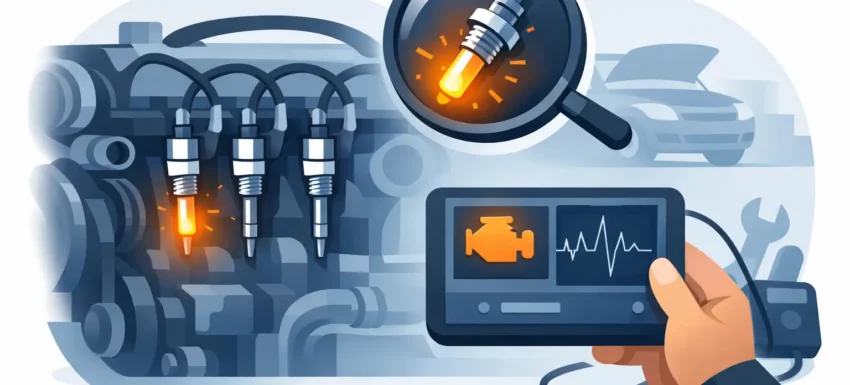
Cold diesel, long crank, rough idle for the first minute – that combination usually points people straight at the battery. Sometimes that is correct. Just as often, though, the real problem is further down the starting system. If you want to know how to identify glow plug faults properly, you need to separate weak pre-heating from battery, starter motor, fuel and sensor issues before you start replacing parts.
Glow plug faults are common on diesel vehicles, especially as mileage climbs and cold-weather starting becomes more demanding. The trouble is that a failed plug does not always cause a no-start. One bad unit may only create harder starting, extra smoke or a lumpy idle on start-up. That grey area is where proper testing matters.
How to identify glow plug faults without guesswork
The fastest route is to look at the symptom pattern first, then confirm it with electrical checks and fault-code data. A diesel with failing glow plugs will often crank longer when cold, start more cleanly when warm, and produce white or grey smoke for a short period after firing. In some cases, the glow plug warning light may flash, but that is not guaranteed.
It also depends on the engine design. Older diesels tend to show classic hard-start symptoms more clearly. Newer common rail systems can mask weak glow plugs to a point because fuel delivery and control strategies are better. That means a vehicle may still start, but with poor refinement and increased emissions on cold start.
Before blaming the plugs themselves, check the basics. Battery voltage, cranking speed and power supply to the glow plug circuit all affect performance. A healthy set of plugs will not do much if the battery is weak or the control module is not switching them on.
Common signs of a glow plug problem
Most glow plug faults show up in a small group of repeat symptoms rather than one dramatic failure. Hard cold starting is the main one. The engine may need extended cranking, stumble into life, or start on fewer cylinders before settling down.
Rough idle immediately after start-up is another strong clue. If one cylinder is not getting enough heat for efficient combustion, the engine can feel uneven for the first few seconds or minutes. White or light grey exhaust smoke on start-up often appears alongside this because diesel fuel is not burning cleanly in a cold combustion chamber.
Some drivers also notice poorer fuel economy, especially in winter, or an engine management light linked to the pre-heating circuit. On certain vehicles, the glow plug lamp itself may flash to indicate a system fault rather than normal operation.
That said, these symptoms are not exclusive to glow plugs. Injector issues, low compression, intake air faults and coolant temperature sensor errors can look similar. This is why symptom spotting is the start of the job, not the end of it.
When one failed plug matters and when it does not
On a four-cylinder diesel, one failed glow plug can be enough to create obvious cold-start issues. On a six-cylinder engine, the symptoms may be milder at first. In warmer weather, some engines will barely show a problem until two or more plugs have deteriorated.
That is why seasonal complaints matter. A vehicle that starts acceptably in summer but struggles on cold mornings often has a marginal pre-heating fault that has gone unnoticed for months.
Start with a scan tool before reaching for parts
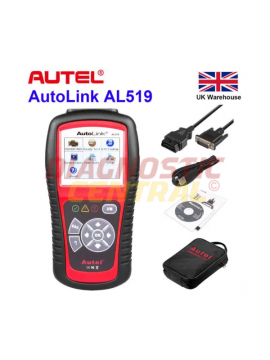
A capable diagnostic scanner can save a lot of wasted time. Many modern diesel vehicles will log glow plug-related codes for individual cylinders, control circuit faults, relay faults or module communication problems. If the system reports a specific cylinder glow plug fault, you already have a strong lead.
Even then, do not treat fault codes as proof that the plug itself is dead. A code can be triggered by wiring resistance, a poor connector, a failed glow plug control unit or low system voltage. Use scan data to narrow the search, then confirm with hands-on testing.
This is where proper workshop-grade diagnostics pay for themselves. For garages and capable DIY users alike, accurate fault reading cuts out guesswork and reduces the chances of fitting a set of plugs when the actual failure sits in the control circuit.
Testing the glow plugs directly
If access is reasonable, direct testing is the clearest way to confirm condition. The most common method is a resistance check with a multimeter. After isolating the electrical connection to each glow plug, measure resistance between the terminal and earth. A healthy plug usually shows very low resistance, though exact figures vary by design and manufacturer.
An open circuit reading is a strong sign the plug has failed internally. A reading that differs significantly from the others can also indicate a weak or deteriorating unit. What matters most is consistency across the set and whether any plug is clearly outside normal range.
A current draw test can be even more useful where equipment allows. Glow plugs should draw current in a predictable pattern as they heat. A plug with no draw is usually failed. One with much lower draw than the others may still be faulty even if resistance does not look dramatically wrong.
Take care with voltage-fed systems and newer pressure sensor glow plug designs. Some engines use more advanced components, and rough testing methods can damage them. If the vehicle uses specialist hardware, check the manufacturer procedure rather than relying on generic assumptions.
Checking the power supply side
If multiple glow plugs appear inactive, do not assume they have all failed together. Test for voltage at the glow plug rail or individual connectors during the pre-heat phase. If there is no supply, the issue may be the relay, control module, fuse or wiring.
This distinction matters. Replacing four plugs will not restore cold starting if the control unit never energises them. Likewise, intermittent faults can come from corroded connectors or damaged loom sections, especially on older or high-mileage diesels.
The glow plug relay or control module can be the real fault
A failed relay or control module often mimics full glow plug failure. The vehicle may show hard cold starts across all cylinders, with no heat reaching any plug. On some models, the module also manages post-heating after start-up, so faults here can affect emissions, idle quality and warm-up smoothness as well.
Listen for assumptions in the workshop. If someone says, “It must be the plugs because it is hard to start cold,” that is a guess, not a diagnosis. Check command, supply and output. If the module receives the correct trigger but sends nothing out, you have a control-side problem. If it sends output but one cylinder remains dead, that points back towards the plug or wiring to that cylinder.
Don’t ignore battery and cranking speed
Diesel pre-heat systems do not work in isolation. Low battery voltage can reduce glow plug performance and slow cranking speed at the same time, giving you two cold-start problems for the price of one. A borderline battery often gets blamed on the plugs, while weak plugs get blamed on the battery.
That is why a proper battery and charging-system check should sit alongside glow plug diagnosis. If voltage drops heavily during cranking, test results can become misleading. Good diagnostics are about ruling systems in or out, not chasing the first likely answer.
How to identify glow plug faults on vehicles with only mild symptoms
Not every glow plug issue produces a full no-start. Sometimes the signs are subtle – a slight hesitation on cold mornings, extra smoke for ten seconds, a brief misfire before the idle stabilises. These are the faults that get missed because the vehicle still runs.
For trade users, this is where customer questioning helps. Ask whether the issue is worse after standing overnight, whether it improves later in the day, and whether the problem changes with outside temperature. A pattern linked tightly to cold starts is valuable evidence.
For DIY owners, the same principle applies. Do not judge the system based on one mild start-up event. Look for repeat behaviour over several cold starts, then test before replacing anything.
Should you replace one glow plug or the full set?
It depends on age, mileage and access. If one plug has clearly failed and the others test well, replacing the single faulty unit may be reasonable. If the set is old and access is awkward, many technicians replace all of them together to avoid repeat labour.
There is a trade-off. Full replacement costs more upfront, but it can restore even performance and reduce the chance of another cold-start complaint a month later. On the other hand, replacing parts unnecessarily is poor practice if testing shows the rest are strong and the owner wants a targeted repair.
Another point worth remembering is removal risk. Glow plugs can seize in the cylinder head, particularly on older diesels. Rushing the job can turn a straightforward repair into a much bigger one. Diagnosis should be confident before removal starts.
If you need to identify faults quickly and accurately, proper scan capability and electrical testing tools make the difference between a clean repair and a parts-swapping exercise. That is exactly why specialists such as Diagnostic Central focus on equipment that gives real answers, not vague guesses.
A diesel that starts badly in the cold is telling you something specific. Listen to the pattern, test the circuit properly, and let the evidence point to the fault rather than the usual suspects.