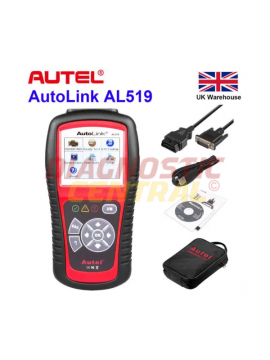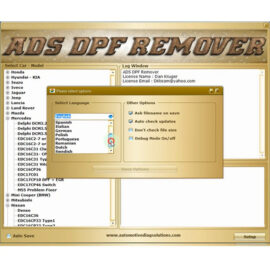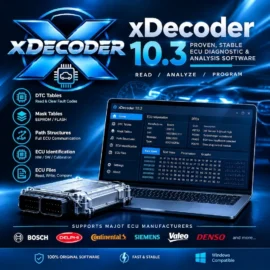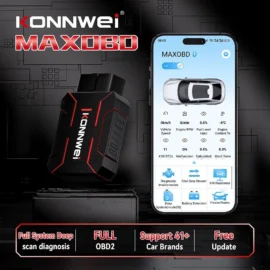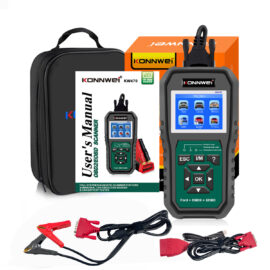

You do not need a full workshop trolley of kit to diagnose modern vehicle faults properly, but you do need more than a bargain-bin code reader. If you are looking for the best diagnostic tool for home mechanic use, the right choice comes down to what you actually work on, how deep you want to go into vehicle systems, and whether you want to save time or simply read and clear engine codes.
That matters because modern vehicles are no longer simple fault-code machines. A warning light might be caused by a sensor issue, a voltage drop, an intermittent wiring fault, a DPF problem, or a module that needs adaptation after a repair. If your tool only tells you that a code exists, you are still guessing. For a capable DIY owner or enthusiast, guessing is what wastes money.
What makes the best diagnostic tool for home mechanic jobs?
The best tool is not automatically the most expensive one. For home use, the strongest option is usually the one that gives you reliable fault reading, clear live data, decent vehicle coverage and enough service functions to support real maintenance work.
At a minimum, a worthwhile diagnostic tool should read and clear EOBD and OBD2 fault codes, show live data streams, display freeze frame information and identify the vehicle correctly. That gets you beyond basic dashboard light chasing. If you can see fuel trim, coolant temperature, lambda readings, battery voltage and sensor behaviour in real time, you are in a far better position to confirm the fault before changing parts.
Where better tools start to separate themselves is system access. Many cheap readers only cover the engine. A more useful home mechanic tool will also access ABS, airbag, transmission and body systems. That is a major difference. If your ABS light is on, an engine-only scanner is effectively useless.
The difference between a code reader and a proper scan tool
A lot of buyers use these terms as if they mean the same thing. They do not.
A code reader is usually a basic device designed to read generic emissions-related fault codes. That may be enough if all you want is a quick check engine light explanation. It is not enough if you maintain more than one vehicle, tackle your own repairs, or want workshop-style information.
A proper scan tool goes further. It reads manufacturer-specific faults, accesses multiple modules, displays more usable live data and often includes service functions. Depending on the model, that may include oil service reset, EPB retraction, battery registration, steering angle reset, injector coding or DPF-related functions.
For most enthusiasts and serious DIY owners, the best diagnostic tool for home mechanic work is almost always a scan tool rather than a simple reader. The price difference is usually justified the first time you avoid replacing the wrong part.
What home mechanics should actually prioritise
Vehicle coverage should be first. There is no point buying a feature-heavy unit if it does not communicate properly with the makes you own. If your household includes a Ford diesel, a Volkswagen Group petrol and a BMW, check that the tool handles all three sensibly. Broad compatibility sounds impressive on paper, but proper system depth matters more than a long list of badge logos.
Live data quality comes next. Plenty of tools claim live data, but the display can be too slow, too limited or too poorly labelled to be useful. You want readable parameter names, stable refresh rates and enough data points to compare values rather than stare at one sensor in isolation.
Service functions are where many home users either overspend or underspecify. If you only do basic maintenance, you may not need advanced coding. If you change rear pads on vehicles with electronic parking brakes, service the battery on stop-start cars or deal with diesel particulate filter issues, those functions become very useful very quickly.
Ease of use also matters more than some people admit. A powerful tool is not much use if the menus are vague or the software feels like an afterthought. Good diagnostics should shorten the fault-finding process, not drag it out.
Which type of tool suits which kind of user?
If you are the occasional DIY owner dealing with one family car, a mid-range handheld scanner or app-based unit with strong OBD2 coverage may be enough. It should still offer live data and basic system support, otherwise you will outgrow it fast.
If you maintain several vehicles, buy and sell cars, or carry out your own servicing and repairs, move up to a multi-system scan tool. This is the sweet spot for most home mechanics. It gives you enough depth to diagnose faults properly without paying for specialist workshop functions you may never use.
If you work on one manufacturer repeatedly, a brand-focused tool can make more sense than a broad multi-make device. Manufacturer-specific access is often deeper, with better coding, adaptations and system tests. The trade-off is obvious – excellent depth on fewer vehicles.
Tablet-style tools are popular because the screen is larger and navigation is usually easier. Handheld units can still be a strong option if you value simplicity, durability and quick startup. Neither format is automatically better. It depends on whether you want portability and speed, or more visual data and broader menu access.
Features worth paying for
Bi-directional control is one of the most useful step-up features if you are serious about fault finding. It lets you command certain components or systems during testing. That means you can activate fans, test actuators or trigger functions to confirm whether a part responds. For a home mechanic, this can save hours.
Auto VIN is another feature that sounds minor until you use a tool without it. Accurate vehicle identification reduces menu errors and helps you access the correct systems faster.
Health scans are useful too, especially on newer vehicles with multiple control modules. Instead of checking each system one by one, you can scan the lot and get a clearer picture of the fault landscape.
Software support should not be ignored. Vehicles are changing constantly, and a diagnostic tool is only as useful as its ongoing compatibility. A slightly cheaper unit with poor update support can become a false economy.
Where cheaper tools fall short
Cheap scanners tend to promise more than they deliver. The usual weak points are shallow module access, poor manufacturer coverage, clumsy software and unreliable fault descriptions. Some will read a code, but not enough supporting data to tell you why the code is there.
That is where frustration starts. A home mechanic reads a code for a misfire, replaces a coil, and finds the problem was low fuel pressure or a wiring issue. The scanner did not lie, but it did not provide enough context to diagnose properly.
This is why the best diagnostic tool for home mechanic use should be judged on diagnostic value, not just on whether it powers on and clears lights. Clearing a fault without understanding it is not diagnostics. It is postponement.
Should you buy broad coverage or specialist depth?
This depends entirely on your driveway and your habits.
If you work on multiple makes, broad multi-make coverage is the practical route. It gives flexibility and better value over time. If you are heavily invested in one marque, specialist depth is often the better buy because you gain functions a general tool may never offer.
There is no universal winner here. A home BMW enthusiast has different needs from someone maintaining a mixed fleet of family cars and vans. The right answer is the one that matches the vehicles you actually touch, not the ones you might work on once.
A sensible buying approach
Start by listing your vehicles and the jobs you already do yourself. Then think about the jobs you want to start doing. If your current limit is reading engine codes but you plan to handle brake work, battery replacement and DPF faults, buy for the next stage rather than the current one.
Be realistic about your confidence level as well. A more advanced tool is worthwhile if you are willing to use live data and learn system behaviour. If not, a simpler but well-supported unit may suit you better.
For UK buyers, it also makes sense to buy from a specialist rather than a generic marketplace seller. Proper product guidance, honest compatibility advice and access to replacement leads or accessories all matter once you start using the tool seriously. That is exactly why specialist suppliers such as Diagnostic Central have a place in this market.
The best diagnostic tool is the one that helps you get to the fault quickly, verify the repair properly and avoid changing parts on a hunch. Buy with that in mind, and you will end up with a tool that earns its keep every time a warning light appears.