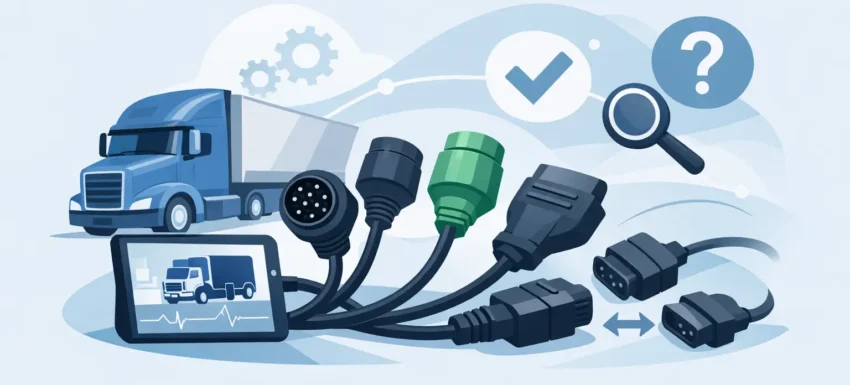
A scan tool is only as useful as the connection between the vehicle and the machine reading it. That is where lorry diagnostic adapter cables stop being an accessory and start being essential workshop kit. If you work on mixed fleets, older commercial vehicles or multiple lorry brands, the right cable saves time, avoids false starts and gets you to the fault quicker.
In practice, adapter cables solve a simple but costly problem. Commercial vehicles do not all use the same diagnostic socket, and many fleets still include older models with manufacturer-specific connections. You can have a capable scanner on the bench, but if the plug does not match the vehicle, you are not diagnosing anything. For garages, mobile technicians and commercial repairers, that delay means lost time and a job that stalls before it begins.
Why lorry diagnostic adapter cables matter
Passenger car diagnostics have become more standardised over time. Commercial vehicle diagnostics have not followed the same neat path. Depending on the make, age and system architecture, you may be dealing with OBD-style ports, round multi-pin connectors, brand-specific sockets or separate links for lorry and trailer systems.
That matters because a poor connection does more than prevent communication. It can create intermittent readings, dropped sessions or failed module access that sends you chasing the wrong issue. When you are trying to identify an ABS fault, engine management problem or electrical communication error on a working lorry, guesswork is expensive.
A proper adapter cable gives you stable communication between the tool and the vehicle ECU. It also protects the value of the diagnostic platform you already own. There is no point investing in a capable scanner if your cable setup limits which vehicles you can actually reach.
What to check before buying lorry diagnostic adapter cables
The first question is compatibility. Not all cables are universal, and that catches buyers out. Some are designed for a specific diagnostic platform, while others only suit certain makes, pin layouts or system generations. Before you buy, check both ends of the cable – the scanner-side connector and the vehicle-side connector. A cable that fits the lorry but not your scan tool is no use at all.
Vehicle coverage comes next. If your work is mainly fleet servicing, think about the makes and ages you see most often. A workshop dealing with DAF, Volvo, Scania, MAN and Mercedes commercial vehicles needs a different cable mix from a smaller operator handling occasional light commercial jobs. Buying based on likely usage is usually smarter than trying to cover every possible connector from day one.
Cable quality is another point that should not be treated as minor. Low-grade cables can look fine on the shelf and fail quickly in the workshop. Weak strain relief, poor pin fitment and thin insulation all show up once a cable is being coiled, transported and plugged in daily. Diagnostic faults caused by cable issues waste technician time and damage confidence in the scanner.
Length matters too, but it depends on how you work. A mobile technician may need extra reach to work comfortably around larger vehicles, while a fixed workshop bay might benefit from shorter cables that stay tidy and reduce strain. Longer is not automatically better if it creates clutter or more wear points.
One cable rarely covers every job
This is where expectations need to stay realistic. Many buyers want one lead that covers all lorries, all trailers and all systems. In real workshop use, that is rarely how it works. Commercial diagnostics often means carrying a small, sensible cable set rather than relying on a single universal answer.
That is not a drawback so much as a practical reality. Different manufacturers have used different connector standards over the years, and older vehicles can be especially awkward. If your customer base includes ageing fleet vehicles still earning their keep, adapter coverage becomes even more important.
The better approach is to build a cable setup around the jobs you actually see. Start with the highest-use adapters, then add specialist leads where they remove a genuine bottleneck. That keeps your spend sensible while improving workshop capability in a measurable way.
Older lorries and mixed fleets need more attention
Mixed fleets are where cable choice really pays off. A newer vehicle may communicate easily, while an older unit in the same yard needs a different adapter entirely. Without the right lead, the technician ends up trying workarounds, swapping tools or delaying the inspection.
For fleet operators and independent garages, that inconsistency is a daily problem. It is also why brand-specific and legacy connector cables remain relevant. The fleet may not be new, but the diagnostic job still needs to be done properly.
Common mistakes when buying adapter cables
One common mistake is assuming any cable with the right shape will carry the right communication. Connector appearance is only part of the story. Pin configuration, signal support and scanner compatibility all matter. A physically similar cable can still be wrong for the vehicle or tool.
Another mistake is buying the cheapest option available and expecting workshop-grade reliability. That usually ends with connection issues, broken clips or internal wire failure. On a vehicle that only comes in once, you might get away with it. On regular fleet work, cheap cables often cost more in wasted labour than they save at purchase.
There is also the problem of buying too broadly without a plan. A large cable bundle sounds attractive, but if half the leads never leave the drawer, it is poor value. Coverage should match actual demand, not just catalogue appeal.
Don’t ignore trailer diagnostics
Commercial diagnostics is not just about the unit itself. Trailer systems can introduce their own faults, especially where ABS, EBS and lighting circuits are involved. If your work includes trailer inspection and fault finding, make sure your cable setup reflects that. Missing trailer adapter coverage can leave a serious gap in what your diagnostic kit can actually do.
How the right cable improves workshop efficiency
Good diagnostics is about speed as much as accuracy. When the right cable is ready, the technician connects, communicates and starts reading data without delay. That sounds basic, but on a busy day basic things make the difference.
It also reduces unnecessary parts swapping. If a cable issue interrupts communication, the fault-finding process becomes less trustworthy. Stable access to modules, fault memory and live data means decisions are based on what the vehicle is actually reporting.
For mobile technicians, the benefit is even clearer. You do not have the luxury of returning to the bench for missing equipment. Carrying the correct adapter cables turns a roadside or on-site diagnostic visit into a productive call rather than a wasted journey.
Choosing a supplier matters as much as choosing the cable
Adapter cables are not glamorous products, but they are technical products. You need accurate compatibility information, clear descriptions and stock that is built for real use, not just attractive pricing. A specialist supplier is usually the safer route because they understand the diagnostic platforms, the connector standards and the practical differences between vehicle applications.
That is especially important if you are expanding your commercial vehicle capability and do not want to buy twice. Getting the right advice early helps you avoid mismatched leads and unsupported combinations. At Diagnostic Central, that specialist approach is exactly the point – practical diagnostic equipment backed by experience rather than generic marketplace listings.
When to upgrade your cable setup
If technicians are borrowing leads between bays, improvising connections or skipping certain jobs because coverage is too limited, your current setup is already costing you. The same applies if your scanner is capable of more vehicles than your cable set allows you to access.
Upgrading does not always mean replacing everything. Sometimes one or two high-use cables remove the biggest delays. In other cases, a fuller commercial vehicle adapter set is the right move because your workload has shifted and the kit needs to catch up.
The best buying decision is usually the one tied to real workshop demand. Look at what vehicles are coming through the door, where diagnostics are being delayed and which connectors keep causing hold-ups. That gives you a sensible path to better coverage without overspending.
Lorry diagnostics rewards preparation. The right adapter cable is not just a connector – it is the difference between a tool that sits in the case and one that earns its keep every day.