
You do not need the most expensive diagnostic tool on the market. You need the one that actually talks to your vehicle properly. If you are asking which OBD2 scanner fits my car, the right answer depends on more than the plug under the dash. Vehicle age, make, protocol support, system coverage and the depth of diagnostics all matter.
A scanner that reads a basic engine fault on one car may be almost useless on another. That is where many buyers go wrong. They assume OBD2 means universal in every sense. It does not. The connector is standard on most modern vehicles, but capability varies sharply between tools.
Which OBD2 scanner fits my car depends on three things
The first is the vehicle itself. In the UK, most petrol cars from 2001 onwards and diesel cars from 2004 onwards support EOBD or OBD2 standards, but that only guarantees a baseline level of engine emissions diagnostics. It does not guarantee full access to ABS, airbag, transmission, service reset functions or manufacturer-specific modules.
The second is what you need the tool to do. If you only want to read and clear engine fault codes and check why the engine management light is on, a basic code reader may be enough. If you are maintaining several vehicles, running a workshop, or dealing with intermittent electrical faults, you need far more than generic code reading.
The third is the level of compatibility built into the scanner. Some tools are genuinely broad in coverage, while others are aimed at a narrow group of makes. Some include software for special functions such as oil service reset, EPB, battery registration or DPF regeneration. Others stop at live data and fault code clearing.
Start with your car, not the scanner
Before comparing models, confirm the basics on your vehicle. You need the registration, make, model, engine type, fuel type and year. If the car sits around the 2001 to 2004 changeover period, be careful. Some early systems can be less straightforward, especially on imported vehicles or models built during transitional years.
If you own a Ford Fiesta from 2016, a Vauxhall Astra from 2012 and a Volkswagen Golf from 2019, your best option is often a multi-make scanner with good European coverage. If you only work on BMWs or Mercedes vehicles, a brand-focused tool can make more sense because it may access deeper functions and more modules.
That is the first trade-off. Broad coverage is useful, but specialist depth often wins on one marque. The best choice depends on whether you need one tool for many cars or a more capable tool for fewer vehicles.
Basic OBD2 readers
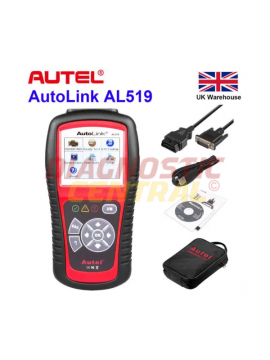
A basic reader is designed for quick checks. It will normally read generic powertrain fault codes, clear the engine warning light and show a limited stream of live data. For DIY motorists and straightforward engine faults, that can be enough.
What it will not usually do is communicate properly with body systems, perform coding, reset adaptations or give strong manufacturer-specific coverage. If your concern is an ABS warning light, airbag issue or service function, this type of tool may leave you short.
Mid-range diagnostic scanners
This is where many serious DIY users and smaller garages get the best value. A mid-range scanner usually covers more systems, offers better live data, and includes practical service functions. That means you can do more than identify a fault. You can verify repairs, reset maintenance indicators and work more efficiently.
For many users asking which OBD2 scanner fits my car best, this category is the sweet spot. It gives a proper jump in function without pushing into full workshop investment.
Professional and brand-specific tools
If you need coding, module access, advanced service routines or regular use across customer vehicles, step up to a professional tool. These scanners are built for faster diagnosis, stronger software support and wider functional coverage.
Brand-specific units are particularly useful where generic tools fall short. Vehicles from BMW, Mercedes, Volkswagen Group, Jaguar Land Rover and others often reward deeper manufacturer-level access. If your work centres on one group, a specialist setup can save time every day.
Generic OBD2 versus manufacturer-specific diagnostics
This is the part buyers often miss. Generic OBD2 covers emissions-related data. It is useful, but limited. Manufacturer-specific diagnostics go deeper into the car’s electronic systems and often reveal faults a generic scanner will not touch.
That matters because modern vehicles are packed with control units. Parking sensors, electronic handbrakes, steering angle sensors, battery monitoring systems and DPF functions all sit outside the narrow band of generic emissions diagnostics.
So if your main issue is simply an engine management light, a generic reader may do the job. If you want a tool that earns its keep on real fault-finding, service work and electronic troubleshooting, you need broader software coverage.
How to tell if a scanner will work on your vehicle
Compatibility should never be guessed. Check the supported makes, models and system functions before buying. A serious supplier should be clear about what a tool covers and where its limits are.
Pay attention to phrases such as full system diagnostics, service functions, ECU coding, or manufacturer software support. These tell you far more than the claim that a scanner is universal. Universal can mean it plugs in. It does not always mean it performs useful work once connected.
Also think about your fleet or household, not just one car. If you own multiple vehicles, choose a scanner that covers all of them at a sensible level rather than buying purely for the car on the drive today.
Choosing by use case
If you are a private owner who wants to stop guessing when a warning light appears, choose something simple, reliable and easy to navigate. You want clear fault code descriptions, live data and dependable basic coverage.
If you are a competent enthusiast maintaining your own vehicles, look for full system scans and service functions. Oil reset, EPB, battery functions and DPF support are often worth having because they turn a scanner into a proper maintenance tool.
If you run a garage or work mobile, speed matters as much as features. A slow or inconsistent scanner costs you labour time. Professional users need stable communication, broad vehicle coverage and practical functions that support repair decisions rather than just fault code reading.
If you work on vans, lorries or mixed commercial vehicles, standard passenger car scanners may not be enough. Commercial diagnostics often require different software support, protocols or adapter leads. This is another area where buying on price alone usually ends badly.
Cheap scanners can cost more than they save
There is a reason the market is full of low-cost units with vague compatibility claims. They sell on price, not performance. Some are acceptable for very basic engine code checks, but many struggle with live data quality, update support and system access.
That becomes expensive when a tool gives partial information or no communication at all. Misdiagnosis wastes parts, time and customer confidence. For workshop use especially, reliability is not a nice extra. It is the whole point.
This is where specialist suppliers matter. A diagnostics-led retailer such as Diagnostic Central is built around actual compatibility, practical product selection and tools chosen for real vehicle work, not marketplace guesswork.
A simple way to answer the question properly
Ask yourself four things. What vehicle do I have? What systems do I need to access? How often will I use the tool? Do I need broad coverage or deeper access to one make?
If the answer is one modern family car and occasional warning light checks, keep it simple. If the answer is multiple vehicles, service work, or professional fault-finding, buy for capability, not just cost. And if the vehicle is known for make-specific electronics, favour stronger manufacturer coverage.
The right scanner should make diagnosis faster, clearer and more accurate. It should reduce guesswork, not add another layer of it.
A good OBD2 scanner does not just fit the port on your car. It fits the job you need doing, the systems you need to reach and the level of certainty you expect when a fault appears. Buy with that in mind, and you will end up with a tool you actually trust when the warning lights come on.