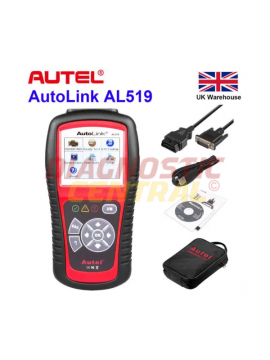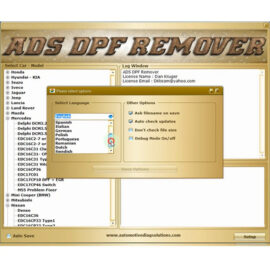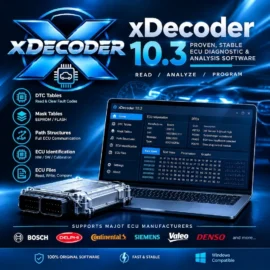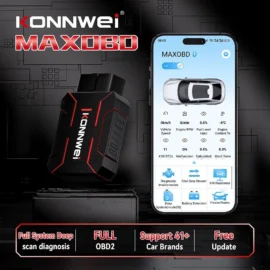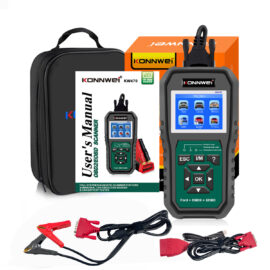

A generic scan tool can read an engine fault code in seconds. That does not mean it can talk properly to a BMW parking brake module, reset a Mercedes service function, or access brand-level live data on a VAG transmission controller. That gap is exactly where brand specific diagnostic modules earn their place.
For garages, mobile technicians and serious DIY users, the question is not whether diagnostics matter. It is whether your tool can reach the systems you actually need to test, calibrate and reset. On many modern vehicles, a basic OBD2 reader is fine for emissions-related faults. Once you move into ABS, airbag, body control, EPB, DPF functions, injector coding or service routines, you often need a tool with make-specific coverage.
What brand specific diagnostic modules actually do
Brand specific diagnostic modules are add-on software or hardware components that allow a diagnostic platform to communicate more deeply with a particular manufacturer’s systems. Instead of stopping at standardised OBD2 data, they open access to the manufacturer-specific protocols, control units and service functions that a generic reader may miss altogether.
That matters because modern vehicles are no longer built around one or two isolated ECUs. A typical car now has a network of modules covering engine management, gearbox, braking, steering, comfort systems, immobiliser, battery management and driver assistance features. A van or commercial vehicle can be even more involved. If the tool cannot enter those systems properly, fault-finding becomes guesswork.
In practical workshop terms, a brand module can mean the difference between seeing a vague communication fault and identifying the exact failed sensor, failed actuator or coding mismatch behind it. It can also mean the difference between replacing a part and actually commissioning it so the vehicle leaves fixed, not just fitted with new components.
Why generic tools hit a limit
Generic scan tools have their place. They are quick, affordable and useful for broad checks across multiple vehicles. For engine warning lights, basic code reading and simple live data, they can save time and money. Plenty of drivers and smaller workshops rely on them every day.
The problem starts when users expect universal tools to provide dealer-level depth across every make. That is rarely realistic. Manufacturers use their own system architecture, fault code definitions, coding procedures and special functions. One vehicle may allow straightforward service resets through a multi-make platform, while another may require a dedicated module or stronger make coverage to complete the same task.
This is where buyers often get caught out. A listing may say a tool covers dozens of makes, but coverage is not the same as capability. Reading codes is one level. Bi-directional testing, adaptation, coding and service functions are another.
Brand specific diagnostic modules in real workshop use
If you work on the same makes repeatedly, brand specific diagnostic modules are not a luxury. They are part of doing the job properly.
Take a Volkswagen Group vehicle with an electronic parking brake issue. A generic scanner might identify a stored fault, but a proper VAG-capable module is far more likely to support the pad retraction function, system checks and correct reset procedure after repair. The same applies to diesel regeneration commands, steering angle calibration and battery registration on many vehicles.
BMW and Mercedes are other common examples. These vehicles often need more detailed access for service functions, module scans, coding changes and brand-specific fault interpretation. On newer models, battery replacement alone may require registration to avoid charging issues and incorrect battery management behaviour.
For independent garages, that deeper access improves first-time fix rates. For mobile technicians, it cuts wasted return visits. For experienced DIY owners, it prevents that familiar situation where a part has been replaced but the warning light remains because the vehicle still needs adaptation or reset.
The difference between multi-make coverage and make-level depth
There is a difference between a diagnostic platform that supports many brands and one that genuinely works deeply within each brand. Some tools do both well, especially when paired with the right add-on modules. Others are broad but shallow.
That distinction matters when buying. If your work is mixed and you see a constant flow of Ford, Vauxhall, Peugeot, BMW and Mercedes through the week, a multi-make system with optional brand specific diagnostic modules can be a strong setup. You keep broad day-to-day usability but add depth where demand justifies it.
If you specialise in one marque, the value shifts. A dedicated module for that manufacturer can often pay for itself quickly by improving speed, accuracy and function access. You are not paying for badge appeal. You are paying for fewer dead ends in diagnosis.
Where these modules save the most time
The biggest gain is not simply more information. It is better direction.
When a tool can access manufacturer-specific live data, run actuator tests and carry out reset routines, you spend less time proving what is not wrong. That shortens the path from customer complaint to confirmed fault. In a busy garage, that matters more than any feature list.
They also reduce unnecessary parts replacement. A poor scan result often leads to assumptions – sensor first, module second, wiring eventually. Better diagnostics reverse that. You test, confirm and then fit what is needed.
There is also a customer-facing benefit. Being able to explain the exact issue, show relevant system data and complete the service function correctly builds confidence. That is particularly useful with electrical faults, intermittent warnings and post-repair commissioning where customers are already wary of repeat visits.
Choosing the right brand specific diagnostic modules
The right choice depends on your workload, not just your wish list. Start with the makes you actually see most often. Then look at the jobs that currently slow you down – DPF resets, EPB work, injector coding, battery registration, ABS bleeding, throttle relearns or transmission adaptations.
If a module supports the functions you use every week, it has obvious value. If it only adds occasional convenience, the buying decision is different. There is no point paying for deep Jaguar or Land Rover access if your workshop mainly handles Ford vans and German saloons.
Compatibility also needs a closer look than many buyers realise. Check model years, system coverage and function support rather than relying on brand names alone. A module may support one manufacturer very well up to a certain generation and more lightly after that. It depends on the platform and the vehicle electronics involved.
Ease of use matters too. A powerful system that buries key functions behind poor menus can still cost time. Good brand modules should make routine jobs faster, not turn straightforward service work into a menu hunt.
Who should invest and who can wait
Not everyone needs them on day one. If you are a home user reading the odd engine light on mixed family cars, a decent general scanner may be enough for now. If your jobs stop at basic fault reading, service interval resets and simple checks, brand-level depth may be more than you need.
But if you are already hitting the ceiling of a generic tool, that is your answer. Repeatedly finding unreadable modules, missing service functions or incomplete fault data is a sign your equipment is holding the job back.
For independent garages, the case is stronger. Labour time is expensive, workshop bays need to turn over, and modern vehicles do not reward guesswork. A targeted upgrade into brand specific diagnostic modules is often more sensible than chasing one supposedly universal tool that promises everything and delivers half of it.
That is also why specialist suppliers matter. Buying from a diagnostics-focused retailer such as Diagnostic Central gives you a far better chance of getting equipment matched to the work you actually do, rather than a generic box with inflated claims.
Brand specific diagnostic modules are about control
At the sharp end of vehicle repair, access is everything. If your scanner cannot reach the module, cannot command the test and cannot complete the reset, you are not really diagnosing – you are circling the fault.
Brand specific diagnostic modules give you more than extra menus. They give you a clearer route through increasingly complex electronics, stronger confidence in your findings and a better chance of fixing the vehicle properly the first time. If your workshop keeps seeing the same makes, or your current tool is starting to come up short, this is one upgrade that usually proves its worth on the job rather than on paper.
The best diagnostic setup is not the one with the longest specification sheet. It is the one that gets you to the fault quickly, lets you act on it correctly, and gets the vehicle back out of the bay without unfinished business.