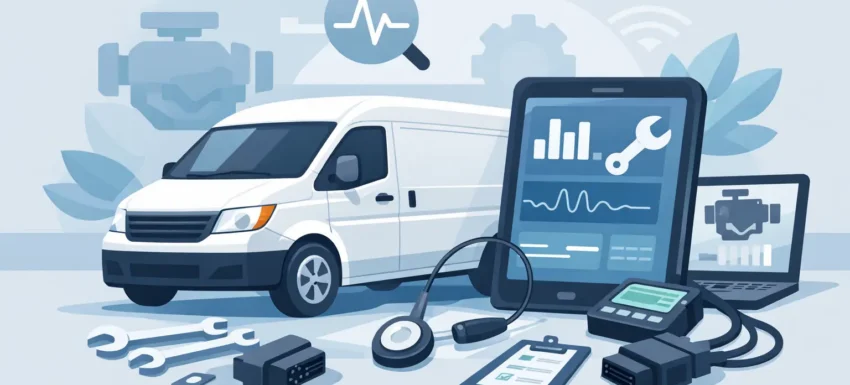
When a van is off the road, the problem is rarely just the warning light. It is missed jobs, delayed deliveries, unhappy customers and workshop time that gets eaten by guesswork. That is why choosing the best tools for van diagnostics matters – not as a nice extra, but as part of keeping commercial vehicles earning.
Vans sit in an awkward space in diagnostics. Some behave like passenger cars, some edge closer to light commercial platforms with more complex systems, and many fleets include a mix of makes, engines and model years. A cheap code reader might clear a basic engine fault on one vehicle, then tell you almost nothing useful on the next. The right tool depends on what you need to test, how often you use it, and whether you are working on your own van, a small mixed fleet or customer vehicles every day.
What makes a diagnostic tool right for vans?
A good van diagnostic tool does more than pull a generic fault code. It needs solid system coverage, stable communication and enough live data to point you towards the fault rather than sending you round in circles. On modern vans, that means access not only to engine management, but often ABS, airbag, DPF, transmission, steering angle, battery registration and service functions.
Compatibility is the first filter. Plenty of scanners claim broad vehicle coverage, but commercial vehicle support can be patchy. A tool that works well on hatchbacks may have weak support for Transit, Sprinter, Vivaro, Crafter or Ducato platforms. For garages and mobile technicians, make sure the tool is strong on the van brands you actually see in the workshop. There is no point paying for impressive-looking features if the software falls short on the vehicles that pay your bills.
The second filter is speed. In a workshop, slow boot-up, awkward menus and unreliable Bluetooth connections waste time. For a DIY owner, a simpler scanner with fewer functions may be the better buy if it gives clear answers fast. More features are not always better. More usable features are.
The best tools for van diagnostics by job
The easiest way to choose is to stop thinking in brand slogans and look at workshop jobs. Different tools solve different problems, and the best setup is often a combination rather than one magic box.
1. OBD2 code readers for quick fault checks
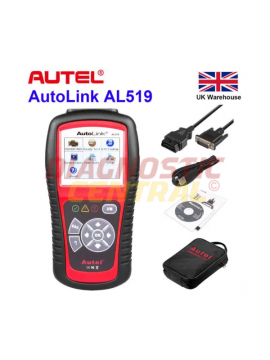
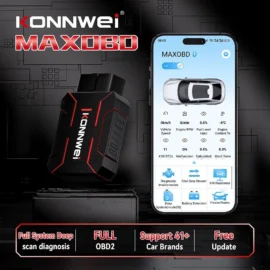
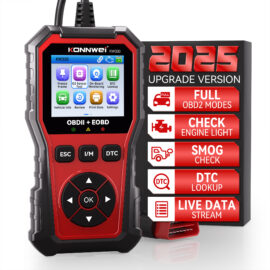
If you need a fast read on an engine management light, a straightforward OBD2 scanner still has a place. For van owners and smaller operators, this is the entry point. It lets you read and clear generic fault codes, check basic live data and see whether the issue looks urgent.
The limitation is obvious. Generic OBD2 only scratches the surface. It may help with emissions-related engine faults, but it often will not access manufacturer-specific modules or deeper system data. That makes it useful for first checks, not full diagnosis. If you maintain one older van and want something simple in the glovebox or workshop drawer, it can be enough. If you are diagnosing commercial vehicles for a living, it will not carry the workload on its own.
2. Multi-system scan tools for serious workshop use
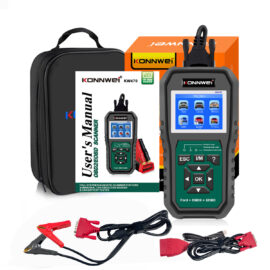
For most garages and mobile technicians, this is the real answer. A proper multi-system scan tool gives access across the vehicle, not just the engine ECU. On vans, that matters because faults often sit in related systems. A DPF issue may tie into sensor values, injector behaviour, temperature readings or failed regeneration history. An ABS fault can affect other warning lights and stability functions.
A strong multi-system tool should provide full code reading, live data streams, actuator tests and service functions. Bi-directional control is particularly useful because it lets you command components and verify operation instead of making educated guesses. That can save a lot of time on EGR, injector, fan, pump and emissions faults.
This is also where software quality starts to matter more than spec-sheet claims. Good coverage, clear menus and reliable communication are what separate specialist diagnostic equipment from cheap marketplace hardware. If you are seeing vans daily, buy for stability and usable depth, not just headline features.
3. Brand-specific diagnostic tools when depth matters most
If your business sees a high volume of one make, or you run a fleet built around a single manufacturer, a brand-specific tool can earn its keep quickly. These tools tend to offer deeper access, better coding capability and more accurate system-level functions than broad multi-make units.
That matters for advanced tasks such as injector coding, module replacement, service resets, DPF procedures and manufacturer-specific adaptations. On some vans, especially newer models with heavier electronic integration, a generic or lower-level tool may identify the fault but not give you the functions needed to finish the repair.
The trade-off is obvious. Brand-specific tools are excellent at what they cover and less useful outside that lane. For a mixed workshop, they work best alongside a strong multi-make platform rather than as the only diagnostic device.
4. Battery testers and electrical system testers
A surprising number of supposed fault-finding sessions turn out to be battery and charging issues. Vans that do frequent stop-start work, short urban runs or carry high accessory loads are particularly prone. Weak batteries, poor earths and charging faults create misleading warnings across multiple systems.
That is why battery testers belong in any realistic list of the best tools for van diagnostics. A proper tester can quickly assess battery health, cranking performance and charging output. It gives you a factual starting point before you chase phantom faults through the CAN system.
For workshops, this is basic discipline. Testing electrical health first saves time and protects credibility. For DIY owners, it can stop unnecessary parts replacement. If a van has intermittent warnings, slow starts or repeated electronic oddities, check the battery and charging system before getting carried away with modules and sensors.
5. Adapter cables for commercial vehicle coverage
Not every van presents itself neatly through a standard setup. Depending on the age, make and intended use of the vehicle, you may need the correct adapter cables to access systems properly. This is often overlooked by buyers who focus on the scan unit and forget the connection side of the job.
For technicians working across commercial vehicles, the right adapter range is not an accessory in the casual sense. It is part of the diagnostic system. Without correct connectivity, even a capable tool becomes limited very quickly. If your workload includes older vans, mixed fleets or crossover commercial applications, check adapter support before you buy.
6. Tablet-based diagnostic platforms for mobile work
Mobile technicians need a different balance. Portability, battery life, quick startup and simple updates matter nearly as much as raw depth. A tablet-based platform with strong van coverage can be ideal because it is easier to carry, easier to use at the roadside and generally faster to navigate during call-outs.
The key is not to confuse tablet format with consumer-grade performance. Some portable tools are excellent. Some are little more than dressed-up code readers with a nicer screen. If you rely on mobile diagnostics for paid work, look for proven system coverage, live data quality and dependable communication rather than flashy presentation.
7. Specialist tools for DPF, service and reset functions
Many modern vans spend their lives on short routes, stop-start schedules and urban mileage. That is bad news for emissions systems. DPF faults, forced regeneration requirements and sensor-related issues are common workshop jobs, especially on diesel vans.
A scanner with proper service and maintenance functions can be the difference between a quick fix and a return visit. Oil service resets, EPB functions, battery registration, steering angle calibration and DPF routines are not luxury extras on commercial vehicles. They are everyday requirements. If your diagnostic work regularly involves post-repair procedures, make sure the tool does not stop at fault reading.
How to choose the best tools for van diagnostics
Start with your workload, not the product advert. If you are a van owner wanting basic fault visibility, a reliable OBD2 tool and battery tester may be enough. If you run a garage or mobile operation, you usually need a multi-system scanner with proper van coverage and service functions. If you specialise in one make, add a brand-specific tool where deeper access will actually be used.
It also pays to think beyond the first sale. Software support, update quality, replacement leads, available adapters and after-sales advice all matter. Diagnostic equipment is only as useful as the support behind it. That is where buying from a specialist supplier rather than a generic box-shifter makes a real difference.
For many UK workshops, the strongest setup is layered. Use a fast code reader for first checks, a battery tester for electrical confirmation, and a proper scan tool for detailed diagnosis and service work. That approach is more practical than expecting one device to be perfect at every job.
If you want fewer dead ends and faster answers, buy diagnostic tools the same way you would buy workshop equipment – for accuracy, coverage and repeat use. The best result is not the tool with the longest feature list. It is the one that gets you to the fault, confirms the repair and gets the van back on the road without wasting half the day.