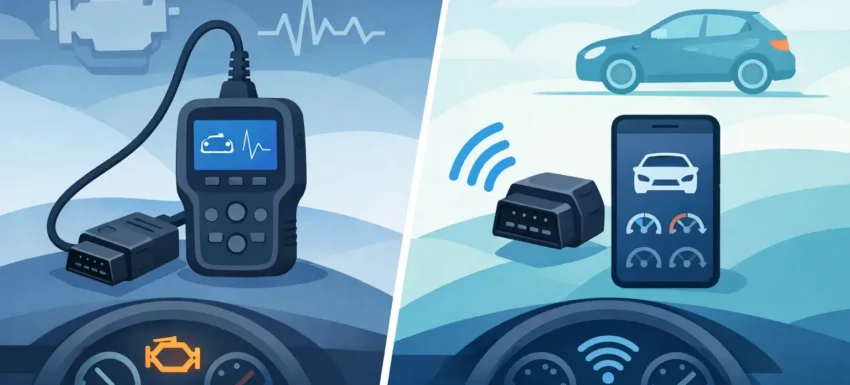
If you have ever tried to trace an intermittent engine fault while a mobile phone drops connection halfway through a live data session, you already know that the wired vs Bluetooth OBD scanner debate is not just about convenience. It is about whether the tool suits the way you actually diagnose vehicles. For some users, Bluetooth is perfectly adequate. For others, especially in a busy workshop, a wired unit is still the better bet.
The right choice depends on what you need from the scanner day to day. Reading and clearing a fault code on your own car is one job. Running repeat diagnostics across multiple vehicles, checking live parameters, carrying out service functions or dealing with awkward communication issues is another. The connection method affects speed, reliability, compatibility and how much confidence you can place in the result.
Wired vs Bluetooth OBD scanner – what really changes?
At a basic level, both types connect to the vehicle through the OBD port and both can access standard emissions-related fault codes on compatible vehicles. That is where the similarity ends. The practical difference comes from how the data is handled and what hardware sits behind the connection.
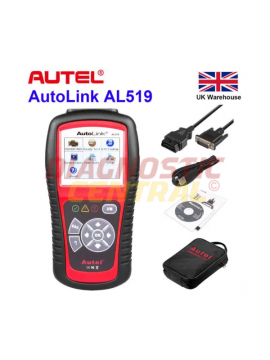
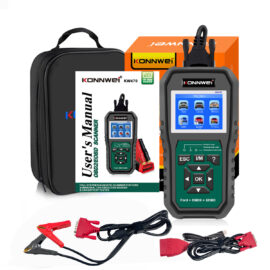
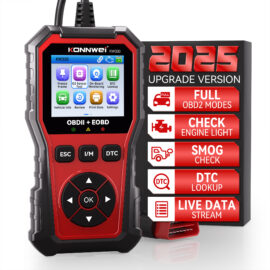
A wired scanner is usually a dedicated handheld unit with its own screen, controls and software. It is built to do one job properly. In most cases, that means stable communication, straightforward menus and fewer moving parts to interfere with the process.
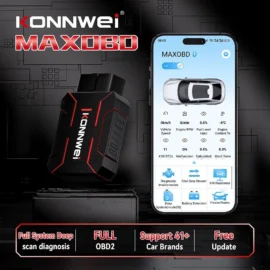
A Bluetooth OBD scanner usually relies on a dongle plugged into the vehicle and an app on a mobile phone or tablet. This makes it compact and low cost, and for many motorists that is the attraction. You can keep one in the glovebox, pair it when needed and read basic faults in minutes.
That sounds simple, but the real-world experience varies widely. The quality of the dongle matters. The quality of the app matters. The mobile phone operating system matters. Even background tasks on the device can affect performance. With a dedicated wired scanner, there are fewer variables.
Why many workshops still prefer wired scanners
In a professional setting, speed and repeatability matter more than novelty. A technician does not want to waste time pairing devices, dealing with app updates or wondering whether a cheap interface is reporting clean data. A wired unit is normally faster to grab, connect and use.
Stability is a major reason. During live data reading, actuator tests or longer diagnostic sessions, a wired connection is less likely to drop out. That does not mean Bluetooth always fails, but a physical connection is simply more dependable under pressure. When the vehicle is in the bay and the customer is waiting, dependable wins.
Wired scanners also tend to be stronger on broader functions. Many are designed for more than generic OBD2 code reading. Depending on the model, you may get service reset functions, battery registration, EPB functions, DPF support, ABS and airbag access, oil light resets and make-specific coverage. That matters for garages and serious DIY users who need more than a basic code reader.
There is also a durability factor. Workshop tools get knocked about. A handheld scanner built for automotive use usually stands up better than relying on a personal mobile phone balanced on the bonnet latch while connected to a budget dongle.
Where Bluetooth OBD scanners make sense
Bluetooth scanners have a clear place, and dismissing them outright would be poor advice. If your main aim is basic fault finding, checking engine warning lights or monitoring a few live data readings on your own vehicle, a decent Bluetooth unit can be a practical and cost-effective option.
For competent DIY users, the convenience is hard to ignore. The hardware is small, setup is often quick and many apps present information in a user-friendly way. If you want to check why the engine management light has come on before booking a repair, Bluetooth can do the job without much fuss.
They also suit occasional use. If the scanner is only coming out once every couple of months, some buyers would rather spend less and accept a few limitations. That is reasonable, provided expectations are realistic. A compact Bluetooth reader is not a substitute for a serious diagnostic platform just because both plug into the same port.
For mobile technicians, Bluetooth can also be handy as a secondary tool. It is easy to carry and useful for a quick first look before bringing out a more advanced unit.
Performance, speed and reliability
This is the point most buyers care about once the novelty wears off. Can it connect quickly, stay connected and return useful information without wasting time?
Wired scanners usually have the edge here. They are designed as integrated tools, so communication tends to be more consistent. Menu navigation is built around diagnostics rather than a general-purpose mobile phone interface. That often makes them quicker in practice, even if the Bluetooth option looks more modern at first glance.
Bluetooth performance depends heavily on the quality of the adapter and app. A good setup can be perfectly usable. A poor one can be frustrating. Common complaints include pairing issues, delayed live data refresh, app crashes and random disconnects. None of these are acceptable when you are trying to verify a fault under load or compare sensor behaviour in real time.
If you only ever read stored codes, that may not matter much. If you need stable communication while diagnosing an intermittent fault, it matters a great deal.
Compatibility is not as simple as many sellers claim
One of the biggest traps in the market is the vague promise that a scanner works on “most cars”. That wording hides a lot. Basic OBD2 compatibility is not the same as deep vehicle coverage, and buyers often find this out after the tool arrives.
With wired scanners, especially dedicated multi-system units, compatibility is usually better defined. You are more likely to see clearer coverage by make, model, system and function. That gives the buyer a more realistic idea of what the tool can actually do.
Bluetooth adapters often rely on generic protocols and app-level interpretation. That can be fine for standard engine codes, but it may fall short if you need access to manufacturer-specific modules or special functions. Not every car responds the same way, and not every app handles the data well.
This matters even more with newer vehicles, vans and mixed fleets. If you work across different makes or need dependable support for regular workshop jobs, check vehicle coverage first and treat broad marketing claims with caution.
Cost versus value
Bluetooth usually wins on entry price. That is why so many buyers start there. For basic use, the value can be good. Spend modestly, get fault code access, clear warning lights where appropriate and view some live data. No issue with that.
But low cost is not the same as low overall spend. If the first adapter proves unreliable, lacks compatibility or leaves you needing a second tool within months, the cheap option stops being cheap. That is especially true in trade use, where time lost on poor equipment costs more than the tool itself.
A wired scanner often costs more upfront, but it tends to offer better long-term value if diagnostics are a regular part of your work. Faster operation, stronger coverage and fewer connection issues pay for themselves quickly in a garage environment.
Which type suits your work?
For casual motorists, the answer is often simple. If you want to check the reason behind an engine warning light, monitor a few readings and avoid unnecessary guesswork, a good Bluetooth scanner may be enough.
For serious enthusiasts and home mechanics, the decision sits in the middle. If you only work on one or two vehicles and mostly need standard OBD functions, Bluetooth can still make sense. If you service your own cars regularly, deal with multiple systems or want a tool that behaves more like workshop equipment, wired is usually the stronger investment.
For garages, mobile mechanics and anyone diagnosing vehicles for paying customers, wired remains the safer choice. Reliability matters. Coverage matters. Speed matters. A diagnostic tool should remove uncertainty, not add another layer of it.
The better question than wired vs Bluetooth OBD scanner
The better question is not which connection type sounds better on paper. It is what level of diagnostic confidence you need. If you need quick convenience for occasional checks, Bluetooth has its place. If you need consistent communication, broader function support and a tool that is ready for real workshop use, wired still leads.
That is why the wired vs Bluetooth OBD scanner choice should be made around the job, not the trend. A scanner is only useful when it delivers accurate information quickly enough to help you act on it. Choose the one that gives you that confidence every time you plug in.