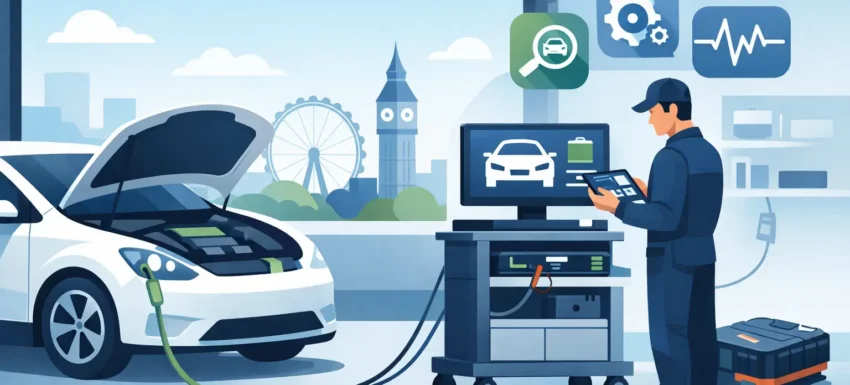
A warning light on an EV is rarely just a warning light. It may relate to the high-voltage battery, charging system, thermal management, insulation monitoring, a communication fault or a conventional 12V issue affecting multiple control units. That is why EV diagnostics equipment trends are moving well beyond basic code reading. UK garages need tools that identify the fault quickly, show live data clearly and support safe, methodical repair decisions.
For workshops, the opportunity is clear. More electric and plug-in hybrid vehicles are coming through the door, and owners expect the same fast answers they receive for petrol and diesel faults. The risk is equally clear: using an incomplete scan tool, guessing at high-voltage faults or overlooking a weak 12V battery can turn a straightforward job into lost time and repeat visits.
EV diagnostics equipment trends changing workshop work
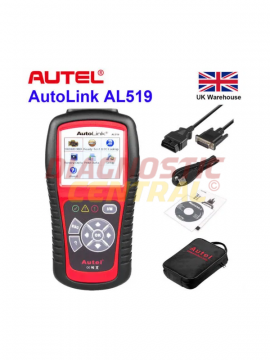
The biggest shift is from generic fault-code retrieval towards system-level diagnosis. An entry-level OBD2 reader can still be useful for checking standard emissions-related codes and basic vehicle information. It is not, however, a replacement for a capable multi-system diagnostic scanner on a modern EV.
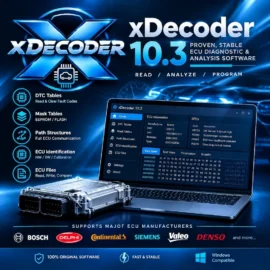
Electric vehicles use a network of modules to manage battery condition, inverter operation, charging, braking regeneration, climate control and driver assistance systems. A useful diagnostic platform needs to access these modules, read manufacturer-specific codes, display live parameters and, where supported, perform active tests and service functions. Coverage matters as much as the number of functions listed on the box. A tool that claims EV capability but cannot communicate properly with the makes arriving at your workshop will not earn its place on the trolley.
Battery data is becoming the key diagnostic evidence
The traction battery is the component customers ask about most, but its state of health cannot be judged from dashboard range alone. Diagnostic equipment is increasingly expected to show battery pack voltage, individual cell or block voltage where the vehicle permits it, temperature readings, state of charge, state of health and charge-discharge behaviour.
These values give a technician evidence to work from. A voltage imbalance between battery blocks, for example, points in a different direction from a charging fault, a cooling issue or a software-related limitation. The best approach is to view stored codes alongside freeze-frame data and live readings, then compare them against the vehicle’s operating conditions.
There is a trade-off. More battery information does not automatically mean a diagnosis is complete. Manufacturers expose different data through their diagnostic systems, and some battery concerns require guided test procedures or specialist repair information. A quality scanner helps narrow the fault accurately; it does not remove the need for electrical knowledge or safe workshop process.
High-voltage safety tools are no longer optional extras
Diagnostics on an EV begin with proving the vehicle is safe to assess. This is driving demand for properly specified insulated tools, high-voltage warning equipment, lockout devices, CAT-rated multimeters and voltage testers suitable for the task. A conventional meter of uncertain quality is not the place to cut costs when working near a high-voltage system.
Technicians need to follow the vehicle manufacturer’s isolation procedure, secure the system against reconnection and prove dead before work begins. The exact process varies by vehicle, which is why repair information and training remain essential alongside the hardware. Equipment supports safe practice; it cannot substitute for it.
Insulation resistance testing is also becoming more relevant when investigating high-voltage faults. Leakage to chassis, damaged cables, moisture ingress and component breakdown can trigger warnings that are not resolved by clearing codes. This type of work calls for the correct test equipment and a clear understanding of when it is safe and appropriate to use it. Testing the wrong circuit in the wrong way can damage expensive electronics.
Software coverage now matters as much as the scanner
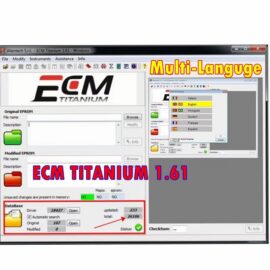
A diagnostic tool is only as current as its vehicle coverage and software. EV platforms change quickly, and model-year differences can affect communication, service functions and data availability. For a busy garage, regular updates are not a luxury. They protect the value of the original purchase and reduce the chance of turning work away because a recently registered vehicle is unsupported.
Bi-directional control is another capability gaining importance. Reading a code tells you what a control unit has detected. Commanding a component, where the system allows it, can help confirm whether a cooling pump, fan, actuator or charging-related function responds as expected. This can reduce unnecessary parts replacement, particularly where a code identifies a circuit problem rather than a failed component.
Remote software updates add another complication. A customer may arrive after an update with altered vehicle behaviour, warning messages or a function that needs recalibration. The diagnostic process must separate a genuine hardware fault from a software, adaptation or configuration issue. Workshops do not need to chase every dealer-level function, but they do need a tool strategy that matches the jobs they intend to take on.
The 12V battery still causes plenty of EV faults
Electric vehicles still rely on a conventional 12V battery to wake up control modules, close contactors and operate low-voltage systems. When it is weak, the symptoms can be dramatic: no-start conditions, multiple warning messages, charging problems and apparent communication failures.
A professional battery tester remains one of the quickest ways to avoid wasted diagnostic time. It should assess battery condition, voltage and starting or charging performance as appropriate, rather than merely report a surface voltage. On vehicles with battery monitoring systems, correct battery replacement and registration procedures may also be required.
This is a practical example of why a balanced equipment setup works best. High-voltage capability gets the attention, but basic electrical testing still solves a significant share of real-world faults.
Calibration and connectivity are joining the diagnostic workflow
EVs are commonly packed with advanced driver assistance systems. A repair involving wheel alignment, steering components, suspension work, windscreens or cameras may require ADAS calibration. The diagnostic tool must be able to communicate with the relevant modules and confirm whether calibrations have completed successfully.
This does not mean every independent garage needs a full calibration bay immediately. It depends on the vehicle mix, available space and whether ADAS work is carried out in-house or referred out. But it does mean diagnostic equipment should be chosen with the wider repair process in mind. A scan tool that can identify calibration requirements and clear post-repair faults gives the workshop better control of the job.
Connectivity is changing too. Newer vehicles may use security gateways that limit access without approved authentication, while some diagnostics increasingly depend on cloud-based software and subscription services. Buyers should look beyond the headline price and check update arrangements, ongoing costs, supported makes and the level of access available. Cheap hardware can become expensive if it cannot carry out the functions your customers actually need.
Building an EV-ready diagnostic setup
For most independent garages, the sensible route is to build capability in stages rather than buy every specialist item at once. Start with a reliable multi-make diagnostic scanner offering strong EV and hybrid coverage, live data, service functions and regular updates. Pair it with a dependable battery tester and quality electrical test equipment.
As EV work grows, add high-voltage safety equipment, insulated hand tools and specialist testing capability that fits the services you are qualified to provide. Mobile technicians may prioritise portable scanners, compact testers and durable adapter leads. A workshop servicing fleets or electric vans may need broader commercial coverage, more manufacturer-specific functions and equipment that can cope with repeatable inspection processes.
Compatibility should be checked before purchase, not after the vehicle is on the ramp. Consider the makes you see most often, the age range of those vehicles, whether plug-in hybrids form a large part of the workload and the service functions you use every day. Also account for adapters. A missing cable or incorrect connector can stop an otherwise capable diagnostic system from doing its job.
Diagnostic Central supplies equipment for practical fault-finding, from everyday OBD2 scanning and battery testing through to specialist cables and workshop diagnostic accessories. The right choice is not necessarily the most expensive unit. It is the one that gives your business accurate access, useful data and dependable support for the vehicles you genuinely repair.
The strongest EV diagnostic process remains straightforward: verify the complaint, check the low-voltage supply, scan every relevant module, study live data, test safely and repair only when the evidence supports it. As vehicle electronics become more complex, that disciplined approach will keep your workshop faster, safer and far more profitable.