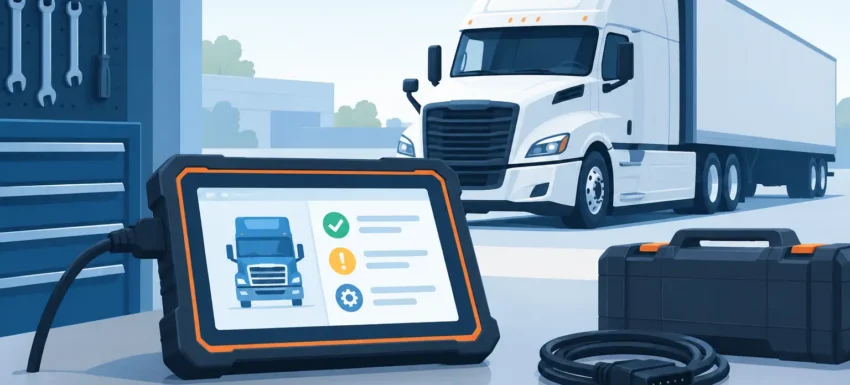
A warning lamp on a working van or lorry is not just an inconvenience. It can mean missed deliveries, a failed roadside inspection or a vehicle occupying a bay while the workshop guesses at the cause. This commercial vehicle diagnostics buyers guide explains what to look for before buying equipment, whether you maintain a small mixed fleet or diagnose heavy vehicles every day.
Quick answer
- Buy for the vehicles and systems you actually service, not the longest generic feature list.
- Confirm coverage for the exact make, model, year, engine and communication protocol before ordering.
- Live data, actuator tests and guided service functions are usually more valuable than basic fault-code reading.
- Budget separately for the correct heavy-duty, trailer and manufacturer-specific adapter leads.
- Check update arrangements, language support and whether advanced functions are supported on the vehicles you see.
Start with the job the tool must do
Commercial diagnostics covers a much wider range of work than reading an engine code. A courier fleet may need quick checks on Euro 6 vans, battery and charging-system testing, DPF data and service-light resets. A commercial workshop dealing with lorries may need access to engine, transmission, braking, suspension, body-control and aftertreatment systems across several manufacturers.
The first question is therefore not, “What is the best scanner?” It is, “What failures are costing us time?” If most jobs involve engine-management warning lights, a capable multi-make tool with full-system scans and live readings may be appropriate. If you regularly deal with EBS faults, trailer communications or air-brake issues, you need equipment and cables designed for those systems rather than a passenger-car reader with a large screen.
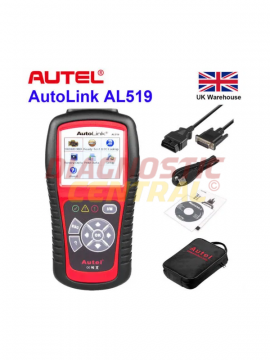
A basic OBD2 scanner can read standard emissions-related codes where the vehicle supports OBD. That is useful as a first check, particularly on light commercial vehicles. It will not necessarily access manufacturer modules, display meaningful live data, carry out service routines or communicate through the diagnostic connector used on heavier vehicles.
Choose coverage before features
Coverage claims need careful reading. “Commercial vehicle compatible” can mean very different things: it may cover selected vans, provide basic engine-code access only, or offer deeper module coverage on certain lorry makes. Always check the tool’s vehicle list against the exact vehicles in your workshop, including model year and engine variant.
For a mixed fleet, make a simple list of the ten to twenty vehicles you work on most. Include the registration, make, model, year, fuel type and any known specialist requirements. This prevents an expensive mistake where a tool handles the newest vans but not the older vehicles that still make up much of the workload.
Also consider the systems you need to interrogate. Common priorities include:
- Engine management and emissions aftertreatment
- ABS, EBS and electronic stability systems
- Automatic transmission and clutch adaptation
- Air suspension and levelling functions
- Body electronics, lighting and central locking
- Instrument cluster, tachograph-related faults and service indicators
- Trailer EBS and lighting diagnostics
Not every function is available on every vehicle, even with professional equipment. Manufacturer software design, vehicle specification, security restrictions and the installed control unit all affect what can be read, tested or programmed.
Live data turns codes into diagnosis
A fault code tells you where the control unit detected a problem. It does not automatically identify the failed part. For commercial vehicles, where replacing components on guesswork quickly becomes expensive, live data is one of the strongest reasons to move beyond a code reader.
Look for a tool that can display and record parameters such as boost pressure, commanded and actual rail pressure, exhaust temperatures, differential pressure, NOx values, AdBlue system readings, battery voltage and wheel-speed signals. The useful part is comparing requested values with actual values under the right operating conditions.
For example, a DPF-related code could be caused by a genuine soot loading issue, an implausible pressure sensor signal, a temperature sensor fault, unsuitable driving conditions or an underlying engine problem that is increasing soot production. Live readings help a technician establish which direction to investigate. They do not replace mechanical checks, wiring tests or an understanding of the system.
Graphing is particularly useful for intermittent faults. A fluctuating supply voltage, dropping wheel-speed signal or erratic sensor reading may be difficult to spot in a static data list. If your work involves regular roadside or mobile diagnosis, choose a unit with a clear display that remains usable in poor light and a practical way to save reports for the customer or workshop record.
Service functions are valuable, but not a substitute for repair
Commercial tools often advertise DPF regeneration, injector coding, battery registration, steering-angle calibration, brake bleeding, service resets and component adaptations. These features can save significant labour when they are correctly supported and used after the underlying repair.
The important qualification is that service functions are not universal and are not shortcuts. A forced DPF regeneration should only be considered once the cause of excessive soot loading has been assessed, fault conditions have been addressed and the correct safety procedures are in place. High exhaust temperatures create a genuine fire risk, especially in unsuitable workshop conditions.
Similarly, coding an injector or resetting an adaptation value does not repair damaged wiring, poor fuel quality or a mechanical fault. Buy equipment with the functions you need, but assess it as part of a diagnostic process rather than a machine that fixes faults at the press of a button.
Heavy-duty cables and trailer support matter
One of the most common purchasing errors is focusing on the diagnostic tablet or hand-held unit and overlooking the adapter kit. Commercial vehicles use a range of connectors and protocols. Depending on the vehicle, you may require 6-pin, 9-pin, 16-pin or manufacturer-specific leads, and the correct cable can be the difference between communicating with a vehicle and losing time at the start of the job.
J1939 is widely used across heavy-duty applications, while older vehicles may use other communication standards. A good commercial package should state which protocols and connectors are included, rather than relying on a vague claim of broad coverage. Check lead quality too. Workshop cables are handled, pulled and exposed to oil, moisture and vibration, so replaceable leads are a practical advantage.
Trailer diagnostics deserves its own consideration. A lorry unit can be fault-free while the trailer has an EBS, ABS, lighting or supply problem. Where trailer work is part of your operation, choose an appropriate trailer test solution or diagnostic interface and ensure it matches the systems you need to test. Do not assume the vehicle’s standard diagnostic port will provide full trailer access.
Consider updates, subscriptions and security access
Vehicle software changes quickly. A tool that is effective now may need regular updates to support newer models, additional systems and revised diagnostic routines. Before purchasing, establish what updates are included, how long they last, what renewal costs apply and whether essential functions remain available if a subscription lapses.
Security gateways are another practical issue. Many newer vehicles restrict access to certain functions to protect vehicle systems. A scanner may still read codes and live data but require an approved account, online connection or additional authorisation for advanced operations. This is not necessarily a limitation of the tool. It is often a vehicle-manufacturer requirement.
Workshop connectivity also matters. If you work in a rural area, roadside location or a building with poor signal, check which functions need internet access and which remain available offline. A wired connection can be more dependable in a busy workshop, while Bluetooth equipment offers convenience for road tests. The right choice depends on how and where you diagnose.
Match the equipment to the operator
The most capable diagnostic platform is not automatically the most productive. A busy workshop may benefit from a professional multi-make system with guided tests, broad commercial coverage and report printing. A mobile technician might prioritise quick start-up, durable hardware, wireless operation and reliable vehicle identification. A competent owner maintaining a small fleet may only need accurate code reading, live data and a battery tester.
Training should be part of the buying decision. Technicians need to understand fault-code status, freeze-frame information, wiring diagrams and test conditions. When a reading looks wrong, confirm power supplies, grounds, connector condition and circuit integrity before condemning a costly control unit. Diagnostic equipment supplies evidence. The technician still makes the diagnosis.
For workshops building a practical setup, Diagnostic Central stocks commercial diagnostic equipment, heavy-duty adapter cables and workshop test tools suited to different levels of work. The sensible choice depends on the vehicles, functions and level of technical access required, not simply the purchase price.
Frequently asked questions
Can a standard car OBD2 scanner diagnose a lorry?
Usually only to a limited extent, if at all. Some light commercial vehicles use standard OBD2 access for emissions-related data, but heavier lorries commonly require dedicated protocols, software and adapter leads for meaningful system coverage.
Do I need a subscription for commercial diagnostics?
It depends on the tool. Some include limited or lifetime updates, while others use annual update plans or subscriptions. Confirm both the initial entitlement and ongoing cost before buying, especially if you work on newer vehicles.
Can diagnostics equipment perform a DPF regeneration?
Some professional tools can request a regeneration where the vehicle supports it. The vehicle must first be assessed for active faults, soot loading, oil condition and safe operating conditions. A regeneration is not appropriate for every DPF-related fault.
Which adapter cables should a commercial workshop buy?
Start with the connectors used by your regular vehicles, then add leads for older fleet vehicles and specialist work. For lorry and trailer operations, check the exact diagnostic sockets and protocols rather than buying a generic cable bundle blindly.
Is live data more useful than fault codes?
For accurate diagnosis, often yes. Codes identify the circuit or system that needs investigation; live data helps show what the vehicle is seeing at the time. The best workflow uses both, alongside physical and electrical testing.
Before you commit, send Diagnostic Central the vehicle registration or VIN, the systems you need to access and the functions you expect to carry out. That short check can help you choose equipment that earns its place in the workshop instead of becoming another scanner that only reads a warning lamp.