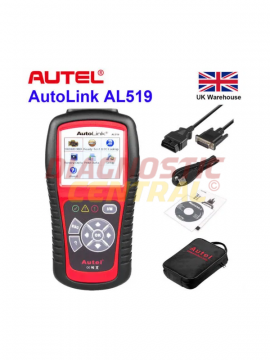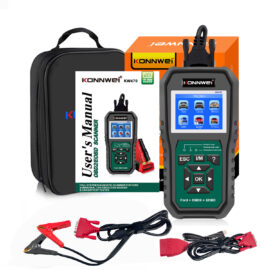

You plug in a scanner, pull a list of fault codes, and suddenly the job looks far bigger than expected. ABS warning, gearbox communication fault, steering angle issue, stop-start unavailable. Before replacing sensors or chasing wiring, ask the right question first: can a weak battery cause faults? Very often, yes. Low system voltage is one of the most common reasons vehicles throw up misleading warnings and inconsistent electronic behaviour.
Modern vehicles are heavily dependent on stable voltage. Control units, sensors, relays and networks are designed to operate within a fairly tight range. Once battery voltage drops too far, modules can begin to behave unpredictably. That does not always mean the battery is the only problem, but it does mean you should not trust every fault code at face value until power supply has been checked properly.
Why a weak battery can cause faults
A vehicle battery does far more than crank the engine. It supports the entire electrical system during start-up, stabilises voltage, and helps modules stay awake or shut down correctly. When the battery is weak, those systems are forced to operate on unstable voltage. That is where false or secondary faults begin.
During cranking, voltage can dip sharply. If it drops below what certain modules need, they may reset, lose communication or store undervoltage-related fault codes. Some systems are more sensitive than others. ABS, airbag, body control, steering and transmission modules are frequent offenders because they rely on clean, reliable voltage and consistent communication over the vehicle network.
This is why one weak battery can make a healthy vehicle appear to have multiple faults. The issue is not that every module has failed. It is that the battery has dragged the whole system into unstable operating conditions.
Can a weak battery cause faults in every system?
Not every fault is caused by a battery, and this is where decent diagnostics matter. A weak battery can trigger fault codes in multiple systems, but it will not magically create a failed wheel speed sensor, a broken wire or an internally damaged ECU. What it can do is muddy the picture.
For example, if a car logs low-voltage communication faults across several modules after a slow start on a cold morning, the battery is an obvious suspect. If it has a single repeat fault on one sensor with a clear wiring or signal issue, that is less likely to be battery-related. Pattern matters.
Intermittent electrical complaints are especially worth treating with caution. Flickering dashboard lights, random warning messages, modules dropping offline, stop-start errors and no-crank events often point to voltage supply problems before anything else. On the other hand, a hard fault that returns immediately after clearing, with battery condition confirmed as good, usually needs a deeper circuit or component-level check.
Common symptoms of battery-related faults
In workshop terms, battery trouble rarely arrives politely. It tends to show up as a cluster of symptoms that do not quite fit together at first glance. The vehicle may crank slowly, struggle after standing overnight, or need a jump start. At the same time, you may see warning lights for systems that are not actually defective.
One day it might be traction control and ABS. Another day it could be gearbox limp mode, parking brake warnings or keyless entry problems. Some vehicles disable comfort functions and energy-hungry features once battery health drops. Others become difficult to scan properly because modules do not stay online.
These are the classic signs that the battery should be tested before parts are ordered. Guesswork here is expensive. It wastes time, delays repairs and can leave the original issue untouched.
Fault codes caused by low voltage are often secondary
A scanner is only as useful as the person interpreting the results. If the battery is weak, fault memory can fill with secondary codes that are symptoms rather than root causes. That is why professionals always look at the whole picture, not just the code description.
Undervoltage codes, lost communication entries and module reset faults should ring alarm bells. Freeze-frame data is useful here because it shows the conditions when the code set. If battery voltage was low at the time, there is a strong chance the stored fault is linked to supply rather than component failure.
That is also why clearing codes too early can be a mistake. Test battery condition first, charge or replace it if needed, then rescan after the power supply is stable. Only then do you know which faults are genuine and which ones were collateral damage.
How to check if the battery is the real cause
A proper battery check is not just a quick glance at resting voltage. A battery can show acceptable voltage and still fail under load. For reliable diagnosis, you need to assess condition, charge state and cranking performance.
Start with the basics. Check battery terminals for looseness, corrosion and poor earth connections. A sound battery cannot perform properly through bad connections. Then test resting voltage, but do not stop there. Cranking voltage is often more revealing because that is when weak batteries expose themselves.
If you have a dedicated battery tester, use it. It will give a clearer picture of state of health, cold cranking performance and internal condition. If the alternator is suspected, charging voltage should also be checked with the engine running. A weak battery and a charging fault can exist together, and if you miss one, the problem will come straight back.
For garages and serious DIY users, this is where proper equipment saves time. A decent diagnostic routine usually starts with battery and charging system checks before deeper fault tracing begins. That approach is faster, cleaner and far more accurate than replacing parts based on assumptions.
Why modern vehicles are more sensitive than older ones
Older vehicles could sometimes tolerate a tired battery with little more than sluggish starting. Modern cars and vans are far less forgiving. They carry more control units, more network traffic and more demand from energy management systems. Features such as stop-start, electric steering, electronic parking brakes, heated screens and advanced driver assistance all increase voltage sensitivity.
Manufacturers now build battery monitoring directly into many systems. If the battery drops below expected performance, the vehicle may disable non-essential functions to protect starting ability. That can look like a fault to the driver, but it is often the vehicle managing low electrical reserve.
Battery registration also matters on many newer vehicles. Fit the wrong type, or fail to register a replacement where required, and charging behaviour may be incorrect. That can shorten battery life and create repeat electrical complaints. So yes, can a weak battery cause faults? On a modern vehicle, absolutely – and often faster than most owners expect.
When it is not just the battery
It is worth being precise here. A weak battery can cause faults, but it is not always the root cause of the weak battery itself. Repeated flat battery complaints may point to a parasitic drain, poor alternator output, failed glow plug system, short journeys, a defective IBS sensor, or a module that is not going to sleep.
This is where experience counts. Replacing the battery might restore normal operation temporarily, but if the charging system is underperforming or the vehicle has an excessive current draw, the same symptoms will return. Good diagnostics means fixing the cause, not just the consequence.
That is also why fault-finding should follow a sequence. Confirm battery condition, verify charging voltage, inspect connections, assess current draw if needed, then rescan and road test. Skip those steps and you risk turning a straightforward voltage issue into an unnecessarily expensive repair.
The practical takeaway for technicians and owners
If a vehicle presents with multiple unrelated fault codes, strange electrical behaviour or intermittent warnings, the battery should be one of the first checks, not an afterthought. That applies whether you run a workshop, work mobile, or maintain your own car at home. Stable voltage is the foundation of accurate diagnostics.
The best results come from combining a capable scan tool with proper battery testing. One tells you what the modules are reporting. The other tells you whether the electrical supply can be trusted. Without both, you are only seeing half the job.
At Diagnostic Central, that is exactly why battery testers and diagnostic tools sit side by side in a serious fault-finding setup. They solve different parts of the same problem. If the voltage is wrong, the data can mislead you.
Before chasing sensors, modules and wiring faults, make sure the vehicle has the electrical strength to report correctly. A weak battery can create a surprising amount of noise in the system, and the quickest repair often starts with the simplest test.