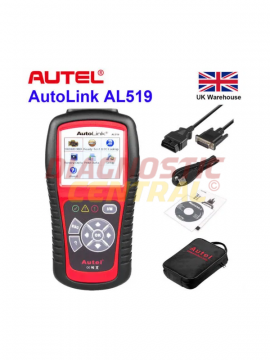
You plug in a scanner, read the fault, tap clear, and the warning light disappears. That is the moment many drivers ask: can OBD2 scanners clear codes, or have they only hidden the symptom for a few miles? The short answer is yes, many OBD2 scanners can clear codes. The more useful answer is that clearing a code and fixing a fault are two very different jobs.
For garages, mobile technicians, and competent DIY owners, this matters because a scanner is not just a code reader. It is part of the decision-making process. Used properly, it helps confirm a repair, reset stored data, and get a vehicle back into service with confidence. Used badly, it can waste time, mask an active issue, and send you back to the same car with the same warning light.
Can OBD2 scanners clear codes on every vehicle?
Most OBD2 scanners can clear generic emissions-related diagnostic trouble codes on vehicles that support the OBD2 standard. That includes a large range of petrol cars sold in the UK from 2001 onwards and diesel cars from 2004 onwards. If the scanner communicates correctly with the engine management system, it will usually have an erase or clear function alongside the read codes option.
That said, not every scanner clears every code on every system. A basic entry-level tool may only clear generic powertrain faults. A more advanced unit can access manufacturer-specific systems such as ABS, airbag, transmission, service intervals, battery registration, DPF functions, and steering angle calibration. If the fault sits outside standard engine emissions diagnostics, your scanner needs the right software coverage and vehicle compatibility.
This is where buyers often get caught out. They assume any scanner that reads codes can reset all warning lights. It cannot. If you are dealing with modern vehicles, multiple control modules, or mixed workshop jobs, the tool specification matters as much as the vehicle fault itself.
What clearing a code actually does
When you clear a fault code, the scanner sends a command to erase stored diagnostic trouble codes from the relevant control unit. In many cases, it also switches off the associated warning light if the ECU no longer sees the fault as active.
That does not mean the underlying problem has gone away. If the defect is still present, the control unit will detect it again during the next self-test cycle and the code will return. Sometimes that happens immediately. Sometimes it takes a short drive, a cold start, or a specific operating condition.
Clearing codes can also wipe freeze frame data and readiness monitors. Freeze frame data records the conditions under which a fault was set, such as engine load, coolant temperature, or RPM. Readiness monitors show whether the vehicle has completed its self-checks for emissions systems. This is useful diagnostic information, and once erased, it is gone until the fault or test cycle happens again.
That is why experienced technicians read, record, and interpret before they clear anything.
When it makes sense to clear codes
There are proper workshop reasons to erase codes. After a confirmed repair, clearing codes allows you to see whether the fault returns. If you have replaced an oxygen sensor, repaired a wiring issue, or fixed an air leak, a clean memory helps verify the result.
It can also be useful after intermittent faults, particularly where historical codes remain stored long after the problem has been resolved. In those cases, clearing the record and road-testing the vehicle gives a more accurate picture of current system health.
For DIY owners, clearing a code can be sensible if you have diagnosed the issue properly and completed the repair. It can save a return trip just to wait for the ECU to switch the light off by itself. The key point is that the repair comes first. The scanner confirms the outcome.
On some vehicles, clearing codes is part of the service process after maintenance work. But again, that depends on the system. Service lights, oil resets, EPB retractions, injector coding, or battery adaptation often require dedicated service functions rather than a simple erase command.
When clearing codes is a mistake
If you clear a code before checking live data, stored data, and the fault pattern, you may make the job harder. A code on its own rarely tells the full story. A lean running fault could be caused by an intake leak, fuel delivery issue, MAF sensor reading, or exhaust leak. Erase it too early and you lose clues.
It is also a mistake to clear codes just to get rid of a dashboard light before sale, handover, or inspection. If the issue is active, the light will usually return. Worse still, some systems will not complete readiness checks straight away after a clear, which can create problems where emissions status matters.
For workshops, repeatedly clearing codes without fixing the root cause does not save time. It adds comebacks. For private owners, it can delay a proper repair and allow a small issue to become an expensive one.
What types of codes can be cleared?
The answer depends on the scanner and the vehicle. Generic OBD2 code readers usually handle powertrain codes related to emissions, often shown as P-codes. More capable scan tools can clear manufacturer-specific codes and communicate with additional modules.
In practical terms, an advanced scanner may clear faults from the engine, gearbox, ABS, SRS, body control, climate control, and other systems. A basic scanner may not even see those modules, let alone erase stored faults from them.
There is another layer to this. Some faults are hard faults. If the component failure or circuit issue is active, the code may clear only briefly or not at all. Some systems will refuse to reset until conditions are met, such as correct voltage, completed repair, or a successful recalibration.
So yes, OBD2 scanners can clear codes, but the real-world answer is always tied to tool level, vehicle coverage, and whether the system is seeing an active defect.
Why the engine light comes back after clearing
This is one of the most common frustrations, and usually the explanation is simple. The control unit has run its checks again and found the same issue. The code comes back because the cause is still there.
A split vacuum hose, weak battery voltage, damaged sensor wiring, blocked DPF, or failed NOx sensor will not be fixed by pressing erase. The scanner can only clear the ECU memory. It cannot repair hardware, wiring, contamination, or mechanical wear.
There are also cases where one fault triggers another. You clear the obvious code, then a related one appears after the next drive cycle. That does not mean the scanner is wrong. It often means the first stored code was part of a bigger fault chain.
Choosing the right scanner if you need code clearing
If your only goal is to read and erase basic engine fault codes on a family car, a straightforward OBD2 code reader may be enough. If you run a workshop, work across multiple makes, or deal with vans and more complex systems, you need broader coverage and better data.
Look at three things before buying. First, check vehicle compatibility by make, model, and system coverage. Second, confirm whether the tool handles only generic OBD2 or also manufacturer-specific modules. Third, consider whether you need service and reset functions beyond simple code clearing.
This is where specialist suppliers matter. A scanner should not just connect. It should give reliable communication, accurate fault reporting, and the right functions for the work in front of you. That is far more valuable than buying a cheap unit that reads one code and leaves you guessing.
A better way to use the clear function
The most effective workflow is straightforward. Read all stored and pending codes first. Check freeze frame data. Look at live data where relevant. Carry out the repair or test the suspected fault. Then clear the codes and road-test the vehicle to confirm the result.
That approach works whether you are diagnosing a daily driver on the drive or processing multiple vehicles through a busy garage. It protects diagnostic information, cuts repeat faults, and gives a much clearer answer than clearing first and hoping for the best.
For buyers comparing tools, this is the real benchmark. The question is not only can OBD2 scanners clear codes. It is whether the scanner gives you enough information to know when you should clear them, and when you should not.
Diagnostic tools are at their best when they reduce guesswork. Clearing a code has its place, but only after the scanner has done the more important job of showing you what the vehicle is trying to say. Get that part right, and the clear button becomes useful instead of misleading.