A warning light comes on, the scanner returns P0300, and the temptation is to order ignition parts immediately. That is precisely where a fault code lookup chart earns its place. It gives the code a name and a system area, but it does not hand you a finished diagnosis. Used properly, it cuts down guesswork. Used carelessly, it can lead to expensive parts-swapping and the original fault still sitting in the vehicle.
For garages, mobile technicians and capable DIY owners, the objective is straightforward: read the code accurately, understand what the ECU has detected, then test the cause before fitting anything. Modern vehicles have too many linked sensors, modules and control strategies for a code description alone to be treated as proof of a failed component.
What a fault code lookup chart actually tells you
A fault code, also known as a diagnostic trouble code or DTC, is the vehicle control unit’s record of an electrical, mechanical or performance condition outside its expected operating range. A lookup chart translates that reference into plain language. For example, P0300 is generally recorded as random or multiple-cylinder misfire detected. P0420 usually points to catalyst system efficiency below threshold on bank 1.
Those descriptions are useful starting points, not repair instructions. P0420 does not automatically mean the catalytic converter has failed. Exhaust leaks, an ageing oxygen sensor, an engine misfire, poor fuelling or oil consumption can all create conditions that make the catalyst appear inefficient. Likewise, P0300 does not identify a particular spark plug, coil, injector or cylinder without further evidence.
Most EOBD and OBD2 codes begin with a letter that identifies the main system. P covers powertrain faults, B covers body systems, C covers chassis systems and U covers network or communication faults. The number immediately after the letter also matters. A 0 commonly identifies a generic code with a standardised meaning, while a 1 often indicates a manufacturer-specific code. The remaining digits narrow down the subsystem and fault type.
This is why a generic online chart has limits. It can be excellent for a standard powertrain code, but a manufacturer-specific B, C or U code may need make-level data and a scanner capable of accessing the relevant module. A basic reader may see engine codes while missing the ABS, airbag, gearbox, parking brake or body-control information that explains the real complaint.
How to use a fault code lookup chart in the workshop
Start by recording every stored code before clearing anything. Note whether each code is current, pending, permanent or historic, and identify which module reported it. A vehicle with a communication code in several modules requires a different approach from one module reporting an isolated sensor circuit fault.
Read the fault data, not just the code description
Freeze-frame data is often the difference between a sensible repair and a guess. It captures conditions present when the ECU decided the fault met its reporting criteria, such as engine speed, coolant temperature, vehicle speed, load and fuel-trim values. A misfire appearing only at high load is unlikely to be diagnosed properly by leaving the engine idling on the ramp.
Live data should then support or challenge the chart description. With P0171, a lean mixture code, check short- and long-term fuel trims, airflow readings, intake leaks, fuel pressure where available, and oxygen sensor response. High positive fuel trims at idle that improve at higher revs can suggest unmetered air. Trims that remain high throughout the range may point more towards fuel delivery or air-measurement issues. The answer depends on the vehicle and the evidence.
Check the basics before chasing advanced faults
Low battery voltage creates misleading symptoms across modern electrical systems. Before pursuing multiple U-codes, non-start faults or strange warning messages, assess battery condition, charging voltage, terminal security and primary earth connections. A weak battery or poor ground can upset several control units at once.
Then inspect the likely physical causes. Look for damaged wiring near hot exhaust sections, water ingress in connectors, rubbed-through looms, split intake hoses, corroded pins and poor previous repairs. A chart may identify a circuit, but a visual inspection and a proper voltage-drop test identify whether the circuit can actually operate under load.
Clear codes only after evidence has been captured
Clearing codes too early removes freeze-frame information and may temporarily hide an intermittent fault. Once you have recorded the findings and completed relevant checks, clear the code and carry out a suitable road test or functional test. Re-scan afterwards. If the code returns under the same conditions, your repair path has stronger support. If it does not, do not declare victory until the vehicle has completed enough drive cycles for its monitors to run.
Permanent emissions-related codes deserve particular care. They are not always cleared manually. The vehicle normally needs to confirm that the repair has been successful through its own monitoring routines.
Why code definitions can send repairs in the wrong direction
The most common diagnostic mistake is treating the named component as the failed component. A code such as P0118, engine coolant temperature sensor circuit high input, can be caused by an open circuit, connector corrosion, a wiring fault, poor terminal tension, a reference-voltage issue or a failed sensor. Fitting a sensor first may fix it, but it is not a test method.
The same applies to circuit codes. “Signal implausible”, “range/performance” and “intermittent” each describe different behaviour. A circuit high code may indicate a disconnected plug or broken wire. A performance code may mean the sensor is electrically alive but reporting a value that does not fit the ECU’s expected model. The diagnostic checks should reflect that distinction.
Code order also matters. One fault can create several secondary codes. An intake air leak can generate mixture, misfire and catalyst-efficiency faults. A failed wheel-speed sensor can trigger ABS, traction-control and tyre-pressure warnings. Deal with the fault most likely to be the root cause, then confirm which remaining codes are genuine.
Choosing the right scanner for the lookup chart
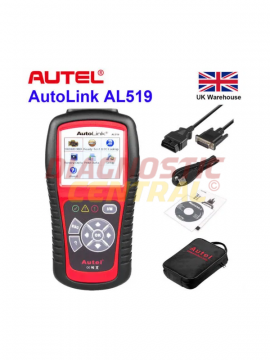
A chart is only as useful as the data supplied by the scan tool. For basic engine warning lights on many petrol and diesel cars, an OBD2 reader can provide generic codes, live engine data and readiness status. That is a practical starting point for a competent owner checking an emissions fault.
Professional work requires more coverage. A multi-system diagnostic tool that can read manufacturer-specific codes, access multiple modules, display live data, perform actuator tests and support service functions gives a garage far more diagnostic control. Commercial vehicles, trailers and specialist applications may also require the correct adapter lead and protocol coverage. Compatibility should be checked against the make, model, year and system before purchase, not assumed from the shape of the diagnostic socket.
Diagnostic Central focuses on this difference because a cheap code reader that only displays a number can waste more workshop time than it saves. The right tool should return clear descriptions, module identification and usable data, rather than simply delete a dashboard light.
When a code chart is not enough
Move beyond the lookup chart when the fault concerns safety systems, network communication, immobiliser functions, high-voltage components or complex transmission behaviour. These systems can require wiring diagrams, manufacturer procedures, oscilloscope testing, programming capability or specialist training. Airbag and hybrid-system faults should never be approached with trial-and-error repairs.
The same rule applies when a code returns after apparently correct repairs. At that point, re-check the original evidence, verify the fitted part, test power and ground under load, and consider whether a software update, mechanical timing issue or control-module fault is being overlooked. Repeatedly clearing the code is not diagnosis.
A fault code is the vehicle’s first clue, not its final verdict. Read it, capture the conditions around it, test the system logically and prove the repair before handing the keys back. That approach protects parts margins, workshop time and customer confidence.