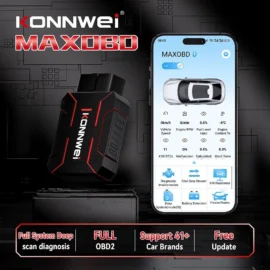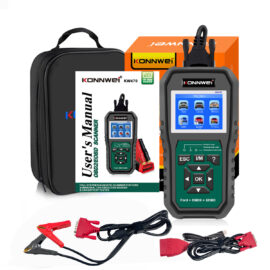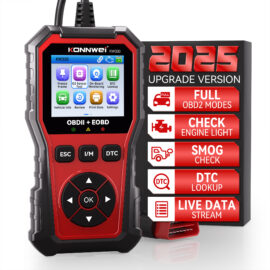
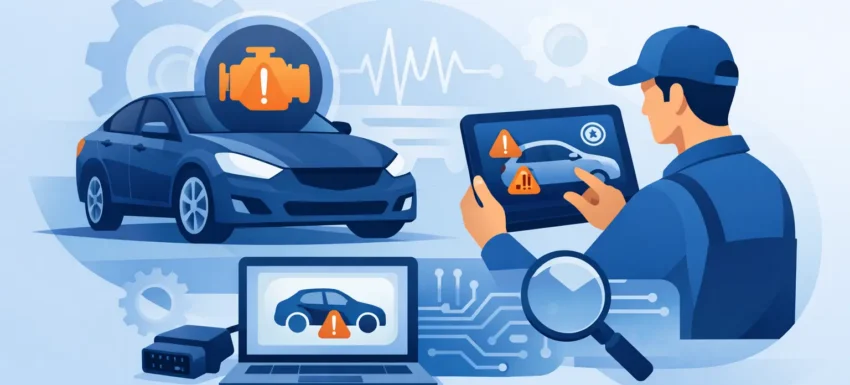
The warning light comes on, the engine still runs, and now you have a decision to make. Ignore it and hope for the best, or plug in a scanner and find out what the vehicle is trying to tell you. A proper car fault code guide helps you do the second job properly, because a code on its own is only the start of the diagnosis.
That matters more than ever. Modern vehicles log faults across engine, emissions, ABS, airbag, transmission and body systems, but they do not always spell out the failed part. A code points you towards a circuit, sensor range, performance issue or communication problem. Good diagnosis comes from reading the code, checking live data, and confirming the fault before any parts are fitted.
What a car fault code guide should actually tell you
A useful guide does more than list code definitions. It explains what the code type means, how urgent it is, and what checks make sense before money is spent. That is the difference between diagnosing a vehicle and guessing at it.
Most workshop and consumer scanners read OBD2 powertrain fault codes, usually those beginning with P. These are the standard emissions-related codes found across many makes. For example, a P0301 misfire code tells you cylinder 1 is misfiring. It does not tell you whether the root cause is an ignition coil, spark plug, injector, compression issue, vacuum leak or wiring fault.
That is why experienced technicians treat code descriptions as a direction, not a verdict. If the tool can also read manufacturer-specific systems, service functions and live parameters, your chances of a first-time fix improve sharply.
Understanding the structure of fault codes
Every fault code follows a pattern. Once you know how to read that pattern, you can judge what sort of problem you are dealing with before you even lift the bonnet.
The first letter identifies the system. P stands for powertrain, B for body, C for chassis and U for network communication. Powertrain faults are the ones most commonly picked up by basic code readers, while body, chassis and network faults often require a more capable diagnostic tool.
The first number after the letter matters as well. A 0 usually indicates a generic code used across manufacturers. A 1 often points to a manufacturer-specific code. That distinction is important, because generic definitions can be broad, while manufacturer-specific faults often need make-level coverage to interpret correctly.
The remaining digits narrow down the subsystem and exact issue. Even then, context matters. Two vehicles can log the same code for very different reasons depending on mileage, service history, previous repairs and the way the vehicle is being driven.
Generic versus manufacturer-specific codes
Generic codes are useful because they create a common starting point. A P0420 catalytic converter efficiency code means roughly the same thing whether you are working on a Ford, Vauxhall or BMW. But the testing path can vary. One vehicle may have a tired catalyst, another may have a lazy oxygen sensor, and another may be running rich because of an upstream fuelling fault.
Manufacturer-specific codes take you deeper, but only if your scanner supports them properly. This is where lower-grade readers often fall short. They may pull the code but give a vague description, or miss related modules entirely. For professional workshops and serious DIY users, coverage matters just as much as code reading.
Common fault codes and what they often mean
Some codes appear repeatedly in everyday workshop use. Misfire codes such as P0300 to P0304 are common and often linked to ignition or fuelling, but mechanical faults should never be ruled out. Oxygen sensor and air-fuel mixture faults such as P0130, P0171 or P0172 can point to sensor issues, intake leaks, fuel pressure problems or exhaust leaks affecting readings.
EGR and DPF-related codes are common on diesel vehicles, especially those used for short runs. In those cases, the code may reflect a blocked system, but it can also be the result of failed sensors, pressure pipe issues or regeneration problems. Replacing parts without checking soot load, pressure readings and temperature data is an expensive way to get nowhere.
ABS and airbag codes are another area where assumptions cause wasted time. A wheel speed sensor code may be a failed sensor, but it may just as easily be a damaged reluctor ring, corroded wiring or poor connector contact. Airbag faults can be even more sensitive. Low battery voltage, disturbed seat wiring or historic faults from prior repairs can all be involved.
How to use a car fault code guide properly
The right process is straightforward, but it needs discipline. First, confirm the customer complaint or vehicle symptom. Then perform a full system scan, not just an engine scan, if your equipment allows it. Modern faults often overlap systems, and communication issues in one module can trigger warnings elsewhere.
Next, record all codes before clearing anything. Note whether each fault is current, pending or historic. Freeze-frame data is especially useful on engine faults because it shows the conditions under which the code was logged, such as engine speed, load, coolant temperature and fuel trim.
After that, check live data. This is where the code starts to become a diagnosis. If a vehicle logs a lean mixture fault, look at short-term and long-term fuel trims. If it logs a coolant sensor fault, compare reported temperature to actual cold-start conditions. If it logs a boost fault, compare requested and actual pressure.
Only then should you move to physical checks. Inspect connectors, wiring, hoses, fuses, earths and obvious mechanical issues. Codes caused by voltage drop or poor connections are common, and replacing sensors before checking basics is still one of the most expensive mistakes in vehicle diagnostics.
When not to clear codes straight away
Clearing codes too early wipes useful evidence. If the warning light returns immediately, you may still have enough to work with, but intermittent faults are different. Once that information is gone, reproducing the exact conditions can take far longer.
There are times when clearing codes is appropriate, such as after a repair confirmation or when checking whether a fault is historic only. But it should be a controlled step, not the first thing you do after plugging in the tool.
Why fault codes do not always point to the failed part
This is where many owners and some inexperienced technicians get caught out. A fault code usually reports what the control unit has seen, not what has definitely failed. If the ECU reports low boost pressure, that does not automatically mean the turbocharger is faulty. The cause might be a split hose, sticking actuator, leaking intercooler, vacuum issue, boost control solenoid fault or inaccurate sensor reading.
The same applies to sensor codes. A code naming a sensor can be caused by the sensor itself, but also by wiring resistance, poor power supply, poor earth, contamination, mechanical conditions outside the expected range or software logic reacting to another fault upstream.
That is why quality diagnostic equipment matters. A basic code reader may tell you what system is unhappy. A stronger platform helps you prove why.
Choosing the right scan tool for fault code work
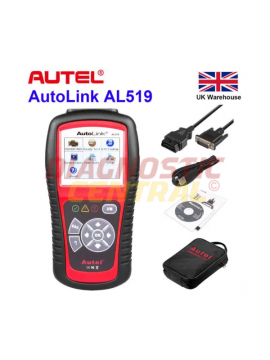
For occasional checks, a simple OBD2 reader may be enough to read and clear generic engine codes. But if you work on multiple makes, need service resets, or diagnose beyond the engine ECU, that level of tool becomes restrictive very quickly.
A better diagnostic setup gives you broader vehicle coverage, access to more modules, live data graphs, actuator tests and in some cases coding or special functions. For garage use, speed and compatibility are not optional extras. They are what keep jobs moving and reduce repeat visits.
For competent DIY users, the best choice depends on how deep you intend to go. If you want to understand warning lights properly rather than just switch them off, buy for coverage and data access, not just for the cheapest entry price. Diagnostic Central focuses on exactly that gap between vague code reading and proper fault finding.
A practical mindset beats a parts cannon
A car fault code guide is most useful when it changes how you think. Read the code, yes, but then question it. Ask what conditions triggered it, what supporting data says, and what simple checks can confirm or rule out the likely causes.
That approach saves time, protects parts budgets and leads to cleaner repairs. It also helps when the answer is not immediate. Some faults are obvious, others are intermittent, temperature-related or buried in network communication problems. In those cases, patience and accurate equipment matter more than guesswork.
When a vehicle throws a code, treat it as a clue from the control unit, not a shopping list. The better your process, the faster the diagnosis becomes, and the less likely you are to replace a good part chasing the wrong fault.