
The scan tool says P0171, the customer says it was “running fine yesterday”, and the engine management light is still staring back at you. This is where common fault codes explained properly makes a difference. A fault code is not a repair instruction. It is a clue, and if you treat it like a finished diagnosis, you can waste time, fit parts the vehicle did not need, and still leave the original problem in place.
Modern vehicles are packed with control units, sensors and communication networks. That has made fault finding faster in one sense, but it has also made lazy diagnosis more expensive. The right scanner gets you to the starting point quickly. What matters next is understanding what the code is actually telling you, what system it belongs to, and what checks should come before any parts are ordered.
What fault codes actually mean
A diagnostic trouble code, usually called a DTC, is generated when a control module sees a value, signal or operating condition outside its expected range. On most passenger vehicles, the first character tells you the general area of the fault. P is powertrain, B is body, C is chassis and U is network communication.
The next digits matter as well. Generic OBD2 codes are standard across manufacturers, while manufacturer-specific codes can vary by make and model. That is why a basic code reader may show the headline fault, but a more capable diagnostic tool often gives far better detail, live data and access to brand-specific systems.
This is the part many drivers miss. A code does not always mean the named component has failed. If you see an oxygen sensor code, the sensor may be working perfectly and reporting a fuelling fault caused by an air leak, low fuel pressure or an exhaust leak. The sensor is the messenger. Replacing the messenger does not fix the message.
Common fault codes explained by system
Some codes turn up again and again in workshops because they relate to common wear points, contamination, voltage issues or emissions systems that operate under tight tolerances. Below are the ones many garages and competent DIY users see most often.
P0171 and P0174 – System too lean
These codes mean the engine is running lean, so there is too much air or not enough fuel in the mixture. P0171 usually refers to bank 1, while P0174 points to bank 2 on engines with two banks.
Possible causes include split intake hoses, leaking vacuum lines, a contaminated mass air flow sensor, weak fuel pressure, injector issues or even an exhaust leak ahead of the oxygen sensor. On some vehicles, a simple air leak after the MAF sensor is enough to trigger the code.
The trade-off here is straightforward. You can clear the code and see if it returns, but that tells you very little on its own. A proper check of fuel trims, live MAF readings and smoke testing the intake system will usually get you to the answer much faster.
P0300 to P0306 – Misfire codes
P0300 is a random or multiple misfire code. P0301, P0302 and so on identify the cylinder involved. These are among the most common fault codes because misfires can be caused by ignition, fuel, air, compression or timing issues.
Spark plugs, coil packs and injector faults are obvious suspects, but they are not the full story. Low compression, valve problems, timing chain stretch and wiring faults can all produce the same code family. On some engines, carbon build-up causes enough imbalance to trigger intermittent misfires without a single failed component.
This is where live data and pattern failure knowledge matter. If one cylinder is consistently misfiring under load, swap testing ignition components may help. If multiple cylinders are involved, look wider at fuel pressure, air leaks or timing correlation before you start replacing parts.
P0420 and P0430 – Catalyst efficiency below threshold
These codes point to catalytic converter efficiency on bank 1 or bank 2. Many people read them as “the catalytic converter has failed”. Sometimes it has. Often, the job is not that simple.
A worn catalyst can certainly trigger the code, but so can long-term misfires, oil burning, coolant contamination, lazy oxygen sensors and exhaust leaks. If the underlying fuelling problem is not fixed, a replacement catalyst may fail early and the code will return.
On a proper diagnosis, compare upstream and downstream oxygen sensor behaviour, check for stored misfire or fuelling codes, and inspect the exhaust system for leaks. Catalyst codes are expensive if guessed at.
P0101 to P0104 – Mass air flow sensor faults
These codes relate to MAF sensor circuit range, performance or signal issues. The sensor may be dirty, the wiring may be damaged, or the airflow reading may simply not match what the ECU expects based on throttle position, engine speed and load.
Air filter issues, intake leaks and contamination from oil vapour can all upset MAF readings. On some vehicles, fitting poor-quality aftermarket sensors creates more problems than it solves. If the readings are unstable or clearly implausible, check power supply, earth, wiring integrity and intake condition before condemning the sensor.
P0113 and coolant or intake temperature sensor codes
Temperature-related codes are common because sensors work in harsh environments and wiring can suffer with age, heat and moisture. P0113 usually refers to high input from the intake air temperature circuit.
A disconnected sensor, corrosion in the connector, wiring damage or a failed sensor can all cause it. The real value of this code is context. If the intake temperature is reading absurdly low or high in live data compared with actual workshop conditions, that gives you a quick direction. If the reading is only slightly out, the fault may be intermittent.
P0401 and EGR-related codes
EGR faults are familiar territory on modern diesel and many petrol engines. P0401 generally means insufficient EGR flow. Carbon build-up, sticking valves, failed actuators, vacuum control problems or blocked passages are all common causes.
Diesels used mainly for short trips are especially prone to this kind of issue. The fault code may look simple, but the fix depends on the system design. Some EGR valves can be cleaned and tested. Others are best replaced once sticking or electrical failure is confirmed.
U-codes – Communication faults
Network faults are increasingly common as more modules share data across CAN systems. A U-code may indicate that one control unit has lost communication with another, either briefly or permanently.
Battery voltage is a major factor here. Weak batteries, poor earths and unstable charging systems can generate communication codes that look alarming but are secondary rather than primary faults. Water ingress, damaged wiring and module failure are also possible, but always check system voltage first. It is one of the fastest wins in vehicle diagnostics and one of the most overlooked.
Why fault code readers give different results
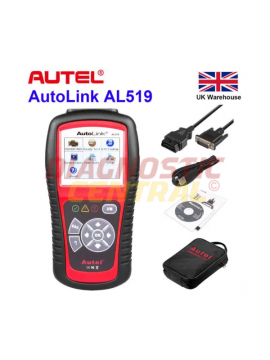
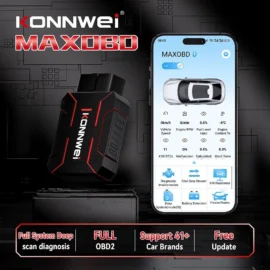
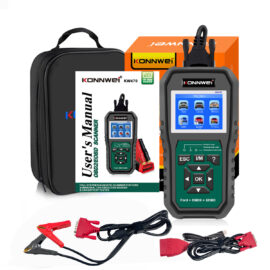
Not all diagnostic tools are equal. A basic handheld reader is useful for generic powertrain codes and clearing warning lights after repair. That is often enough for straightforward engine faults on many vehicles. It is not enough if you need access to ABS, airbag, service functions, battery registration, DPF data or manufacturer-specific modules.
For workshop use, speed and coverage matter. A tool that can read live data properly, display freeze-frame information and access multiple systems saves time on every job. For DIY users, ease of use matters just as much, but the same principle applies: better data leads to better decisions.
Diagnostic Central focuses on tools that do the practical work, not just the marketing. That matters when the difference between a quick fix and a comeback often comes down to what your scanner can actually see.
Common fault codes explained – and what to check first
Before you clear any code or replace any component, start with the basics. Confirm the complaint. Check battery condition and charging voltage. Read all modules, not just the engine ECU if your tool allows it. Look at freeze-frame data to see when the fault occurred. Then move to live data and physical inspection.
A surprising number of faults come back to connectors, wiring, vacuum leaks, poor grounds and low voltage. Those checks are not glamorous, but they are often where the real answer is. If the code points to a sensor, ask whether the sensor is faulty or whether it is reporting a problem elsewhere in the system.
This is also where experience helps. The same code on two different vehicles may lead you down two different routes. A lean code on one engine may mean a split breather hose. On another, it may be low fuel pressure under load. The code is the same. The failure pattern is not.
When to clear codes and when not to
Clearing codes has its place, but timing matters. If you clear them before recording data, you may wipe the exact evidence needed to diagnose the fault properly. Freeze-frame values, pending codes and historical patterns can all help narrow the job down.
After repair, clearing codes and confirming the fix through a road test is standard practice. Clearing a light just to make it disappear is not. If the underlying issue remains, the vehicle will usually tell you soon enough.
Good diagnostics is about precision, not guesswork. The code gets you in the right area, but the proper repair comes from reading the data, checking the system and understanding how the fault developed. That approach saves time in the workshop, saves money on parts and gives you a result you can trust.