
When the ABS lamp stays on, guessing is expensive. Proper abs warning light diagnosis tells you whether you are dealing with a dirty wheel speed sensor, a wiring fault, a weak battery voltage issue or a genuine hydraulic control problem that needs attention before the vehicle goes back on the road.
For garages and capable DIY owners, the key point is simple: the ABS light is not a parts-changing prompt. It is a fault indication from a system that relies on clean sensor signals, stable voltage and accurate communication between modules. Treat it like any other electronic fault. Read the data first, confirm the cause second, then repair what has actually failed.
What the ABS warning light is really telling you
ABS stands for Anti-lock Braking System. Its job is to prevent wheel lock under heavy braking by monitoring wheel speed and adjusting brake pressure when needed. When the warning light appears, the vehicle will usually still have normal braking, but the anti-lock function may be disabled. On some vehicles, traction control and stability control functions may also be affected because they share the same wheel speed and control data.
That matters in workshop terms because one light can point to more than one lost feature. A customer may report only the ABS lamp, but the root issue can also interfere with hill hold, traction control, cruise control or gearbox behaviour, depending on the platform. That is why abs warning light diagnosis should start with a full system view, not a narrow look at one sensor.
ABS warning light diagnosis starts with the right checks
The fastest route is not always the cheapest route if it sends you in the wrong direction. A structured approach saves time.
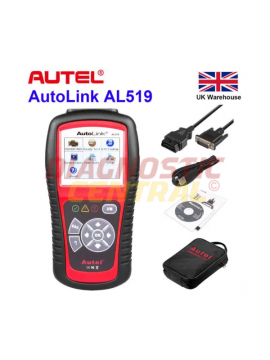
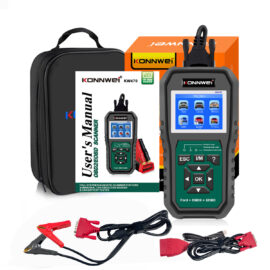
Start with a scan tool that can access the ABS module properly, not just basic engine fault codes. Generic OBD readers often fall short here. They may talk to the engine ECU but not the brake control unit, which leaves you blind to stored fault codes, live wheel speed data and actuator test functions. For modern vehicles, proper module-level coverage is what separates diagnosis from guesswork.
Once connected, record all fault codes before clearing anything. Look for current and historic faults, then compare them with live data. If the module reports an intermittent front left wheel speed signal and live readings show that wheel dropping out at low speed, you already have a direction. If multiple communication or voltage-related codes appear across systems, the issue may be power supply related rather than a failed sensor.
Common causes behind an ABS light
Wheel speed sensor faults are still one of the most common reasons for an ABS lamp, but that phrase covers several different failures. The sensor itself may have failed internally, the tone ring may be cracked or corroded, the sensor tip may be contaminated with debris, or the wiring may have damage where it flexes near the suspension.
Reluctor ring faults are often missed. On older systems, a corroded or split ring can distort the signal and trigger intermittent ABS faults, especially at low road speeds. On bearing-integrated systems, the magnetic encoder built into the wheel bearing can also fail or be damaged during installation. Replacing a good sensor will not fix a bad encoder ring.
Wiring faults are just as common in real workshop conditions. Moisture ingress, chafing, stretched harnesses and poor previous repairs can all create signal loss. This is especially true on vehicles that see winter road salt, rough use or repeated brake and suspension work.
Low system voltage can also trigger ABS warnings. A weak battery, charging fault or poor ground can produce odd behaviour across electronic modules. If the ABS light arrives with multiple unrelated warning lamps, check battery condition and charging performance before condemning the ABS unit.
Then there is the ABS pump or control module itself. These units do fail, but not as often as people assume. Internal module faults, pump motor issues and valve circuit errors do happen, particularly on ageing vehicles, but they should be confirmed with code data, power and ground checks, and where possible, actuator testing.
How to read the symptoms properly
A constant ABS light from start-up often points to a hard fault that the module can detect immediately. That could be an open circuit, short circuit, internal module issue or a stored failure that returns as soon as the self-test runs.
A light that comes on after moving off is more likely to involve wheel speed comparison. The module may only see the fault once it receives signals from all four wheels. This is where live data becomes valuable. A wheel speed that drops out, lags behind or spikes compared with the others usually tells you where to look.
If the ABS activates at very low speeds when the road is dry, suspect a weak or distorted wheel speed signal. This often happens with corroded reluctor rings or excessive wheel bearing play. The system thinks one wheel has locked when it has not, so it intervenes unnecessarily.
Pedal feel matters too, but it is not a diagnosis on its own. A firm pedal with the ABS light on does not rule out an electronic fault. A poor pedal with warning lamps may point to a separate hydraulic issue. The two can overlap, but they are not the same problem.
Practical ABS warning light diagnosis in the workshop
A clean process keeps comebacks down. Begin with a visual inspection around the affected corner if the code points to a specific wheel. Check sensor mounting, connector condition, harness routing, signs of impact damage and bearing play. If the vehicle has recently had brakes, bearings or suspension work, pay even closer attention. Many ABS faults appear straight after unrelated repairs.
Then move to live data. Spin each wheel where appropriate and compare readings. On a road test, watch for a wheel speed dropout during low-speed braking or cornering. Intermittent faults may only show under movement, vibration or steering load.
If the data supports a sensor circuit issue, test the wiring properly. Continuity checks alone are not enough if the fault is intermittent. Wiggle testing, voltage supply checks and connector inspection can expose problems that a static meter reading misses. On active sensors, signal interpretation also depends on the sensor type, so know whether you are dealing with a passive inductive sensor or an active Hall-effect design.
Where a module or pump fault is suspected, confirm powers, grounds and network communication before replacing anything. Control units are expensive and coding may be required. On some vehicles, poor earths or water ingress around the module mimic complete unit failure.
Why the right diagnostic tool matters
ABS systems are no longer standalone in the way they once were. On many vehicles, the brake electronics sit in the middle of traction control, stability control, steering angle inputs and driver assistance functions. A basic code reader will not give enough detail when faults involve calibration, module communication or bi-directional testing.
This is where proper diagnostic equipment earns its keep. A capable tool should read manufacturer-specific ABS codes, display live wheel speed and brake data, access service functions where supported and help narrow faults quickly. For workshops, that means less wasted labour and fewer unnecessary parts. For serious DIY users, it means you can make informed decisions before the vehicle goes any further.
Diagnostic Central’s customer base tends to know this already: good diagnostics shorten the job because they stop you chasing symptoms.
When it is safe to drive – and when it is not
A vehicle with the ABS light on will often still brake normally in everyday conditions, but the anti-lock function may be unavailable in an emergency stop or on wet, icy or loose surfaces. That is a real safety reduction, not a cosmetic warning.
If the ABS lamp is joined by the red brake warning light, a spongy pedal, poor braking performance or multiple stability-related warnings, do not treat it as a routine dashboard nuisance. The vehicle needs proper checks before continued use. The same applies if warning lights appeared after recent brake work or if the brakes behave unpredictably.
For trade users, this matters from both a safety and liability point of view. Clearing the light without fixing the cause is not a repair. It is an invitation for the fault to return at the worst moment.
The mistakes that waste the most time
The most common mistake is replacing the sensor named in the code without testing the circuit or signal. Fault codes indicate where the module sees a problem, not always which component has failed. A rear right sensor code can still be caused by a damaged reluctor ring, poor connector contact or harness fault.
The second mistake is ignoring battery voltage and charging condition. Modern systems are sensitive, and low voltage can create a false trail of module errors.
The third is relying on an engine-only scanner. If you cannot see ABS data, you are working with half the picture.
A good abs warning light diagnosis is rarely dramatic. It is methodical, data-led and grounded in how the system actually works. Get the right scan data, compare it with live readings, inspect the obvious mechanical causes and verify the electrical side before ordering parts. That approach is quicker, cleaner and far more profitable than guessing – and it is the difference between switching a light off and fixing the fault properly.