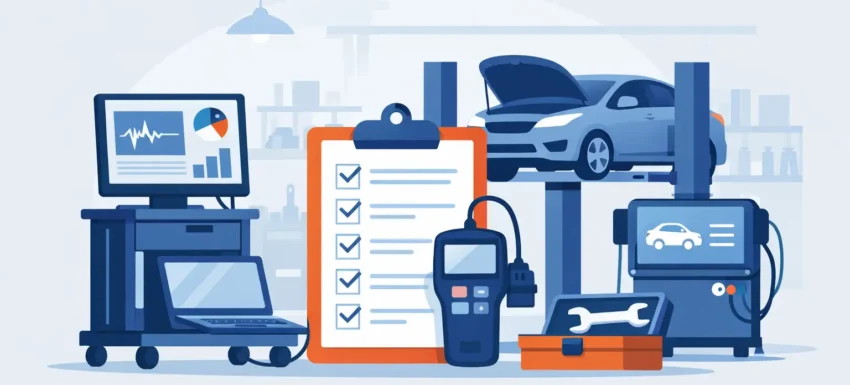
A misfire that only shows when the engine is hot, a battery drain that appears overnight, an ABS light with no obvious cause – this is where a proper garage diagnostic equipment checklist pays for itself. Modern fault finding is no longer about guesswork and part swapping. The right equipment shortens diagnosis time, protects workshop margins and gives you confidence that the repair decision is based on data, not hunches.
For most UK workshops, the challenge is not whether to buy diagnostic tools. It is knowing which tools are genuinely essential, which ones improve efficiency, and which ones only make sense if your workload justifies them. A small independent garage, a mobile technician and a commercial vehicle repairer will not need exactly the same setup. Still, there is a core kit every serious workshop should have.
What a garage diagnostic equipment checklist should cover
A useful garage diagnostic equipment checklist is not just a shopping list. It should help you assess coverage, compatibility and daily practicality. That means asking a few basic questions before you spend any money.
First, what vehicles do you actually see every week? If your work is mostly cars and light vans, a broad multi-make scan tool with strong service functions may cover most jobs. If you deal with premium marques, commercial vehicles or mixed fleets, you may need brand-specific capability, extra adapter leads or software that goes deeper into manufacturer systems.
Second, how far do you need the tool to go? Reading and clearing fault codes is the starting point, not the finish. A workshop tool needs to access live data, carry out actuator tests, perform service resets, code components where supported and guide technicians towards the root cause. Basic tools can be useful at the front counter or for quick triage, but they are not enough for a busy repair environment.
Third, how often will the tool be used? Daily-use equipment needs to be reliable, quick to boot, easy to update and tough enough for workshop life. A cheaper unit that wastes ten minutes per job is not cheap for long.
The core diagnostic tools every workshop should consider
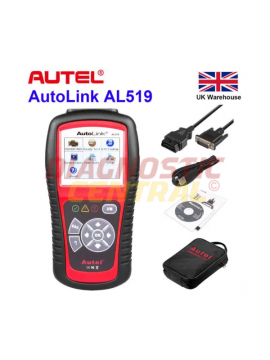
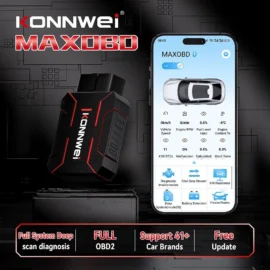
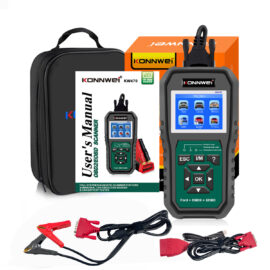
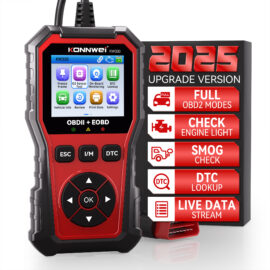
At the centre of any setup is an OBD2 and EOBD scan tool with proper system coverage. That means engine, transmission, ABS, airbag and body systems as a minimum. The better units also handle electronic parking brake functions, DPF regeneration, battery registration, injector coding and steering angle calibration. If you work on varied makes, this is the tool that earns its keep every day.
Live data capability matters just as much as fault code reading. Many faults do not reveal themselves through a stored code alone. You need to see sensor values, switch states, fuel trim, charging voltage and system behaviour in real time. Freeze-frame data is equally valuable, especially for intermittent issues, because it shows the conditions present when the fault was logged.
A battery and electrical system tester should sit alongside the scan tool, not behind it. Low voltage causes false faults, module communication errors and no-start complaints that can send technicians down the wrong path. A proper tester helps you assess battery condition, cranking performance and charging system health quickly. In workshop terms, that means less wasted time and fewer incorrect parts fitted.
A quality multimeter is another essential. Scan tools tell you what the modules are reporting. A multimeter tells you what is actually happening in the circuit. Voltage drop testing, continuity checks and resistance measurement remain part of proper diagnosis, especially when dealing with wiring faults, blown feeds, poor earths or failed components.
If your workshop deals with CAN faults, parasitic drain issues or difficult intermittent electrical problems, an oscilloscope becomes increasingly worthwhile. It is not the first item every small garage buys, but once electronic workload increases, it can save hours. For sensor signals, network integrity and current draw analysis, a scope gives a level of visibility that a standard meter cannot.
Don’t overlook cables, adapters and power support
Good diagnostics are often lost on small missing pieces. Workshops regularly invest in a capable scan platform and then find they cannot access certain vehicles or functions because they do not have the right adapters. That is why any garage diagnostic equipment checklist should include cables and accessories from the start.
If you cover vans, lorries, trailers or older vehicles, adapter leads are not optional. Different connector types and system layouts still exist across the market, especially in the commercial sector. Make sure your setup reflects the vehicle mix you actually service.
Power support is another common gap. During programming, coding or long diagnostic sessions, unstable voltage can create serious problems. A battery support unit or stabilised charger helps maintain system voltage and reduces the risk of interrupted procedures. For any workshop doing module replacement, coding or software-driven repair work, this is basic protection.
Replacement accessories also matter more than many buyers expect. Diagnostic leads, test clamps, probe kits and spare connectors wear out. Choosing equipment with available spares is often smarter than buying a sealed low-cost unit that becomes useless after one damaged cable.
Software, updates and compatibility matter as much as hardware
A tool can look impressive on paper and still be a poor fit for the workshop. Coverage lists need careful reading. One unit may claim broad compatibility but offer limited service functions on the vehicles you see most. Another may go much deeper on fewer makes and be the better investment.
This is where software support matters. Regular updates help keep pace with new models, revised systems and added service functions. If your workshop sees late-model vehicles, outdated software quickly becomes a bottleneck. It is also worth checking how updates are delivered and how easy the process is. If updating the tool becomes a chore, it will get postponed, and workshop efficiency suffers.
User interface matters too. Fast navigation, sensible menus and clear live data presentation make a real difference when the tool is used every day. Technicians should be able to move from vehicle identification to system access without fighting the machine. Speed is not a luxury in a workshop. It is profit.
Matching the checklist to your type of workshop
A one-bay independent garage usually needs wide coverage first. In that setting, a dependable multi-make scanner, battery tester, multimeter and a sensible range of adapter leads will cover the majority of jobs. Add a battery support unit if coding or module setup is part of your normal work.
A mobile technician may place more emphasis on portability and quick setup. Compact scan tools, handheld battery testers and durable accessory kits are often more useful than larger bench-based systems. Weight, charging options and the ability to work roadside all matter.
A commercial vehicle workshop needs to think beyond standard passenger car diagnostics. Lorry and trailer compatibility, appropriate adapter cables and system access relevant to fleet maintenance are essential. If commercial work is routine, buying car-focused equipment and hoping it copes is a false economy.
For specialist garages, brand-specific tools or modules can be the difference between basic access and full functionality. That does not always mean replacing a multi-make platform. Often, the strongest setup combines broad coverage with deeper manufacturer-specific support where needed.
Common buying mistakes to avoid
The most common mistake is buying on headline price alone. Cheap tools can look attractive, especially for newer businesses, but if they lack reliable coverage or struggle with updates, they cost more in time, misdiagnosis and repeat work.
Another mistake is focusing only on code reading. Modern workshops need tools that support test plans, live data analysis and service functions. Reading a fault code is easy. Proving the cause is where value sits.
There is also a tendency to overbuy. Not every garage needs dealership-level capability on every marque. If a high-end function will only be used twice a year, money may be better spent on a stronger all-round platform and better electrical testing equipment.
This is where specialist suppliers make a difference. A business such as Diagnostic Central is useful because the conversation is about fit for purpose, not just box shifting. For workshop buyers, that matters.
A practical way to build your setup
Start with the jobs you do every week, not the jobs you might do one day. Build around a strong main scan tool, then support it with electrical testing equipment, battery support and the adapters your vehicle mix requires. After that, fill the gaps based on actual workflow. If network faults and intermittent electrical issues are becoming more common, add scope capability. If coding and setup are increasing, prioritise voltage support and deeper software functions.
The best workshop diagnostic setup is not the one with the most boxes on the shelf. It is the one your technicians trust, use properly and can rely on under pressure. Buy for coverage, buy for accuracy and buy for the kind of work that pays your bills. The right checklist keeps your workshop sharp, your diagnosis faster and your repairs a lot harder to argue with.