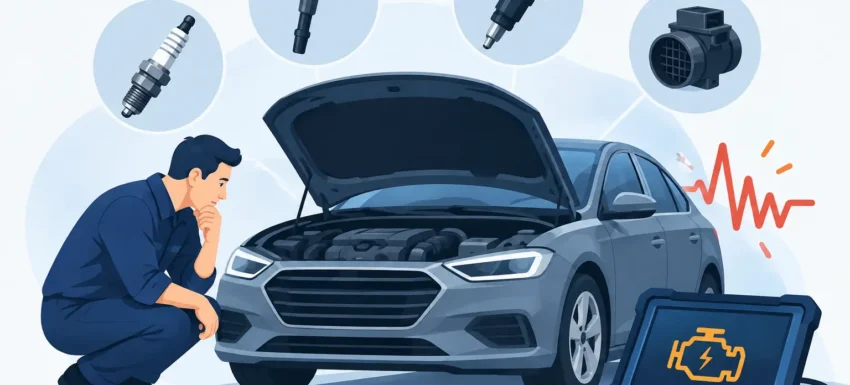
An intermittent misfire is one of the most time-consuming faults to diagnose because the engine may run perfectly when it reaches the workshop. It may hesitate only under load, misfire in damp weather, stumble at idle after a hot restart, or flash the engine management light on a motorway climb. Knowing what causes intermittent misfires helps prevent the usual costly mistake: replacing parts before proving the fault.
Quick answer
- Ignition faults such as worn spark plugs, failing coils and damaged wiring are common causes.
- Air leaks, fuelling problems and poor electrical supply can create a misfire only in certain conditions.
- Sensor readings may appear plausible but become inaccurate with heat, vibration or load.
- Low compression, valve-train faults and timing issues must be considered when ignition and fuelling checks do not explain the fault.
- Live data, fault-code freeze-frame information and targeted component testing are far more useful than guesswork.
Why intermittent misfires are harder to find
A misfire occurs when a cylinder does not make its expected contribution to engine torque. That can mean the air-fuel mixture did not ignite properly, the mixture was wrong, or the cylinder could not compress the charge effectively. Modern engine control units monitor crankshaft speed variation to identify these events, but they cannot always identify the root cause.
The word “intermittent” matters. Heat can increase resistance in a coil winding. A loose terminal can lose contact as the engine rocks on its mounts. A fuel injector may stick briefly, then recover. A small inlet leak may have little effect at higher revs but upset idle fuelling badly. The fault conditions need to be recreated before a reliable diagnosis is possible.
What causes intermittent misfires most often?
Spark plugs, ignition coils and secondary ignition faults
On petrol engines, ignition faults are the first area to assess. Spark plugs wear gradually, their gaps increase, and the voltage needed to fire the plug rises. Under heavy acceleration or boost, cylinder pressure is higher and the ignition system needs more voltage. A plug or coil that appears acceptable at idle can therefore break down only when the engine is loaded.
Check that the correct plug type, heat range and gap have been fitted. Incorrectly specified plugs, overtightened plugs and contamination from oil or coolant can all cause repeat misfires. On coil-on-plug engines, inspect for cracked coil bodies, carbon tracking around the plug insulator and damaged boots. Where cylinder-specific codes are present, swapping a suspected coil to another cylinder can be useful, provided the vehicle is then retested and the code movement is confirmed.
Do not overlook the basics. Poor engine earth straps, corroded connectors, water ingress in plug wells and wiring chafed against the cylinder head can interrupt coil operation. Some faults only appear when the wiring loom is moved or the engine reaches normal operating temperature.
Fuel delivery and injector problems
A weak fuel pump, blocked filter where fitted, restricted pickup or poor fuel-pump electrical supply can cause misfires during acceleration, towing or sustained high-speed driving. If several cylinders show misfire counts together, a system-wide fuel issue is more likely than several failed coils.
A single-cylinder misfire can point towards an injector, its connector or its control circuit. Deposits may affect injector spray pattern, while internal electrical faults can emerge once the injector becomes hot. Direct-injection petrol engines are particularly sensitive to injector performance and intake-valve deposits, although the exact failure pattern depends on the engine design.
Fuel pressure should be checked against manufacturer data using the appropriate method. Scan-tool readings can be valuable, especially for requested versus actual rail pressure, but do not assume every displayed value proves pressure is correct. Some systems require a mechanical gauge, manufacturer test routine or scope testing for a meaningful result.
Unmetered air, boost leaks and EGR faults
Air entering after the mass air flow sensor can create a lean mixture and unstable idle. Split breather hoses, leaking inlet manifold gaskets, cracked vacuum lines and faulty positive crankcase ventilation systems are familiar causes. A smoke test is often the quickest way to find a small intake leak that visual inspection misses.
Turbocharged engines add more possible leak points. A split charge-air hose or loose intercooler connection may create hesitation and misfire-like symptoms only when boost rises. Diesel engines do not use spark ignition, but drivers and technicians often describe rough running, combustion imbalance and hesitation as a misfire. On these vehicles, boost control, EGR operation, injector correction values and air-path leaks deserve close attention.
An EGR valve stuck open can dilute the intake charge excessively at idle or low engine speed. The result may be rough running that clears as revs increase. Do not condemn the valve solely from a code. Confirm commanded position, actual feedback where available, wiring integrity and whether carbon contamination is physically preventing proper closure.
Sensor and control faults that come and go
Crankshaft and camshaft position sensors are essential for accurate injection and ignition timing. A sensor can fail when hot, suffer connector corrosion or produce a weak signal disturbed by vibration. It may set a dedicated code, but not always. An oscilloscope is often the most convincing way to assess signal quality and synchronisation where the fault is difficult to capture.
Mass air flow, manifold pressure, coolant temperature and oxygen sensor errors can also lead to incorrect fuelling. Compare live values with a cold engine, at hot idle and under a controlled road test. Look for readings that do not make sense in context, rather than focusing only on whether a value is present.
Battery condition and charging voltage should be checked early, especially where several unrelated codes are stored. Low voltage can affect coil output, injector control and sensor reference circuits. A battery tester is useful for assessing starting and charging health, but it will not replace circuit voltage-drop tests when a connection fault is suspected.
Mechanical faults and timing problems
If ignition, fuelling and air-path checks do not provide an answer, move to mechanical testing. Low compression from a burnt valve, worn rings, damaged piston, sticking valve or head-gasket issue can cause a persistent or heat-related cylinder misfire. Relative compression testing can provide a quick indication, followed by a compression or leak-down test where required.
Variable valve timing faults may also be intermittent. Contaminated oil, a sticking control solenoid, incorrect oil level or timing-chain wear can alter valve timing enough to affect combustion. Mechanical timing should be verified if cam/crank correlation data, relevant fault codes or symptoms point in that direction.
A practical diagnostic order
Start by recording all fault codes, including pending codes, and save freeze-frame data before clearing anything. Freeze-frame can reveal whether the misfire happened at idle, during warm-up, under high load or at a particular engine speed. Then inspect service history, plug condition, connectors, wiring routes, vacuum hoses and signs of oil or coolant contamination.
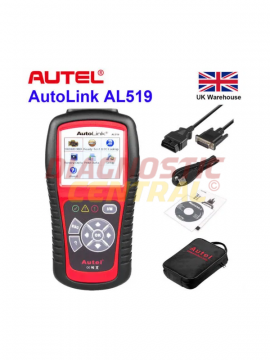
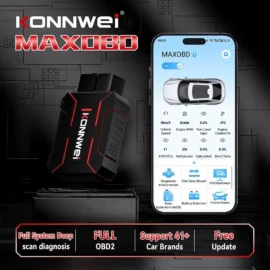
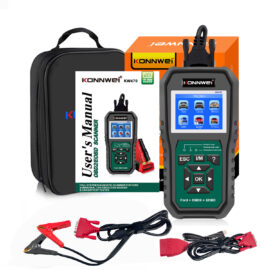
Use live data and cylinder misfire counters, where the vehicle supports them, during the conditions that produce the complaint. A capable OBD2 scan tool can read generic engine codes on many vehicles, but manufacturer-level data, bi-directional tests and misfire counter access vary by make, model, engine and tool coverage. Always check exact compatibility and the functions required before choosing equipment.
When a single cylinder is identified, compare components and readings against a known-good cylinder. When all cylinders are affected, look first at common supplies: fuel pressure, intake air measurement, timing information, system voltage and engine management grounds. This approach narrows the test plan quickly and avoids fitting a full set of coils when the real issue is a failing fuel-pump supply.
Can you keep driving with an intermittent misfire?
A flashing engine management light normally indicates an active misfire severe enough to risk catalytic-converter damage on a petrol vehicle. Reduce load immediately and avoid continued driving if the light flashes, the engine shakes heavily or there is a strong fuel smell. A steady warning light with mild symptoms may allow careful movement for diagnosis, but it is still a fault that needs prompt attention.
Misfires also increase fuel consumption, reduce performance and can damage components beyond the original failure. The repair cost is usually lower when the cause is found before unburnt fuel overheats the catalyst or a lean condition harms the engine.
Frequently asked questions
Can a weak battery cause an intermittent misfire?
Yes. Low cranking voltage, poor charging output or high resistance at battery and earth connections can disrupt ignition and injector operation. Check battery condition, alternator output and voltage drops under load.
Why does my car misfire only when accelerating?
Acceleration raises cylinder pressure and fuel demand. This commonly exposes weak ignition coils, excessive spark plug gaps, fuel-pressure loss and boost or intake leaks that are not obvious at idle.
Will an OBD2 scanner tell me which part has failed?
Usually not. It can identify affected cylinders, related systems and operating conditions, but a misfire code reports the result, not necessarily the failed component. Live data and physical testing remain essential.
Can damp weather cause a misfire?
Yes. Moisture can track high voltage across cracked coils, worn plug boots or contaminated plug insulators. Water ingress in connectors and ignition wells is another possibility.
For dependable results, diagnose the vehicle in the conditions that trigger the fault and test before replacing parts. If you need help selecting suitable diagnostic equipment, contact Diagnostic Central with the registration, VIN and the functions you need to carry out.