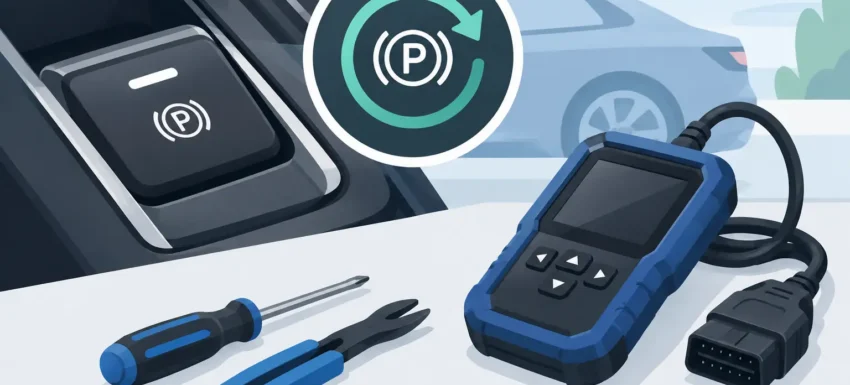
An electronic parking brake can turn a routine rear pad change into a costly problem if the caliper is forced back without first placing the system in service mode. So, which tool resets electronic handbrake systems properly? The answer is an EPB-capable diagnostic scanner that supports the exact vehicle and can command the brake control module to retract and reapply the rear caliper motors.
Quick answer
- Choose a diagnostic tool with an Electronic Parking Brake, EPB or brake pad replacement service function.
- Check that it supports your vehicle make, model, year and brake system before starting work.
- A basic OBD2 code reader usually cannot retract the motors or complete the relearn procedure.
- Use the service function before pushing rear pistons back, then follow the tool prompts to initialise the system afterwards.
Which tool resets electronic handbrake systems?
The right tool is not simply one that reads engine fault codes. It must offer bidirectional control or a dedicated EPB service function. This lets the scanner communicate with the electronic parking brake module and instruct it to enter maintenance mode. Depending on the vehicle, that can mean winding the caliper motors back, opening the pads, releasing automatic hold functions, or preparing the system for new rear pads and discs.
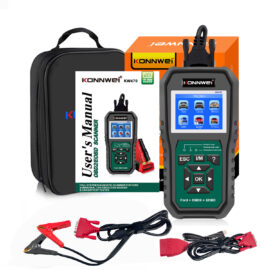
A professional multi-make diagnostic tablet is usually the most dependable choice for a busy workshop, particularly where it provides guided service routines, live data and manufacturer-specific coverage. These tools can be a practical investment for garages working on varied vehicle parc, as EPB work is only one of several regular service tasks they can support.
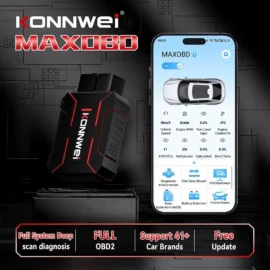
For a capable DIY user working on one or two vehicles, a lower-cost scanner with confirmed EPB coverage can be enough. The key word is confirmed. A tool advertised with an EPB reset function may only cover selected makes, model years or systems. It may also reset the warning light without offering the full retract-and-initialise routine required for a brake service.
Why an ordinary code reader is not enough
Generic OBD2 readers are useful for reading and clearing standard engine-related fault codes, but electronic parking brake operation sits outside that basic remit on many vehicles. The parking brake module may be accessed through manufacturer-specific diagnostics, often via the chassis, body or brake system menu.
If a scanner only shows fault codes, it does not automatically mean it can operate an actuator. Resetting an EPB requires an active command, not just communication. The tool must be able to send the correct request to the relevant control unit and, where supported, guide the technician through the required sequence.
This distinction matters because forcing a motorised caliper piston back can damage the internal gears, motor or screw mechanism. It can also leave the parking brake unable to apply correctly. Replacing a caliper or actuator after an avoidable mistake costs far more than using a suitable scan tool from the outset.
The functions to look for before you buy
Tool menus and marketing descriptions vary, but the useful functions are generally easy to identify. Look for EPB, electronic parking brake, brake pad replacement, brake maintenance mode or brake service mode. These terms are commonly used for the same essential job, although the exact procedure differs by manufacturer.
A worthwhile scanner should also identify the vehicle automatically or allow accurate manual selection by make, model, year and engine. VIN auto-detection can save time, but it is still sensible to check the selected vehicle profile against the vehicle in front of you. Mid-year revisions and differing brake specifications can affect coverage.
For regular workshop use, consider a tool that also provides ABS bleeding, steering angle sensor calibration, battery registration, injector coding and oil service reset functions. These are not necessary to reset an electronic handbrake, but they make a diagnostic platform more useful across routine repair work. The trade-off is cost: broader coverage and active tests normally sit above entry-level code-reader pricing.
A typical EPB brake service procedure
The exact instructions on screen must always take priority, but a standard electronic parking brake service usually follows a familiar pattern. Connect a stable battery support unit if battery condition is doubtful, switch the ignition on as required, and connect the scanner to the diagnostic socket.
Select the correct vehicle and enter the EPB or brake service menu. The tool may ask whether new pads are being fitted, then command the rear calipers into release or maintenance position. Listen for motor operation and check that the system has completed its command before removing the old parts.
With the brake released, carry out the mechanical work correctly. Inspect pad wear, disc condition, caliper sliders, carrier hardware and brake hoses rather than treating the scan tool as the whole repair. On many vehicles, the rear piston must then be wound or pressed back in the specified direction. Some systems use a conventional hydraulic piston once the motor has been retracted; others have more specific requirements.
After fitting the new components, use the scanner to exit service mode or apply the parking brake. The system may run an adaptation cycle to establish pad clearance. Confirm that the warning lamp is out, the brake applies and releases consistently, and no EPB or ABS faults remain. A cautious road test and brake check are sensible before returning the vehicle to service.
Compatibility is the deciding factor
There is no single scanner that can truthfully be said to reset every electronic handbrake on every car. Vehicle makers use different modules, communication protocols and calibration routines. Even within the same make, one model may offer a simple rear-caliper retract function while another requires a more involved guided procedure.
This is why technicians should check the exact registration or VIN, model year, engine and required function before purchasing equipment. If the job involves a Volkswagen Group vehicle, for example, a tool may need access to the relevant control module and a supported basic setting. On other vehicles, the EPB routine may be within an ABS menu rather than labelled as a standalone service function.
Also separate an EPB reset from fault diagnosis. If the electronic handbrake has failed, seized, displayed a warning message or stored recurrent faults, a pad-change service routine may not fix it. Read the module fault codes, inspect supply voltage and earths, assess wiring and connectors, and test the actuator where the diagnostic equipment supports it. Low battery voltage is a common cause of misleading brake-system faults.
Professional tablets versus handheld service scanners
A professional diagnostic tablet suits garages and mobile technicians who need broad vehicle coverage, regular software updates, system scans and active tests alongside EPB work. Its larger screen and guided menus can speed up repeat jobs, especially when technicians are moving between makes throughout the day. Coverage still needs checking, but this is normally the stronger option for volume work.
A handheld service scanner can be the sharper choice for a smaller workshop or technically confident owner who needs a defined set of maintenance functions. It is usually quicker to store, cheaper to buy and less complex to operate. The limitation is that it may not diagnose deeper module faults, code replacement components or support every later model.
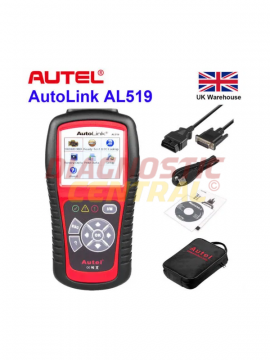
Diagnostic Central supplies EPB-capable diagnostic equipment for workshops and capable DIY users, with options ranging from service-focused scanners to wider diagnostic platforms. The sensible choice depends on the vehicles you actually see and whether you need only brake maintenance functions or full-system diagnostic capability.
Common mistakes when resetting an EPB
The first mistake is starting with a weak vehicle battery. Electronic brake actuators draw current, and a voltage drop during a service command can create faults or interrupt the procedure. Where practical, keep the battery supported and ensure the tool itself is adequately charged.
The second is selecting the wrong vehicle profile. Do not assume that a similar model, engine or year will use the same brake module. The third is clearing faults immediately after the repair without recording them. Stored codes can point to a motor, wiring or control-unit problem that new pads will not solve.
Finally, do not rely solely on an audible motor noise as proof of a successful repair. Check the scanner status, dashboard warnings and physical brake operation. A parking brake that appears to release but cannot generate proper holding force is not a completed job.
FAQs
Can I reset an electronic handbrake without a diagnostic tool?
Some vehicles have a manufacturer-approved manual procedure, often involving ignition, brake pedal and switch inputs. Many do not. Avoid internet workarounds unless they are verified for the exact vehicle, as an incorrect sequence can cause faults or damage.
Does an OBD2 scanner reset the electronic parking brake?
Only if it includes supported EPB service functions and active control for that vehicle. Standard OBD2 code readers generally do not provide this capability.
Do I need to reset the EPB after changing rear pads?
Usually, yes. The system normally needs to enter service mode before the work and then be re-applied or initialised afterwards. Follow the vehicle-specific procedure shown by the diagnostic tool.
Can an EPB tool fix a parking brake fault?
It can identify codes, command components and complete adaptations where supported, but it cannot repair a failed actuator, damaged wiring, seized caliper or low-voltage issue. Diagnosis must lead the repair.
Before ordering a tool, contact Diagnostic Central with the vehicle registration or VIN and the functions you need, such as EPB retraction, fault reading, ABS bleeding or battery registration. Matching the equipment to the actual job is the fastest route to a safe, repeatable repair.