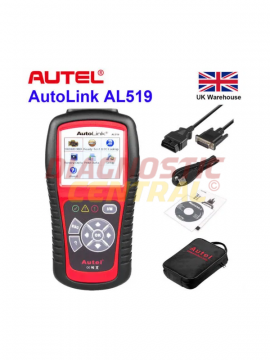
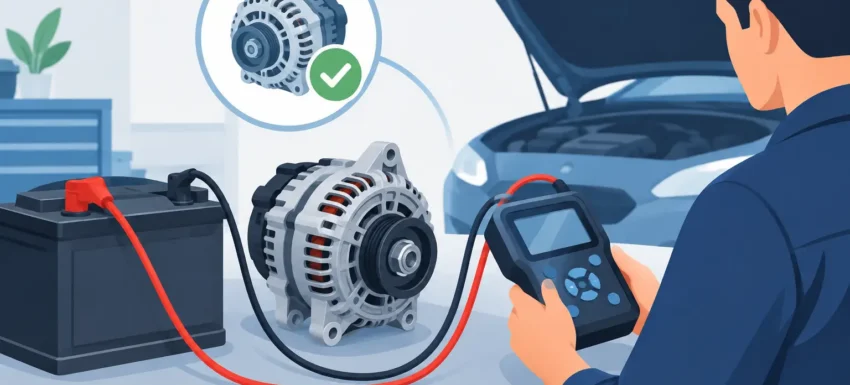
A vehicle can start perfectly at the workshop, pass a basic battery voltage check, then return the next morning on a recovery lorry. The reason is often missed charging-system trouble. So, do battery testers check alternators? Some do, but only battery testers with a dedicated charging or alternator test can assess the system while the engine is running. A basic tester may only tell you about battery condition.
Quick answer
- A battery-only tester does not properly test an alternator.
- A tester with a charging-system mode can measure alternator output voltage and, on some models, ripple.
- A healthy voltage reading alone does not prove the alternator, wiring and battery are fault-free.
- Accurate results depend on correct connections, engine speed, electrical load and vehicle type.
For garages and capable DIY users, the useful distinction is simple: battery health and alternator performance are related, but they are not the same test.
What a battery tester actually measures
Most modern battery testers assess the battery using conductance testing. Instead of putting a heavy traditional load across the battery for an extended period, the tool sends a small signal through it and estimates its available starting performance. The result is normally compared with the battery rating entered into the tester, such as EN, CCA, SAE, DIN or IEC.
This can reveal low state of charge, reduced cranking capacity, high internal resistance or a battery that is approaching the end of its service life. That is valuable information, particularly when a vehicle has slow cranking, stop-start warnings or repeated no-start complaints.
However, a battery test taken with the engine switched off cannot verify whether the alternator is replenishing the battery after starting. It only shows the battery’s present condition. A weak battery may have been caused by an alternator fault, short journeys, excessive parasitic drain, a poor connection or simply age. Treat the result as evidence, not a complete diagnosis.
Do battery testers check alternators when the engine is running?
Yes, where the tester includes a charging-system test. After testing the battery, the operator starts the engine and follows the prompts. The tester monitors voltage at the battery terminals, usually at idle and sometimes under electrical load. It may then report charging voltage as normal, low or high.
On a conventional charging system, the alternator should generally raise battery-terminal voltage above the resting battery voltage. Many systems operate somewhere around 13.5V to 14.8V, but that range is only a guide. Temperature, battery state of charge and vehicle design all affect the figure.
Some better battery and charging testers also examine AC ripple. Excessive ripple can point towards a failed rectifier diode or stator issue inside the alternator. It can cause unstable charging, electronic faults, warning messages and unexplained battery discharge. A simple voltmeter may not make that problem obvious.
The test is quick and useful, but it is not magic. It assesses what is happening at the battery terminals at that moment. It cannot always identify whether the root cause is the alternator itself, the regulator, belt drive, main charging cable, earth path, battery current sensor or intelligent charging control.
Why modern smart charging changes the result
Many Euro 5 and Euro 6 vehicles use smart alternator control. The engine control module may command low charging voltage after a start, increase it during deceleration, or reduce it to improve fuel economy. A reading near 12.5V with the engine running can therefore be normal in specific conditions.
This is why applying an old fixed-voltage rule to every car or van creates misdiagnoses. Check the manufacturer’s data where available, inspect battery-management fault codes and use live data from a suitable diagnostic scanner if the charging behaviour looks unusual. On some vehicles, the battery monitoring sensor and its wiring deserve just as much attention as the alternator.
How to carry out a meaningful charging-system test
Start with the basics. Inspect the battery terminals for looseness, corrosion and heat damage. Check the earth lead between battery, body and engine. On belt-driven alternators, inspect belt condition, tensioner operation and pulley condition. No tester can compensate for a slipping auxiliary belt or a high-resistance connection.
Connect the tester directly to clean battery posts where possible, rather than to remote jump points, unless the vehicle procedure specifies otherwise. Enter the correct battery technology and rating. AGM, EFB and conventional flooded batteries have different characteristics, and the wrong setting can make the battery result less useful.
Test the battery before starting the engine. If it is very low, charge it fully and retest before condemning it. A discharged battery can distort the charging-system picture because the alternator may initially work hard to recover it.
Then run the charging test according to the tester instructions. With a conventional system, check the result at idle and with sensible loads switched on, such as headlights, heated rear window and blower motor. Watch for a voltage drop that is excessive or unstable. Where a current clamp is available, checking actual alternator output can add another layer of certainty, especially on a vehicle with high electrical demand.
If the tester flags high ripple, low output or overcharging, confirm the finding. Measure voltage drop on the positive and earth sides under load, inspect fuse links and connectors, and scan the vehicle for relevant charging, battery-sensor or communication faults. This is the difference between replacing an alternator quickly and diagnosing it correctly.
When a battery tester is enough, and when it is not
For routine service checks, a battery tester with alternator test capability is often ideal. It is fast, portable and gives a clear printed or on-screen record of battery condition and basic charging performance. That makes it a practical tool for pre-winter inspections, used-vehicle preparation and first-line fault finding.
It is less decisive when the fault is intermittent, the vehicle uses smart charging, or there are multiple electrical symptoms. A vehicle may charge correctly when stationary but lose output when hot, under vibration or after a long drive. Likewise, an alternator can be capable of producing voltage yet fail to deliver sufficient current under a sustained load.
In those cases, combine the battery tester with a multimeter, current clamp and diagnostic scan tool. A scan tool can reveal requested charging voltage, battery state of charge, battery sensor values and stored fault codes. This matters on late-model cars, vans and commercial vehicles where alternator control is part of a wider energy-management strategy.
Choosing the right tester for the job
If you only need to check whether a 12V starter battery is serviceable, a basic conductance tester may be sufficient. If you are diagnosing charging complaints, choose a battery tester that explicitly lists charging-system and ripple testing. Do not assume every tester with a digital display offers these functions.
For a busy workshop, look for coverage of the battery types and rating standards you see daily, clear pass-retest-replace guidance, durable leads and the ability to test 12V and 24V systems where relevant. Lorry and commercial-vehicle work may require 24V capability, while motorcycle, leisure and start-stop applications may need a tester suited to smaller batteries or AGM and EFB technology.
Diagnostic Central’s battery tester range is intended to cover these different requirements, from straightforward battery assessment to more detailed battery and charging checks. Always check the exact product specification, voltage range and supported battery types before purchase. A tester cannot diagnose every intelligent charging system on its own, but the right model removes a large amount of guesswork at the first inspection.
FAQs
Can a battery tester diagnose a bad alternator?
It can identify abnormal charging voltage and, on supported testers, excessive AC ripple. That can strongly indicate an alternator or regulator issue, but further checks may be needed to rule out wiring, earth, belt-drive and battery-management faults.
What voltage should an alternator produce?
There is no single figure for every vehicle. Conventional systems are often around 13.5V to 14.8V, while smart charging systems can operate outside that range depending on operating conditions. Use the vehicle’s specified data and live diagnostic information where necessary.
Can a faulty battery make an alternator test fail?
Yes. A heavily discharged or internally damaged battery can place an unusual load on the charging system and affect test results. Charge and retest the battery where practical before reaching a final diagnosis.
Does excessive ripple always mean the alternator needs replacing?
Not always, but it needs investigation. Ripple can indicate failed internal diodes, yet poor connections, test setup and electrical interference should be considered before replacing parts.
A charging-system test is one of the fastest ways to turn a vague battery complaint into a focused diagnostic plan. If you need help selecting equipment, contact Diagnostic Central with the vehicle registration or VIN, battery type, and the exact functions you need. The right tester should help you prove the fault, not merely point at the most expensive part.