An EGR-related fault code does not automatically mean the valve has failed. Effective EGR valve testing separates a sticking valve from a wiring fault, blocked intake passage, vacuum supply issue or an engine condition that is preventing the ECU from commanding EGR in the first place. Replacing the valve before making those checks can turn a straightforward diagnosis into an expensive comeback.
Quick answer
- Read manufacturer-specific codes and freeze-frame data before clearing anything.
- Compare requested and actual EGR position or flow in live data, where the vehicle supports it.
- Check wiring, connector condition, vacuum supply and carbon blockage before condemning the valve.
- Use an actuator test only when engine conditions and the scan tool allow it.
- Do not apply battery voltage directly to an electronic EGR valve unless the manufacturer’s test procedure specifically permits it.
What the EGR system is meant to do
The exhaust gas recirculation system feeds a controlled amount of exhaust gas back into the inlet system. Under suitable operating conditions, this lowers combustion temperature and helps reduce NOx emissions. On petrol and diesel engines alike, the ECU decides when to open or close the valve using inputs including engine temperature, airflow, load, boost pressure and, on many diesels, DPF operating status.
That control strategy matters when testing. A valve may remain closed during cold running, heavy acceleration, certain regeneration events or when another engine-management fault makes EGR operation unsuitable. Seeing zero EGR flow at idle is therefore not enough evidence to call the valve faulty.
Common reported symptoms include an engine-management light, poor idle quality, hesitation, reduced power, increased smoke on diesel vehicles, poor fuel economy and limp-home operation. These symptoms overlap with air leaks, boost-control faults, MAF sensor issues and DPF restrictions, so testing needs to be methodical.
Start with a proper diagnostic scan
A basic code reader can identify generic faults such as P0400 through P0409, but a scan tool with enhanced manufacturer coverage is far more useful. It can show pending codes, freeze-frame information, EGR commanded position, EGR feedback position, calculated flow and related values such as MAF, MAP and differential pressure.
Record all faults before clearing them. A P0401 code, for example, usually indicates insufficient EGR flow, but the cause could be a blocked cooler, carboned-up port, failed vacuum solenoid, seized valve or inaccurate airflow measurement. P0402 indicates excessive flow and can point towards an EGR valve stuck open, though its wiring or position feedback circuit still needs checking.
Freeze-frame data gives valuable context. Note coolant temperature, engine speed, load, vehicle speed and airflow at the moment the code was stored. If the fault occurred only during a warm motorway cruise, testing solely at idle may not reproduce it.
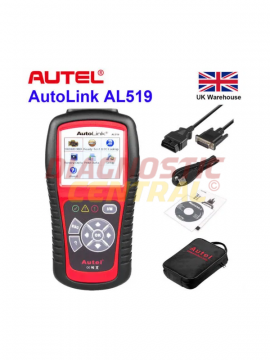
For regular workshop work, a professional OBD2 diagnostic scanner with live-data graphing and bi-directional control can reduce guesswork considerably. Check the exact vehicle coverage and whether EGR actuation is supported before relying on this function, particularly on older cars and commercial vehicles.
Inspect the simple faults first
Before dismantling the intake system, inspect the EGR valve connector, loom routing and surrounding pipework. Look for oil contamination inside connectors, damaged insulation, loose terminals and heat damage near the exhaust side of the engine. A wiring fault can produce a convincing EGR code even when the valve itself is mechanically sound.
On vacuum-operated systems, examine every small-bore hose between the vacuum pump, control solenoid and actuator. Hardened, split or incorrectly routed hoses are common faults. Confirm that the engine vacuum supply is present and that the solenoid can pass vacuum when commanded. A handheld vacuum pump is often the quickest way to test a diaphragm actuator.
If the actuator does not hold vacuum, its diaphragm is leaking. If it holds vacuum but the valve mechanism does not move, the valve may be seized with carbon. If it moves freely but the ECU still reports a flow fault, investigate the passages, cooler and associated sensors.
Using live data for EGR valve testing
Live data is the most useful non-invasive test on an electronically controlled EGR system. With the engine fully warm and no conditions preventing EGR operation, monitor EGR commanded position alongside actual position. The labels vary by make, but the principle is the same: the requested value is what the ECU wants; the feedback value is what the valve reports.
If command changes but actual position remains fixed, investigate the valve motor, internal position sensor, power supply, earth and signal circuits. If both values move together but calculated flow does not change, suspect a blocked EGR route, cooler restriction or inaccurate MAF/MAP data.
On many engines, opening EGR at a stable idle reduces fresh-air flow measured by the MAF sensor. A commanded EGR change with no corresponding airflow response can support a flow restriction diagnosis. It is not a universal rule, however. Use the manufacturer’s data values and test conditions where available rather than relying on one percentage figure.
Graphing data during a road test is often more revealing than watching a static screen. Compare requested versus actual EGR operation during light, steady acceleration and cruise, only where it is safe and legal to do so. Do not attempt to operate the scan tool while driving alone.
Actuator tests and electrical checks
A bi-directional actuator test allows the scan tool to command the EGR valve through part of its range. When supported, listen for movement and watch position feedback or airflow data. Some systems will refuse an active test if the engine is cold, a fault is currently active or battery voltage is low. That is a control-system safeguard, not proof that the valve has failed.
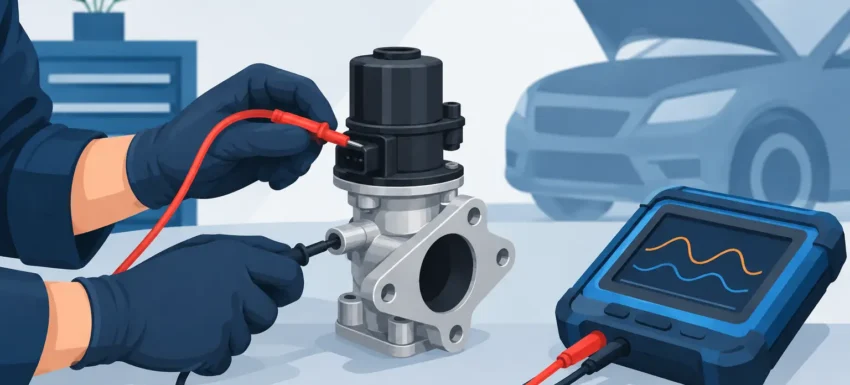
For an electrical check, use wiring information for the specific vehicle. Verify the reference voltage, switched supply, earth integrity and signal circuit as applicable. A quality multimeter is suitable for basic voltage and resistance checks, while an oscilloscope can expose intermittent feedback or PWM control issues that a meter may miss.
Do not judge an electronic valve by resistance alone. Many modern units contain motors, reduction gears, position sensors and internal electronics, so a simple resistance reading is rarely a complete pass-or-fail test. Equally, avoid applying 12V directly to a multi-pin EGR valve. That can damage the internal electronics or drive the valve beyond its controlled range.
When carbon is the real fault
EGR valves operate in a harsh environment. Soot from the exhaust mixes with oil vapour from the breather system and forms deposits in the valve body, intake manifold, cooler and ports. A valve can be electrically healthy yet unable to achieve the flow the ECU expects because the passage behind it is restricted.
Removal and inspection may be necessary where live data indicates a flow problem but valve movement appears normal. Check the valve pintle, mating ports and accessible cooler passages. Clean only components that are suitable for cleaning, and keep solvent away from electronic housings, motors and sensors unless the manufacturer permits it.
Cleaning can restore operation when deposits are the issue, but it is not a cure for worn gears, failed position sensors, a damaged actuator or a leaking cooler. If the valve is heavily seized or feedback is erratic after cleaning, replacement is usually the more reliable repair.
Confirm the repair rather than guessing
After repair, clear codes, run the engine through the relevant conditions and recheck live data. A road test may be required before the monitor completes and before a pending fault returns. Verify that the commanded and actual values behave plausibly, no related airflow or boost codes return, and the original symptom has gone.
On diesel vehicles, also consider whether DPF loading, failed temperature sensors or boost leaks are contributing to abnormal EGR operation. The EGR system does not work in isolation, and a replacement valve will not correct a separate air-management fault.
Frequently asked questions
Can I test an EGR valve without removing it?
Yes. Scan data, actuator tests, wiring checks and vacuum testing can identify many faults with the valve fitted. Removal is normally needed only when you need to inspect carbon deposits, mechanical movement or blocked passages directly.
Will disconnecting the EGR valve prove it is faulty?
No. Disconnecting it usually stores additional faults and may force the ECU into a substitute strategy. It can occasionally change an engine symptom, but that result is not a reliable diagnosis.
Can a cheap code reader test an EGR valve?
It can read and clear many generic EGR codes, but it may not access live position data, manufacturer fault descriptions or active tests. For diagnosis rather than code clearing, enhanced functions are a significant advantage.
How long should an EGR valve last?
There is no fixed interval. Driving pattern, engine condition, oil vapour, fuel quality and DPF health all affect deposit build-up. Short urban journeys can be particularly hard on diesel EGR systems.
If you are choosing equipment for this work, Diagnostic Central can help match a suitable diagnostic tool to the vehicle registration or VIN and the functions you need, including live data and actuator tests where supported. Bring the fault codes and symptoms to the conversation too – they are often the quickest route to the right test, rather than the next replacement part.