A new tyre pressure sensor has been fitted, the pressures are correct, yet the warning lamp remains on. This is where TPMS sensor programming is often misunderstood. Fitting the physical sensor is only half the job. The vehicle must be able to recognise the sensor ID, its wheel position where required, and the correct communication protocol.
For a busy workshop, getting this wrong costs time at the tyre bay and can leave the customer returning with a TPMS warning. For capable DIY users, it can mean buying a sensor that cannot be configured for the vehicle in the first place.
Quick answer
- TPMS work may involve activating an existing sensor, relearning sensor IDs to the vehicle, cloning an ID, or programming a blank universal sensor.
- The required method depends on the vehicle, the sensor type and whether the car uses direct or indirect TPMS.
- A diagnostic tool is not automatically a TPMS programming tool. Check it supports the exact TPMS function required.
- Confirm the vehicle application, sensor frequency, valve type and OE part reference before fitting anything.
What TPMS sensor programming actually means
Direct TPMS uses pressure sensors mounted inside each wheel, normally at the valve stem. Each sensor transmits a unique identification number, tyre pressure, temperature and often battery status to a receiver or TPMS control module. When a sensor is replaced, the vehicle may need to learn its new ID.
In workshop language, “programming” can describe several different jobs. They are related, but they are not interchangeable.
Sensor activation means waking the sensor and reading its transmitted data with a TPMS tool. This is the first useful check when diagnosing a warning lamp or confirming that a sensor is alive.
Relearn is the process of registering the sensor IDs with the vehicle. Some cars have an automatic relearn procedure after driving; others require a sequence using the ignition, buttons, a trigger tool, or a diagnostic tool through the OBD port.
Cloning copies the ID from the old sensor to a programmable replacement. If the original sensor can still be read, this can avoid an OBD relearn on vehicles that accept the same ID without further intervention.
Programming a universal sensor writes the correct protocol and ID information to a blank or multi-application sensor. This is not possible with every replacement sensor. A fixed aftermarket sensor may already be configured for a narrow range of applications, while an OE sensor is generally supplied with its own ID.
Direct and indirect systems need different thinking
Not every TPMS warning points to a wheel-mounted sensor. Indirect TPMS uses the ABS and wheel-speed system to infer a pressure loss from changes in rolling circumference. There are no pressure sensors to clone or programme. After tyre pressures are set correctly, the system is usually reset through the vehicle menu or a switch.
Direct TPMS is more common on many modern vehicles and is the system relevant to sensor programming. It introduces extra variables: sensor frequency, communication protocol, wheel location, module registration and sensor battery condition.
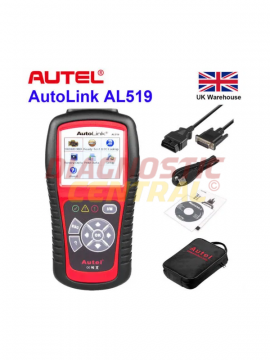
A scan tool may show a TPMS fault code, but that does not mean it can activate sensors or create a universal sensor. Equally, a dedicated TPMS tool may programme sensors successfully but have limited capability for broader fault-finding. Workshops covering regular tyre and warning-light work often benefit from both types of equipment.
Choose the right route before removing the tyre
The most efficient TPMS jobs start with identification, not disassembly. Read the vehicle registration or VIN, establish the exact model year and check whether it has direct TPMS. Production changes within the same model range can affect sensor specification and relearn procedure.
Then scan or trigger all four fitted sensors where accessible. Record the IDs, pressures, temperatures and battery information if the tool provides it. This tells you whether the issue is one failed sensor, a wheel-position problem, poor tyre pressure, receiver communication or a separate TPMS module fault.
If the old sensor reads correctly but its valve is corroded or damaged, cloning can be a sensible route. The new programmable sensor receives the existing ID, then the vehicle continues to see the same identity. This is particularly useful where an OBD relearn is not available or is inconvenient.
If the old sensor is dead, missing or unreadable, the replacement must normally be programmed with the correct vehicle protocol and then registered to the vehicle through the appropriate relearn process. Some cars will learn it after a drive cycle, but relying on that without checking the manufacturer procedure can turn a quick repair into a repeat visit.
Why compatibility checks matter
A sensor that physically fits the wheel is not necessarily electronically compatible. The valve angle, rubber or aluminium construction, frequency and radio protocol all matter. Most UK passenger-car applications use 433 MHz sensors, but this must never be assumed. Some makes, imports and specific model generations use different frequencies or protocols.
Universal sensors also vary. One supplier’s programmable sensor may cover thousands of applications, while another may require a different programming device or offer reduced coverage on certain newer models. Tool software and sensor software must be current, especially as vehicle manufacturers introduce new TPMS applications.
Before quoting or fitting, check the following information together:
- Exact vehicle registration or VIN, make, model, year and derivative
- Whether the system is direct TPMS and the required sensor part reference
- Sensor frequency, valve configuration and wheel fitment
- Whether the replacement can be cloned, requires OBD relearn or supports automatic relearn
- The programming tool’s confirmed coverage for that sensor and vehicle
This is not paperwork for its own sake. It prevents fitting a sensor that cannot communicate with the car, or ordering a tool that can read TPMS faults but cannot write a sensor ID.
A practical TPMS programming workflow
Start by checking all four tyre pressures against the vehicle placard, not the tyre sidewall. A genuine under-inflation issue must be corrected before fault diagnosis. Inspect valves for corrosion, impact damage and signs of a leaking seal. On older alloy valve sensors, galvanic corrosion can make removal difficult and may damage the sensor body.
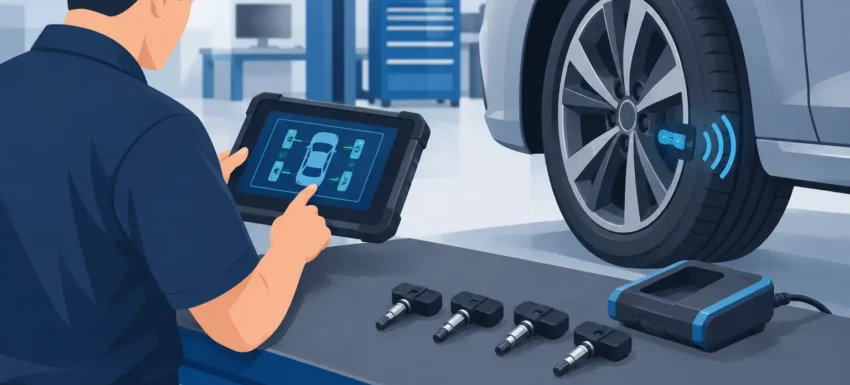
Next, use a suitable TPMS activation tool to interrogate each wheel. If one sensor will not respond, try the correct trigger position at the valve and confirm the tool has the right vehicle profile selected. A non-response can indicate a flat internal battery, damaged sensor, incorrect frequency selection or simply a tool-coverage issue.
Once the replacement choice is confirmed, programme it before tyre installation where possible. Read back the programmed sensor to verify its ID and vehicle application. After fitting, carry out the specified relearn method and check that the vehicle has accepted each wheel. Finally, clear related fault codes only after the underlying fault is resolved, then road-test where the procedure requires it.
Do not overlook wheel position. Certain systems identify each corner during the relearn, while others require manual position entry through diagnostics. A sensor fitted to the wrong location may still transmit correctly but cause incorrect tyre pressure information or a warning after the vehicle is driven.
When an OBD diagnostic tool is required
OBD capability is commonly needed when adding new IDs to the TPMS module, writing wheel locations, reading module faults or confirming live data after a relearn. It can also be needed after module replacement or when the vehicle has lost its stored sensor information.
However, OBD access does not replace a sensor programming tool. It cannot generally wake a wheel sensor or programme a blank universal sensor on its own. The strongest setup for regular TPMS work combines a dedicated TPMS tool with a diagnostic scanner that supports TPMS module functions for the vehicle range being serviced.
For occasional repairs, a vehicle-specific relearn method and correctly matched pre-programmed sensors may be enough. For tyre centres, mobile technicians and independent garages, programmable universal sensors can reduce stockholding, but only where the chosen tool and sensor range genuinely cover the vehicles coming through the door.
Common mistakes that create repeat TPMS faults
The most common error is treating the warning lamp as proof that one sensor has failed. Low pressure, a tyre change without reset, an ABS fault on an indirect system, a weak sensor battery and a communication issue can all produce similar complaints.
Another is cloning a sensor that was never read successfully. If the old ID is unknown, guessing or copying stored information from an unverified source can leave the new sensor unrecognised. Likewise, fitting a sensor before checking its protocol can waste a tyre strip-down.
Finally, avoid using sealant products unless they are approved for the wheel and TPMS system. Tyre sealant can contaminate the sensor pressure port and cause inaccurate readings or sensor failure.
TPMS sensor programming FAQs
Can I programme a TPMS sensor without a tool?
Usually not when using a blank universal sensor. Some vehicles can automatically relearn a pre-configured OE-style sensor after driving, but the sensor itself must still be correct for the application.
Can I reuse the old TPMS sensor ID?
Yes, where the old sensor can be read and the replacement sensor supports cloning. This can reduce the need for an OBD relearn, but it depends on the vehicle and sensor system.
How long do TPMS sensor batteries last?
Many last around five to ten years, depending on use and sensor design. The battery is sealed into the sensor, so a flat battery normally means sensor replacement.
Will a universal TPMS sensor work on every car?
No. Coverage depends on the sensor brand, programming tool software and the specific vehicle application. Always check the exact vehicle before ordering.
For reliable TPMS work, match the sensor, programming method and diagnostic capability before the wheel comes off. If you are choosing equipment, Diagnostic Central can help assess the registration, VIN and functions you need, so you can select a setup suited to the vehicles you actually service.