A diesel fault rarely gives you much warning. One day it is pulling cleanly, the next you are dealing with a DPF light, poor boost, an EGR issue, or a no-start that wastes half the morning. That is exactly why the best obd2 scanners for diesels are not just handy gadgets. They are time-saving tools that cut out guesswork and tell you where to look first.
The catch is that diesel diagnostics are not always as straightforward as petrol diagnostics. Many basic readers will pull generic engine fault codes, but that does not mean they are genuinely useful on diesel vehicles. If you work on diesels regularly – whether that is a Transit, Sprinter, Vivaro, Ranger or a mixed fleet of vans and lorries – you need a scanner that can do more than clear a warning light and hope for the best.
What makes a diesel scanner worth buying?
A decent diesel scanner needs to handle the faults you actually see in the workshop. That means reliable access to engine management data, but it should also mean useful coverage for DPF systems, injector correction values, glow plug faults, turbo-related codes, fuel pressure readings, and where supported, regeneration functions and service resets.
This is where buyers often get caught out. Plenty of low-cost tools claim wide compatibility, yet only offer generic OBD2 functions. Generic coverage is fine for reading standard emission-related codes, but diesel fault-finding often needs manufacturer-specific data. If you cannot view live rail pressure properly, check soot load, or see what the EGR is doing under load, you are still diagnosing in the dark.
For a home user, a simple reader may be enough if the goal is basic fault code checks. For a garage or mobile technician, that is rarely enough. Speed matters. Accuracy matters more.
Best OBD2 scanners for diesels by type of user
There is no single best unit for everyone. The right tool depends on the vehicles you see, how deep you need to go, and whether you want a quick handheld reader or a more capable tablet-based platform.
1. Basic handheld code readers
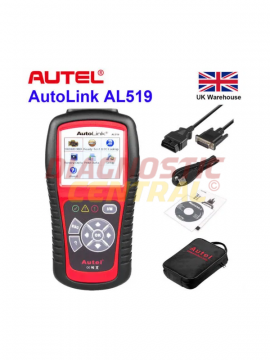
If you want a compact scanner for straightforward engine faults, a handheld reader still has a place. These are ideal for DIY owners and smaller garages that need a fast first check before moving to deeper diagnostics.
The better ones read and clear generic and some manufacturer fault codes, show live data, and perform readiness checks. On diesels, that can help with common issues such as boost pressure faults, airflow sensor problems and emissions warnings. The limitation is simple – most do not offer advanced bidirectional functions or deep diesel service routines.
For older diesel cars and vans, that might be enough. For newer Euro 5 and Euro 6 vehicles with more complex emissions systems, it often is not.
2. Mid-range scan tools with diesel service functions
This is the sweet spot for many independent garages and serious DIY users. A mid-range scanner usually gives you stronger vehicle coverage, better live data, access to multiple modules, and a wider list of service features.
On a diesel, that can include DPF regeneration, injector coding, throttle or EGR relearns, oil service resets and battery registration on some models. These tools are far more practical for real diagnostic work because they move beyond code reading and into repair support.
If you are seeing repeated DPF issues, limp mode complaints, or intermittent running faults, this class of scanner usually gives the best balance of price and capability.
3. Professional diagnostic tablets
For workshop use, professional tablet-based scanners are often the strongest option. They tend to offer broader make coverage, faster menus, stronger graphing, more special functions and regular software updates.
This matters on modern diesels because a fault can involve several systems at once. A blocked DPF might be linked to a failed differential pressure sensor, poor injector performance, incorrect thermostat operation, or a boost leak that stops regeneration conditions being met. A proper professional tool lets you see that bigger picture.
The trade-off is cost. If you only check your own vehicle a few times a year, a professional scanner is hard to justify. If your income depends on identifying faults quickly, it pays for itself far faster than a cheap reader that misses half the story.
4. Multi-system scanners for vans and light commercial vehicles
Diesel diagnostics often means vans rather than cars. That changes the buying decision. You may need stronger support for commercial platforms, not just passenger vehicles, and in some cases adapter leads or expanded software coverage.
A scanner that works well on cars is not automatically the best choice for a fleet Transit or Sprinter environment. Multi-system access becomes more important because ABS, airbag, transmission and body modules can all influence the fault path. For commercial users, broad compatibility is not a nice extra – it is the reason the tool earns its keep.
The key features to look for in the best OBD2 scanners for diesels
Diesel owners and technicians should be ruthless here. Ignore inflated claims and focus on functions that solve actual faults.
Live data is near the top of the list. You want stable readings for boost pressure, MAF, fuel rail pressure, injector balance where available, coolant temperature, EGR operation and DPF values. If the live data is slow, limited or badly labelled, the scanner becomes frustrating very quickly.
DPF support is another major point. Some tools only read DPF-related codes. Better ones show soot load, ash load, exhaust temperature sensors, differential pressure values and regeneration status. The strongest units support forced regeneration where the vehicle allows it. That is especially useful for trade users, but it should always be used with care and only after fixing the root cause.
Manufacturer-specific diagnostics matter just as much. Generic OBD2 does not go far enough on many diesel faults. If you regularly work on Ford, Vauxhall, Volkswagen, Mercedes or Peugeot diesels, make sure the tool has proper make-level coverage rather than broad marketing claims.
Software updates are worth checking too. Diesel systems have become more complex, not less. A scanner that can be updated is usually a better long-term buy than a static unit that gets left behind.
Common diesel jobs your scanner should help with
A good scanner should shorten the path from symptom to answer. If a van comes in with poor acceleration and a management light, you should be able to confirm whether you are dealing with underboost, overboost, an airflow issue, fuel pressure instability or a DPF-related restriction without wasting hours on parts swapping.
It should also help with repetitive jobs that eat workshop time. DPF checks, injector coding after replacement, service resets, and battery registration on newer systems all matter because they turn a scanner into a working tool rather than a code reader kept in a drawer.
Even for capable DIY users, this makes a difference. If you can confirm a glow plug circuit fault or identify that a regeneration has failed repeatedly because the engine is not reaching proper temperature, you are making decisions based on evidence, not forum guesswork.
Where cheaper scanners fall short
The budget end of the market is crowded for a reason. Cheap scanners sell well because everyone wants a quick answer for very little money. Sometimes that works. More often, they tell you just enough to know there is a problem, but not enough to fix it properly.
That is especially true with diesel vehicles. A generic code for low boost, for example, does not tell you whether the issue is vacuum control, a split hose, a sticking actuator, a sensor fault or a blocked DPF affecting engine behaviour. Without better live data and system access, you are left testing blindly.
This is why serious users tend to move up a level quite quickly. Paying more for better data is usually cheaper than wasting labour time or fitting the wrong part.
Choosing the right scanner for your workshop or driveway
If you only need occasional checks on one diesel car, buy for clarity and reliability rather than maximum functions. A solid handheld or entry-level multi-system scanner is often enough.
If you run a garage, work on mixed makes, or deal with diesel vans daily, step straight into a mid-range or professional platform. You need speed, proper coverage and dependable service functions. That is where specialist suppliers such as Diagnostic Central make more sense than generic marketplace sellers, because you are buying tools for actual fault-finding, not just for reading marketing claims on a box.
The best buying decision is usually the one that matches the jobs in front of you. Not every diesel needs dealer-level diagnostics, but modern diesel faults rarely reward basic tools.
Buy the scanner that gives you useful data, proper vehicle coverage and functions you will genuinely use. When a diesel starts playing up, the right tool does not just save time – it gives you a faster route to the right repair.