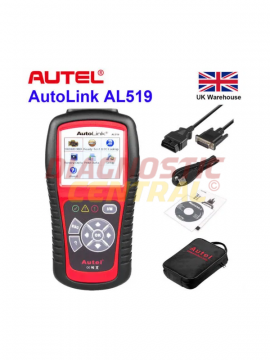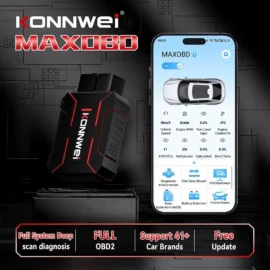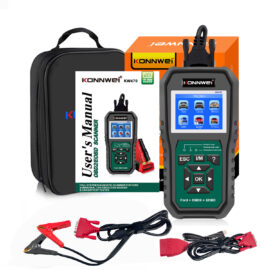

A lorry stopped at the roadside is not just a repair job. It is a missed delivery slot, a driver waiting on instructions and a customer asking where their goods are. Commercial vehicle diagnostic tools give workshops and fleet operators a faster route to the actual fault, replacing assumption with live data, fault-code information and system tests that support a confident repair decision.
For a technician working on vans, rigid lorries, tractors, buses or trailers, a basic code reader is rarely enough. Commercial vehicles carry more control units, use different communication standards and face operating demands that expose weaknesses quickly. The right diagnostic equipment needs to identify the vehicle correctly, communicate reliably with its systems and provide information useful enough to act on.
Why commercial diagnostics are different
A passenger-car scanner may be suitable for simple engine fault codes on a light van, but it can reach its limits once the work moves into heavier vehicles. Many commercial platforms use the SAE J1939 protocol through a round multi-pin diagnostic socket, while some older vehicles use J1708 or manufacturer-specific arrangements. Trailer systems add another layer, particularly where electronic braking and lighting faults are involved.
That matters because an engine warning lamp is only one piece of the picture. A commercial diagnostic tool may need to access the engine ECU, automated gearbox, ABS and EBS braking systems, body controller, instrument cluster, suspension, diesel after-treatment and tachograph-related modules. If the tool cannot see the relevant system, it cannot confirm the reason for the warning.
Vehicle coverage should therefore be checked before purchase, not after a vehicle arrives in the bay. Make, model, year, engine family and diagnostic connector all matter. A multi-brand tool can be an efficient choice for an independent workshop with mixed vehicles, while a specialist unit may be the stronger investment for a fleet built around one manufacturer.
What the right tool should do in a working workshop
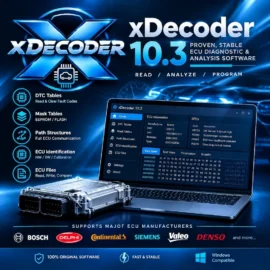
The most useful diagnostic equipment does more than display a generic description such as “sensor fault”. It should show stored, pending and permanent codes where supported, along with live readings and, ideally, freeze-frame data showing what the system saw when it logged the issue.
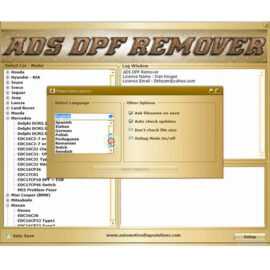
Live data is where diagnosis begins to pay for itself. On a Euro 6 diesel, a DPF-related fault may be linked to exhaust temperature, differential pressure, soot load, regeneration status or an upstream sensor reading. Replacing a component because its code appears first can be expensive and ineffective. Comparing readings at idle, under load and during an active test helps narrow down whether the fault is wiring, a blocked component, an implausible signal or a genuine failed part.
Bi-directional functions are equally valuable when they are available for the vehicle. These allow the technician to command selected components or routines through the scan tool, rather than waiting for the vehicle to meet a particular operating condition. Examples include initiating a DPF regeneration, carrying out an injector coding procedure, operating an actuator, resetting service functions or calibrating a component after replacement. Coverage varies by manufacturer and model, so these functions should be treated as a compatibility question, not an automatic promise.
A serious tool also needs a clear screen, sensible menus and dependable updates. The fastest diagnostic process is not the one with the longest feature list. It is the one that lets the technician select the correct vehicle, enter the correct module and interpret the result without wasting ten minutes navigating poor software.
Choosing commercial vehicle diagnostic tools for your work
Start with the vehicles you actually see. A mobile mechanic dealing mainly with Transit-sized vans has different requirements from a commercial repairer servicing HGVs, municipal vehicles and trailers. Buying for an imagined future workload often leaves a workshop paying for functions it will not use, while missing the adapter cable needed for the vehicles at hand.
Connector support deserves the same attention as software coverage. Commercial vehicle diagnostic tools commonly require 6-pin, 9-pin or 16-pin adapters, and some applications demand dedicated manufacturer leads. An interface supplied with the wrong cable is not a bargain when the vehicle is occupying a ramp and the correct lead is elsewhere.
Think about the type of work as well. For routine inspections and first-line fault finding, a reliable multi-system scanner that reads and clears codes, displays live data and reports vehicle information may be enough. For regular emissions, brake, gearbox or programming-related work, deeper functions and more extensive coverage are worth paying for. The financial case is straightforward: a tool that saves repeated diagnostic time and prevents unnecessary parts fitting earns its place quickly.
Software support is another practical consideration. Newer vehicles bring new modules, revised software and changing service procedures. A tool with a clear update path is more likely to remain useful as the fleet changes. Check whether updates are included for a defined period, whether functions are model-specific and whether technical support is available when a vehicle will not communicate as expected.
Do not diagnose the code in isolation
A fault code is evidence, not a repair instruction. “Low pressure”, “signal implausible” or “communication error” describes what a control module has detected. It does not automatically identify the failed component.
Take a NOx sensor code on a modern diesel lorry. The sensor may have failed, but the underlying issue could also involve damaged wiring, poor power or earth supply, exhaust leaks, contamination, an SCR efficiency problem or another module sending incorrect information. Clearing the code and fitting a sensor without checking related values may return the vehicle to the workshop days later with the same warning.
The same discipline applies to communication faults. Before blaming a control unit, verify battery voltage, charging condition, fuses, grounds, connector pins and CAN wiring. Low voltage produces misleading faults across multiple modules, especially after a vehicle has stood idle or a battery has deteriorated. A proper battery tester belongs alongside the scan tool for that reason.
Trailer faults need their own approach
Trailers are often treated as an afterthought until an EBS or ABS warning appears on the tractor unit. That is costly. The trailer may have its own electronic brake control system, sensors, modulator valves, power supply and wiring issues, all of which need checking at the trailer diagnostic socket.
A compatible trailer diagnostic interface and the correct adapter can show active faults and system data directly, rather than relying solely on the tractor display. This is particularly useful for intermittent faults caused by corroded connectors, damaged coiled leads or voltage drop under load. It also reduces the risk of sending a trailer out with a cleared warning but an unresolved braking-system defect.
Build a diagnostic process, not a collection of gadgets
Even premium equipment cannot compensate for a rushed test routine. A consistent process protects labour time and helps less experienced technicians make better decisions. Record the customer complaint, inspect the vehicle, test battery condition and supply voltage, perform a full system scan, then use live data and guided tests to prove the cause before replacing parts.
Keep the report where possible. A pre-repair scan records the original condition, while a post-repair scan confirms that the relevant code has not returned and systems are communicating properly. For fleet customers, this creates a useful repair trail and makes recurring faults easier to spot across similar vehicles.
Diagnostic Central focuses on equipment that supports this real-world approach: practical coverage, clear results and the accessories needed to connect to the vehicle in front of you. The correct scanner, adapter and supporting test equipment will always outperform guesswork.
The best purchase is not necessarily the most expensive unit on the shelf. It is the tool that covers your vehicles, supports the jobs you carry out and gives reliable information when downtime is costing money. Choose it with the same care you would apply to any workshop equipment, then use the data to prove the repair before the vehicle returns to the road.