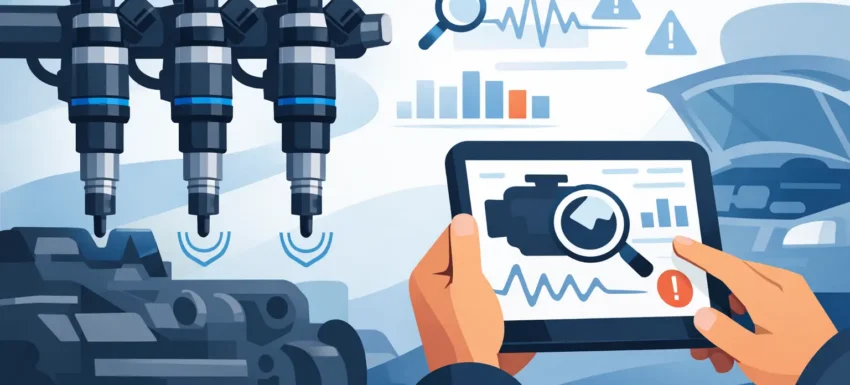
A modern common-rail diesel can log an injector-related fault long before it becomes a no-start, a heavy misfire or a cloud of smoke. The key is knowing how to scan diesel injectors properly: reading codes is the starting point, but live data, cylinder comparison and guided tests are what prevent expensive guesswork.
An injector fault does not always mean the injector itself has failed. Wiring faults, low rail pressure, a blocked fuel filter, air entering the fuel system, a weak battery, EGR issues and DPF faults can all produce similar symptoms. A capable diagnostic scan helps separate the cause from the complaint before parts are ordered.
What a diesel injector scan can tell you
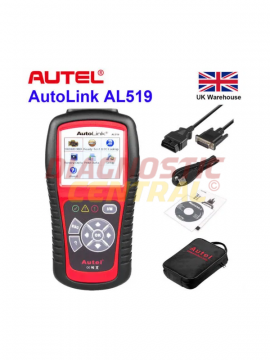
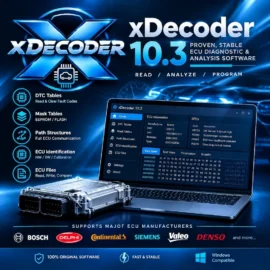
Most OBD2 readers will retrieve generic engine fault codes, but a diesel-specific diagnosis needs more than a basic code read. A suitable multi-make scan tool should access the engine control unit, manufacturer-specific codes, freeze-frame information and live data. On many vehicles it should also offer actuator tests, injector coding functions and service routines.
The scan tool is not physically measuring injector spray pattern, nozzle wear or internal leakage. It is reading what the ECU sees: electrical circuit status, commanded fuel quantity, fuel rail pressure, crankshaft speed variation and the correction each cylinder requires to keep the engine running evenly.
That distinction matters. A healthy-looking injector correction value does not prove an injector is perfect, while a high correction value does not automatically condemn it. Use scan results alongside the engine’s symptoms and basic fuel-system checks.
How to scan diesel injectors step by step
Start with the battery and vehicle details
Connect a battery support unit if the vehicle has a weak battery or you expect to carry out actuator tests, coding or a regeneration-related procedure. Low voltage creates false communication faults and can interrupt programming functions.
Plug the scanner into the vehicle’s diagnostic socket, usually beneath the dashboard on cars and light commercial vehicles. Turn the ignition on without starting the engine, then identify the vehicle automatically where possible. If manual selection is required, be precise about make, model, engine code and year. Diesel engine management systems can differ substantially within the same model range.
Before clearing anything, record the registration details, mileage, stored codes and freeze-frame data. Freeze-frame information can show coolant temperature, engine speed, rail pressure and vehicle load when the fault was first recognised. This is often more useful than the code description alone.
Read all engine fault codes, not just one
Enter the engine or ECU menu and perform a complete fault-code scan. Look for codes described as current, active, pending, stored or historic. Current faults are normally the priority, but stored codes may reveal an intermittent fault that has developed into the present complaint.
Common injector-related code families include circuit faults for a specific cylinder, injector control pressure or rail-pressure faults, fuel metering issues, cylinder contribution faults and combustion-related misfire codes. The exact wording differs by manufacturer.
A code for injector cylinder 3 circuit high, for example, points first towards the injector connector, loom or ECU driver circuit. It does not tell you to fit a new injector immediately. Inspect connectors for corrosion, oil contamination, stretched wiring and poor terminal grip before replacing parts.
Check live rail-pressure data
With the engine at idle, compare desired or commanded rail pressure with actual rail pressure. The two should normally track closely once the engine is stable. A major gap can cause rough running, poor starting and injector-related codes even when every injector is electrically sound.
Repeat the check while raising engine speed smoothly and, where safe, during a road test under load. Actual pressure that falls behind demand may indicate a restricted fuel supply, weak high-pressure pump, faulty pressure control valve, rail-pressure sensor issue or excessive injector leak-off.
Do not judge values against one universal figure. Rail pressure varies widely between engines, operating temperatures and load conditions. The useful question is whether actual pressure follows the ECU’s requested pressure consistently.
Read injector correction or balance values
Find the live-data parameters called injector correction, fuel quantity correction, smooth running control, cylinder balance, adaptation value or a similar manufacturer-specific term. These figures show how much additional or reduced fuel the ECU is applying to each cylinder to maintain a stable idle.
Look for a cylinder that is consistently different from the others, particularly once the engine is fully warm. A large positive correction can suggest the ECU is adding fuel because that cylinder is contributing less than expected. A large negative figure can mean it is reducing fuel to compensate for excessive contribution.
There is no single acceptable correction range for every diesel. Some systems display milligrams per stroke, others show a percentage, time value or coded status. Always use the manufacturer’s data where available. More importantly, compare all cylinders under the same conditions rather than treating one isolated number as a verdict.
If one cylinder is clearly out of line, consider the full picture: injector condition, compression, valve timing, air leaks, glow plug performance during cold starting and mechanical engine wear can all influence balance data.
Use cylinder cut-out and actuator tests carefully
Higher-level diagnostic equipment may allow an injector cut-out, cylinder contribution or actuator test. The ECU briefly reduces or stops fuelling to an individual cylinder while monitoring the effect on engine speed.
A healthy cylinder should cause a noticeable change when cut out. If disabling one cylinder makes little difference, that cylinder may already be weak. This is useful supporting evidence, especially when paired with an uneven correction value, but it is not a substitute for mechanical testing.
Carry out these tests at idle, with the vehicle secure, transmission in neutral or park, parking brake applied and workshop ventilation in place. Follow the scan tool’s on-screen instructions. Do not run repeated cut-out tests on an engine that is severely misfiring or showing dangerously low fuel pressure.
Inspect coding and adaptation status
Many common-rail injectors have calibration codes, often referred to as IMA, C2I, C3I, ISA or trim codes. These codes tell the ECU the injector’s individual flow characteristics. If an injector has been replaced, the code may need entering into the correct cylinder position.
Use the scanner to check whether injector coding is supported and whether the stored values match the injector labels. Incorrect coding can lead to poor idle quality, smoke, reduced economy and fault codes after an otherwise correct repair.
Coding is not a cure for a worn injector. It is a calibration step after fitting the correct part. Never copy codes between cylinders or guess a code because the original label is unreadable.
When the scan points to a fuel-system problem
If injector corrections are uneven and rail pressure is unstable, follow up with physical tests before authorising injectors. A leak-off or return-flow test is often the next sensible step. Excessive return flow from one injector can prevent the rail from reaching pressure, particularly during cranking, and can identify a failing injector that live data alone cannot prove.
For an electrical circuit code, use a wiring diagram and test the harness correctly. Depending on injector type, resistance testing may be inappropriate or misleading, particularly with piezo injectors. Check manufacturer procedures before applying a multimeter or test light. Piezo systems operate differently from conventional solenoid injectors and should be handled with care.
Never loosen high-pressure diesel pipes while the engine is running or cranking. Common-rail systems operate at extremely high pressure, and fuel injection through the skin is a medical emergency. Depressurise the system only in line with the vehicle manufacturer’s procedure.
Common scanning mistakes that waste time
The most costly mistake is clearing codes before recording them. Once freeze-frame data has gone, you may lose the clue that showed the fault appeared only during cold starts, hard acceleration or low fuel level.
Another is scanning only at idle. Some injectors behave acceptably with no load but fail to deliver correctly on the road. If the vehicle is safe to drive and the scan tool records live data, compare rail pressure, correction values and fault status under the conditions that reproduce the complaint.
It is also easy to overlook related systems. A blocked DPF can increase exhaust back-pressure and alter engine behaviour. EGR faults can mimic combustion problems. An intake leak can affect air-mass readings and fuelling control. Good diagnostics follows the evidence rather than chasing the first code displayed.
Choose a scanner with the right diesel coverage
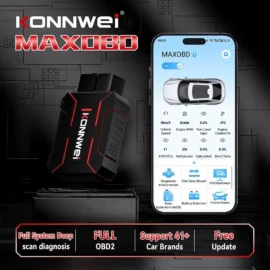
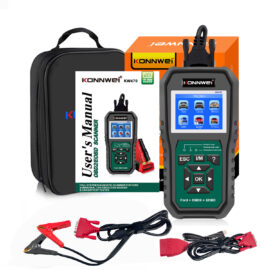
For occasional checks, a dependable OBD2 scanner that reads engine codes and basic live data can establish whether a fault is present. For regular workshop use, choose equipment with manufacturer-level engine coverage, live graphing, injector coding, actuator tests and clear data logging. Commercial vehicle work may also require dedicated lorry protocols and the correct adapter leads.
Diagnostic Central customers should prioritise supported vehicle coverage and usable functions over a long, vague feature list. A tool that can access the right ECU and display meaningful live data will save more workshop time than a cheap reader that only reports generic codes.
Treat the scan as the evidence-gathering stage, then confirm the repair with a focused test rather than replacing a full set of injectors on assumption. That disciplined approach protects the customer, the vehicle and the workshop’s reputation.