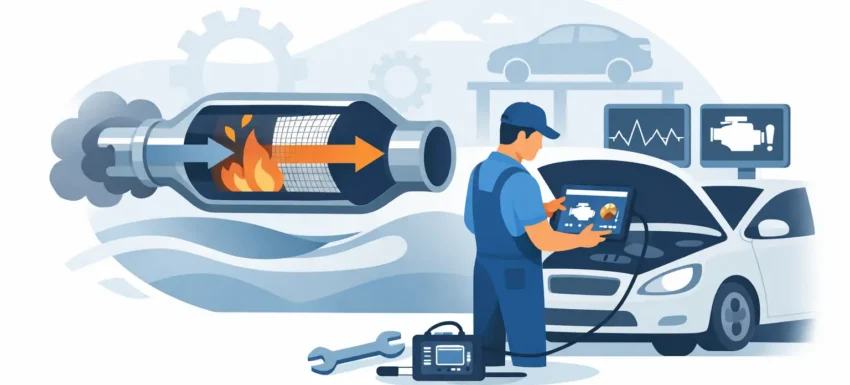
A DPF warning lamp is rarely a simple instruction to force a regeneration and hand the keys back. It is a sign that the engine management system has calculated an excessive soot load, detected a failed regeneration attempt, or identified a fault that makes regeneration unsafe. This DPF regeneration diagnostic guide sets out a workshop-led process for finding the cause before the filter, turbocharger or engine oil pays the price.
Start With the Fault Codes and Live Data
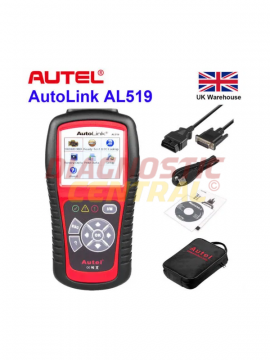
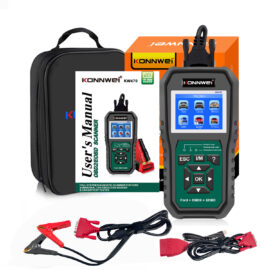
Read all stored, pending and manufacturer-specific fault codes before clearing anything. A generic code reader may identify a particulate filter efficiency or pressure issue, but a capable diagnostic tool will show the data needed to make a decision: calculated soot mass, ash loading where supported, differential pressure, exhaust gas temperatures, distance since the last regeneration and regeneration status.
Do not treat a DPF-related code as proof that the filter itself has failed. Codes for an exhaust temperature sensor, differential pressure sensor, boost control, EGR system, glow plugs or injector circuit can all stop an active regeneration. Clearing the code without correcting the underlying fault merely resets the evidence and often sends the vehicle back with the same warning lamp a few days later.
Begin with a cold-engine data check where possible. Record the values, then compare them against manufacturer information for that vehicle. Values vary widely by engine, control strategy and sensor range, so there is no single differential-pressure figure that condemns every DPF. What matters is whether the reading is credible at idle and under load, and whether it agrees with the reported soot calculation.
Separate soot loading from ash loading
Soot is combustible carbon generated during normal diesel operation. A successful regeneration burns it away by raising exhaust temperature. Ash is non-combustible residue from engine oil additives and fuel-borne additives. It remains in the filter and accumulates over the life of the vehicle.
This distinction prevents expensive mistakes. A filter with high soot loading may recover after the fault is repaired and a controlled regeneration is completed. A filter at its calculated ash limit will not be restored by repeated regenerations. It may need professional off-car cleaning or replacement, depending on its condition and the vehicle manufacturer’s procedure.
Check Whether Regeneration Is Being Inhibited
Modern diesel systems have strict conditions before they will begin or continue active regeneration. A short run to the shops is only part of the story. The ECU also needs believable sensor signals, enough fuel, suitable coolant temperature and no active faults that could make exhaust temperatures uncontrolled.
Before requesting a service regeneration, check these common blockers:
- Fuel level, as many vehicles inhibit regeneration below a specified level.
- Coolant temperature and thermostat operation, because an engine running too cool may never meet regeneration criteria.
- Differential pressure sensor readings and the condition of both pressure hoses.
- Exhaust gas temperature sensors before and after the DPF.
- EGR, intake-air, boost and injector faults that increase soot production or prevent the ECU from starting the process.
- Engine oil level and oil condition, particularly where fuel dilution is suspected.
The pressure sensor hoses deserve proper attention. Split, melted, restricted or water-contaminated hoses can create false readings. Remove them only when safe to do so, inspect their routing and check for carbon blockage at the take-off pipes. Fitting a DPF because a £20 hose has collapsed is poor diagnostics.
Also check the vehicle’s use pattern. Repeated short journeys can explain why soot has built up, but they do not explain an implausibly high pressure reading, an inoperative temperature sensor or a thermostat stuck open. Driving pattern is a contributing factor, not a substitute for testing.
Use Differential Pressure Properly
Differential pressure is one of the most useful indicators in DPF diagnostics, but only when measured in context. At idle, a healthy filter should generally show a low, stable pressure drop. Raise the engine speed and the value should increase progressively as exhaust flow rises. A reading that stays fixed, drops unexpectedly or jumps about points towards sensor, wiring or hose issues.
A high reading at idle and at elevated revs may indicate genuine restriction, but confirm it. Compare the scanner data with a mechanical pressure gauge where the workshop procedure allows. Check sensor supply, earth and signal integrity with suitable electrical test equipment. A pressure sensor that has drifted out of range can cause repeated regenerations, excessive fuel use and, eventually, a damaged DPF.
Interpret pressure alongside soot mass. If calculated soot is low but differential pressure is very high, investigate the sensor circuit, blocked pressure ports or ash accumulation. If soot is high but measured pressure remains unusually low, suspect incorrect sensor data, a leaking hose or a damaged filter substrate. The numbers need to tell the same story.
Decide Whether a Forced Regeneration Is Safe
A scan-tool initiated regeneration is not a cure-all button. It deliberately raises exhaust temperatures, often well beyond normal driving levels, to oxidise accumulated soot. That makes it useful after the underlying fault has been corrected, but potentially damaging if used on an overloaded, mechanically compromised or fuel-diluted vehicle.
Follow the tool prompts and manufacturer procedure exactly. Carry out the process in a suitable, well-ventilated area, keep combustible materials clear, and do not leave the vehicle unattended. The exhaust, DPF and surrounding components become extremely hot. On some vehicles, the radiator fan may run at high speed and the engine idle will increase during the procedure.
Do not initiate regeneration simply because a customer wants the warning light off quickly. Stop and investigate further if soot loading exceeds the manufacturer’s forced-regeneration limit, differential pressure is extreme, exhaust temperature sensors are faulty, oil level is above maximum, or there are faults related to fuelling, turbo control or combustion quality. In these cases, forcing the process can melt the filter substrate, overheat the exhaust system or worsen engine damage.
If the scanner offers both parked and driving regeneration routines, choose based on the vehicle’s condition and the manufacturer instructions. A road regeneration can be less stressful in the right circumstances, but it must be completed safely and legally. A parked routine provides more control and better live-data observation, although it places a concentrated thermal load on the system.
Confirm the Root Cause After Regeneration
A completed regeneration is the start of verification, not the end of the job. Re-read fault codes, check the soot figure has reduced as expected, and compare differential pressure at idle and raised engine speed with the values recorded before the work. Confirm exhaust temperature sensors react logically during a road test and that the ECU has registered regeneration completion.
Then address why the filter loaded in the first place. On a high-mileage diesel, gradual ash accumulation may be the honest answer. On a low-mileage vehicle, investigate excessive soot production from leaking injectors, air leaks, boost faults, sticking EGR valves, poor combustion, frequent interrupted journeys or incorrect engine oil specification.
Oil quality matters more than many owners realise. A DPF-equipped vehicle requires the specified low-SAPS oil. The wrong oil produces more ash, reducing filter capacity over time. If repeated failed regenerations have caused fuel dilution, change the oil and filter before releasing the vehicle. Diesel-contaminated oil can lose viscosity and create a far larger repair bill than the original DPF complaint.
When Cleaning or Replacement Makes More Sense
Chemical cleaning may help where contamination or moderate soot loading is the issue, but it cannot repair a cracked, melted or collapsed substrate. It also cannot remove a substantial ash load as effectively as a reputable off-car cleaning process. Be cautious of claims that any additive will reverse a severely restricted filter without inspection or measured results.
Replacement is justified where the substrate is damaged, ash load has reached the service limit, or a cleaning process has not restored acceptable pressure readings. Before fitting a new DPF, rectify every related engine-management fault and reset adaptations only where the manufacturer procedure calls for it. A new filter fitted to an engine with a boost leak or failed temperature sensor is simply an expensive countdown to the next warning lamp.
DPF Regeneration Diagnostic Guide: The Workshop Standard
The strongest DPF diagnosis combines scan data, physical inspection and common sense. A quality diagnostic tool earns its place by showing more than a single fault code: it gives the technician the live information needed to prove whether the fault is sensor-related, operational, combustion-related or genuinely inside the filter.
For competent DIY users, the same principle applies. Reading codes and monitoring live values can help you understand the fault, but do not force a regeneration without confirming that the vehicle is safe and suitable. For garages, recording pre- and post-repair values protects the customer and demonstrates that the repair was based on evidence rather than guesswork.
Treat the DPF as the messenger until the data proves it is the culprit. A precise diagnosis prevents repeat visits, protects expensive exhaust components and gives the vehicle its best chance of returning to reliable service.