A proper ECU remapping equipment guide starts with a hard truth: the flashing tool is only one part of the job. A successful calibration depends on identifying the ECU correctly, maintaining stable voltage, reading the original file without corruption and applying a vehicle-specific calibration that keeps the car legal, reliable and fit for purpose. Buy a cheap programmer without considering the rest of that chain and an apparently simple remap can become an expensive recovery job.
For professional workshops, mobile technicians and capable enthusiasts, the right setup reduces guesswork. It also determines which vehicles you can support, how quickly you can work and how confidently you can deal with newer control units protected by gateways, boot modes and increasingly complex security.
What ECU remapping equipment actually does
ECU remapping equipment communicates with the engine control unit to read, write or clone its software and calibration data. Depending on the vehicle and ECU type, this may happen through the OBD port, directly on the bench, or through a boot-mode connection to the ECU circuit board.
The aim is not simply to add power. A legitimate calibration can refine torque delivery, account for approved hardware changes, improve drivability or support specialist applications. The equipment itself does not create a good result. It provides controlled access to the ECU; the quality of the file, the accuracy of vehicle identification and the technician’s process determine the outcome.
A remapping tool should therefore be viewed as part of a workshop system. You need diagnostic capability before programming, dependable power support during programming and a recovery plan if a write fails.
ECU remapping equipment guide: choose your access method
The first decision is how you will access the ECU. No single method covers every vehicle, and a tool advertised as universal still has protocol, software and vehicle-specific limits.
OBD programming
OBD programming is usually the fastest route. The tool connects through the vehicle’s diagnostic socket, reads the relevant ECU data and writes the revised file without ECU removal. For routine work on supported vehicles, it is efficient, tidy and well suited to a busy garage.
Its limitation is access. Some ECUs allow only partial reads through OBD, while others block writing or require security authorisation. A modern vehicle may also need a gateway bypass or authorised access before diagnostic communication is available. Never assume that an OBD connector means the ECU can be safely flashed through OBD.
Bench programming
Bench work involves removing the ECU or accessing its connector off the vehicle, then using a dedicated wiring harness or breakout cable. It gives the technician greater control and can support ECUs that are unavailable through OBD.
This method requires accurate pinout information, clean connections and a stable external power supply. It takes longer than OBD programming, but it is often the sensible route where the vehicle has communication restrictions or the ECU needs recovery after an interrupted flash.
Boot mode and service mode
Boot mode and service mode provide lower-level access to certain control units. The ECU housing is opened and connection points on the circuit board are used to place the unit into a programming state. This is specialist work, not a shortcut.
The benefits are substantial when dealing with locked, damaged or unsupported modules. The risks are equally real: incorrect probe placement, electrostatic damage, poor soldering or disturbed components can turn a recoverable ECU into a replacement cost. If your work is mainly straightforward stage-one calibrations, it may be more commercial to use OBD and bench systems first, then add boot-mode capability when demand and training justify it.
The core equipment a reliable setup needs
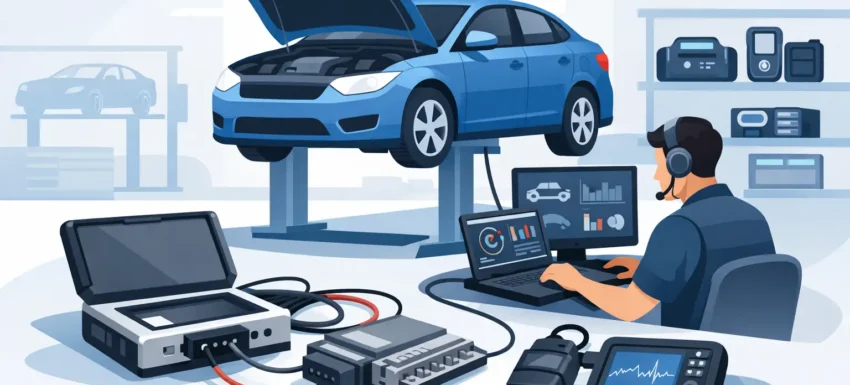
A capable remapping workstation is built around more than a programmer. The following items are the practical minimum for repeatable work:
- A professional ECU programming tool with current vehicle, ECU and protocol coverage.
- A regulated battery support unit or stabilised power supply with sufficient amperage for programming.
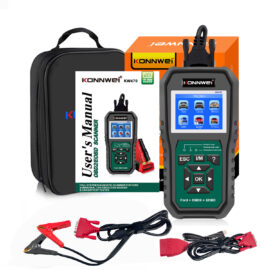
- Correct OBD leads, bench harnesses, breakout cables and manufacturer-specific adapters.
- A dedicated Windows laptop with reliable USB ports, sufficient storage and up-to-date licensed software.
- A diagnostic scanner capable of full-system scans, live data and clearing pre-existing fault codes.
- A clean ESD-safe bench, ECU pinout data and basic electronics tools for bench or boot work.
The battery support unit deserves particular attention. Voltage drop during writing is one of the most avoidable causes of ECU corruption. A vehicle battery that starts the engine normally is not automatically stable enough for programming. Fans, modules, infotainment systems and wake-up events can create fluctuating demand. Use a proper support unit, check the connection at the battery terminals and avoid programming a vehicle with an already weak battery.
Diagnose before you read or write
Remapping a car with unresolved faults is poor workshop practice. Scan all systems before any programming work, record fault codes and check relevant live data. If the engine has boost leaks, injector issues, DPF faults, battery voltage problems or implausible sensor readings, a calibration will not cure them.
This pre-check also protects the workshop. Save the vehicle identification number, ECU hardware and software numbers, mileage where appropriate, fault report and original read file. These records confirm what arrived, what was installed and what conditions existed before work began.
After programming, scan the vehicle again. Confirm that the ECU communicates correctly, clear only faults related to the programming process where appropriate, then road-test the vehicle or validate it through the correct workshop procedure. A clean write message does not replace verification.
File handling is as important as hardware
The original file is your fallback. Store it immediately, name it consistently and keep more than one backup. A sensible file name includes the registration or internal job number, ECU type, hardware number, software number and date. Avoid saving files to a random desktop folder or overwriting the original with a modified version.
Good file management matters when a customer returns months later, when an ECU requires recovery or when software updates introduce revised reading methods. It also supports clear traceability if several technicians use the same equipment.
Only use calibrations from a source you trust and that understands the exact ECU, software version and vehicle application. Generic files are a false economy. Two vehicles with the same engine badge can have different ECU software, turbo hardware, transmission limits and emissions equipment. Calibration must respect those differences.
Compatibility, subscriptions and the real cost of ownership
The headline price of a remapping tool rarely tells the whole story. Before buying, check whether the supplier includes protocols, how updates are charged, which cable sets are supplied and whether tokens, credits or annual subscriptions apply. Also establish what technical support is available when a vehicle is not listed, a read is incomplete or an ECU needs recovery.
For a garage working across common UK passenger vehicles, broad OBD and bench coverage may offer the best return. A specialist working on performance cars, agricultural machinery, vans or lorries may need particular ECU families, commercial-vehicle protocols or 24-volt support. Buy for the vehicles you genuinely see, not for an impressive but irrelevant coverage list.
A lower-cost device can make sense for occasional, supported jobs. Daily commercial use calls for better update support, stronger cable quality, clearer documentation and a supplier who understands workshop consequences when a job does not go to plan.
Legal, insurance and emissions boundaries
ECU work must not be treated as a route around emissions or safety systems. Removing or disabling emissions-control functions can make a vehicle illegal for road use, create MOT problems and expose both owner and workshop to serious risk. A responsible remapping service keeps vehicles compliant with applicable roadworthiness and emissions requirements.
Customers should also be told that an engine calibration can affect insurance, warranty and vehicle resale. The owner is responsible for declaring relevant modifications to their insurer, but clear written advice from the workshop helps avoid disputes later. Be equally clear where a vehicle is used only for motorsport or off-road applications, as that does not automatically make every modification appropriate for public-road use.
Build a process before expanding your services
The most profitable remapping operation is usually the one that refuses unsuitable jobs. Start with supported ECUs, established calibration sources and a defined intake process. Build competence in diagnostics, voltage management, data backup and recovery before taking on complex locked modules.
Diagnostic Central’s remapping accessories, diagnostic tools and adapter cables are designed for technicians who need practical equipment that earns its place in the workshop. Match the tool to the work, protect every programming session with stable power, and keep the original data secure. That discipline is what turns ECU access into dependable calibration work.