
A vehicle rarely fails without leaving clues. A starter slows down on cold mornings, battery voltage drops under load, a DPF regeneration takes longer than expected, or a live-data reading begins to drift away from normal. Predictive maintenance diagnostics turn those clues into usable information before a warning light, breakdown or missed job forces the issue.
For a busy workshop, that means less time chasing intermittent faults and fewer vehicles occupying a ramp because the true cause was missed first time. For a competent DIY owner, it means making informed decisions before a minor concern becomes an expensive repair. The principle is straightforward: measure vehicle condition regularly, identify change early, then repair on evidence rather than assumption.
What predictive maintenance diagnostics actually mean
Predictive maintenance is often confused with routine servicing. Routine servicing follows a schedule: replace oil, filters and consumables at set mileage or time intervals. It remains essential, but it does not always reveal whether a component is starting to fail between services.
Predictive maintenance diagnostics use test results, stored fault data and live readings to judge the likely health of systems before failure occurs. The aim is not to replace parts because a code reader has found one historic code. It is to establish whether the vehicle is developing a fault, how urgent it is, and what evidence supports the repair.
Modern vehicles provide far more information than a basic engine warning light suggests. Depending on the vehicle and diagnostic tool, you may be able to assess charging voltage, battery state of health, fuel trim, coolant temperature behaviour, injector correction values, DPF soot loading, wheel-speed signals, sensor plausibility and module communication.
A single reading is useful. A pattern over time is far more valuable. If a battery is repeatedly tested at the same point in the service cycle, a falling state of health is easier to act on than a no-start callout in a customer car park.
Why workshops benefit from earlier fault detection
The commercial benefit is not simply avoiding breakdowns. Predictive work improves how efficiently a workshop operates. A technician who starts with accurate data can narrow the fault path quickly, order appropriate parts and set realistic customer expectations.
It also protects against the expensive habit of replacing components by guesswork. A fault code for low boost pressure, for example, does not automatically condemn a turbocharger. It may point to a split hose, sticking actuator, vacuum issue, sensor problem or an intake restriction. Live data and actuator tests help establish which possibility deserves attention.
For fleet operators and commercial vehicle repairers, early diagnosis carries extra weight. A lorry, van or trailer out of service can affect deliveries, drivers, planned work and customer commitments. Monitoring battery condition, charging performance, emissions-system data and recurring communication faults can help schedule repairs around the operation rather than reacting at the roadside.
There is a customer-service benefit too. Showing a customer a measured battery result, saved scan report or repeated live-data anomaly makes the recommendation easier to explain. It moves the conversation away from “we think it may be” and towards a clear, recorded reason for repair.
The diagnostic data that matters most
Not every available parameter needs monitoring. The right checks depend on vehicle age, usage, engine type and known weak points. A high-mileage diesel used for short journeys needs different attention from a petrol performance car or a delivery van covering motorway miles every day.
Battery and charging data are among the most useful starting points. Low voltage causes a surprising range of false faults, communication errors and stop-start complaints. A proper battery tester can assess state of health and starting capacity, while a scan tool can identify charging-system faults and voltage-related module codes.
Engine live data is equally valuable when interpreted in context. Coolant temperature that never reaches operating level may indicate a thermostat issue. Fuel trims that are consistently high can point towards unmetered air, fuel delivery problems or sensor errors. Uneven injector correction values do not always mean an injector requires replacement, but they can justify further testing before a drivability complaint becomes severe.
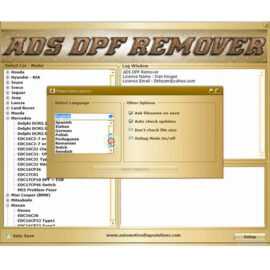
On modern diesel vehicles, DPF and emissions data deserve regular attention. Differential pressure, soot load, ash accumulation, exhaust gas temperature readings and regeneration history can reveal a developing issue before the vehicle enters reduced-power mode. The trade-off is that data values vary between makes and engines. A figure that looks alarming on one vehicle may be normal on another, so use manufacturer information and known-good comparisons where available.
ABS, airbag, body-control and transmission modules should not be ignored simply because the engine runs correctly. Intermittent wheel-speed dropouts, low-voltage codes and module communication issues may be stored long before a permanent dashboard warning appears. A full-system scan is therefore more useful than checking the engine ECU alone.
A practical process for predictive maintenance diagnostics
Reliable diagnosis follows a repeatable routine. Start with the vehicle history and the driver’s report. A fault that occurs only after rain, under heavy load or during short trips needs testing in those conditions where possible. Clearing codes immediately may erase useful evidence, particularly freeze-frame data showing the engine state when the fault was recorded.
Carry out a full vehicle scan before beginning repairs. Record current, pending and historic codes, then separate genuine recurring faults from old entries that may relate to previous work or a flat battery. Pay attention to codes across different modules. Several unrelated systems reporting low voltage is usually a charging or battery concern, not several failed control units.
Next, check live data at idle, during a controlled road test where safe, and under the conditions that trigger the complaint. Compare sensor values with each other as well as with expected ranges. If intake-air temperature is implausible compared with ambient conditions, or a wheel-speed signal drops out only on turns, the trend is more meaningful than the code description alone.
Use active tests where the diagnostic equipment supports them. Commanding a cooling fan, EGR valve, injector test, fuel pump or actuator can confirm whether the control module is requesting operation and whether the component responds. This helps divide electrical control faults from mechanical failures.
Finally, save the results and establish a recheck point. A borderline battery may be suitable for monitored use rather than immediate replacement, particularly if the vehicle is driven regularly and charges correctly. A rising DPF pressure reading, however, may need earlier action if the vehicle’s duty cycle makes successful regeneration unlikely. Predictive maintenance is about managing risk, not treating every imperfect reading as an emergency.
Choosing equipment that supports real decisions
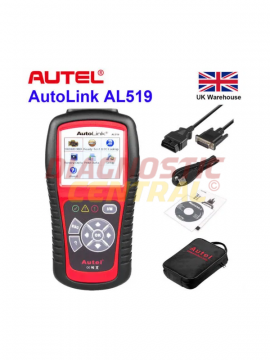
A basic OBD2 reader is useful for checking generic engine codes, but it has limits. It may not access body, ABS, airbag, gearbox or manufacturer-specific modules. It may also offer little or no live data, service functions, coding capability or active tests.
For regular workshop use, choose diagnostic equipment around the vehicles you actually see. Multi-make coverage is valuable for independent garages and mobile technicians, while brand-specific diagnostic modules can offer deeper access where a particular manufacturer is a regular part of the workload. Check supported model years, system coverage, update arrangements and whether the tool can produce reports worth retaining with the job record.
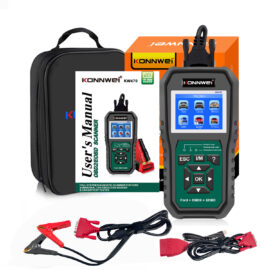
Do not overlook the accessories. Correct adapter cables matter on commercial vehicles, older vehicles and specialist applications. A quality battery tester, breakout leads, multimeter and suitable charger often provide the evidence that a scan tool alone cannot. Diagnostics work best when electronic data is checked alongside basic electrical and mechanical testing.
Where predictive diagnosis can go wrong
Diagnostic equipment reports what the control modules can see. It cannot directly identify every mechanical problem. An air leak, poor earth connection, blocked fuel filter, worn timing component or damaged wiring loom may produce misleading symptoms or no code at all.
There is also a risk in treating every stored code as a current failure. Historic codes, voltage events and intermittent faults require verification. Clear the fault only after recording it, reproduce the conditions where possible, and confirm the repair with a rescan and road test.
The strongest diagnostic decisions combine scan results with vehicle history, visual inspection, voltage-drop testing and technician judgement. That is where good equipment earns its place: it reduces uncertainty and shortens the route to proof.
The next vehicle on the ramp does not need to wait for a warning light to become a problem. Build condition checks into servicing, retain the readings, and let the trend tell you when it is time to act.