A warning message such as ‘EV system fault’, reduced power, or a charge cable that will not lock can stop a vehicle in its tracks. EV diagnostics give you a structured way to find out whether the cause sits in the 12V supply, charging system, battery management, thermal control or high-voltage network, rather than replacing parts on assumption.
Quick answer
- Start with a complete vehicle scan and record all fault codes before clearing anything.
- Check the 12V battery and low-voltage supply first, as poor voltage can create misleading EV faults.
- Use live data and guided tests, where supported, to separate a stored history code from an active fault.
- Treat high-voltage work as a safety-critical task requiring the correct training, isolation process and equipment.
What EV diagnostics actually covers
Electric vehicles still use a standard diagnostic connector and control modules, but the systems being checked are more varied than on a conventional petrol or diesel car. A capable scan tool may communicate with the battery energy control module, inverter, onboard charger, DC-DC converter, electric drive unit, thermal management system, charge-port controller, body control module and safety restraint systems.
Reading a generic OBD2 code can be useful for an initial indication, particularly for emissions-related hybrid functions or basic powertrain faults. It is rarely enough for meaningful EV fault-finding. Manufacturer-specific faults, live data, actuator tests, service functions and module coding vary by make, model, year and software level. Check the exact vehicle and required function before choosing equipment.
The objective is not simply to erase a dashboard warning. Good diagnostic work identifies what the module has detected, whether the fault is current or intermittent, what conditions caused it and whether a basic wiring, supply or component check supports the result.
Why a full system scan matters on an EV
Modern EVs share information across several networks. A fault in one area can create warnings in another. For example, a weak 12V battery may cause communication errors, contactor-related codes and charging issues even where the high-voltage battery is healthy. A cooling-system fault can limit charging rate or vehicle performance because the battery management system is protecting cell temperature.
A full scan gives context. It shows which modules are reporting faults, whether codes are repeated across the network and which control unit is the likely source. Save or print the pre-repair scan where your tool allows it. This is particularly useful for workshop records, fleet maintenance and confirming that a repair has resolved the original concern.
Freeze-frame data and live parameters are often more valuable than the code description alone. Battery state of charge, state of health, cell-temperature readings, insulation resistance status, charge-port state, coolant temperatures and contactor commands can point the investigation in the right direction. The data must still be interpreted carefully. A parameter reading that appears abnormal may be a normal response to low ambient temperature, a low state of charge or a system protection strategy.
A practical EV diagnostic process
Start by confirming the customer complaint. Does the vehicle fail to wake up, refuse AC charging, refuse rapid charging, display reduced power or show a warning only after a journey? Conditions matter. A fault that occurs only when cold, wet, connected to a particular charge point or under high load needs testing in that context where it is safe to do so.
Next, inspect the basics. Check the 12V battery condition, battery terminals, relevant fuses, visible wiring, coolant level where applicable and the charge port for damage or contamination. A battery tester is a sensible first-line tool for assessing the low-voltage battery and charging support system. Do not assume an EV’s 12V battery is healthy simply because the traction battery has charge.
Then perform a complete scan. Record all codes and look for communication faults, undervoltage history and codes marked current, pending or permanent. Clear codes only after they have been recorded and only when this will not interfere with a safe diagnosis. If faults return immediately, inspect the related circuit and live data. If they return during charging or driving, reproduce the conditions only within your competence and the manufacturer’s safety guidance.
Guided functions can save considerable time where supported. These may include battery pack data checks, cooling-system bleeding routines, electronic parking brake service modes, charge-port tests, steering angle calibration or component activations. They do not replace mechanical checks or electrical testing, but they can confirm whether a control module is receiving and responding to commands.
High-voltage safety is part of the diagnosis
The high-voltage system is not an area for trial and error. Orange cables, battery pack connections, inverter terminals and high-voltage components must be approached using the vehicle manufacturer’s approved isolation procedure. This may require suitable qualifications, insulated tools, appropriate PPE, a correctly rated meter and confirmation that the system is de-energised before work begins.
A scan tool is valuable because it lets you investigate many faults without disturbing high-voltage hardware. However, a diagnostic code indicating isolation loss, contactor malfunction or battery internal fault may require specialist testing and repair procedures. Do not bridge circuits, disconnect high-voltage connectors while live or rely on a code reader as proof that a vehicle is safe to work on.
Hybrid vehicles deserve the same care. They combine high-voltage drive systems with an internal-combustion engine, and their faults can involve either side of the vehicle. The correct diagnostic coverage matters even more on these vehicles.
Choosing equipment for EV diagnostics
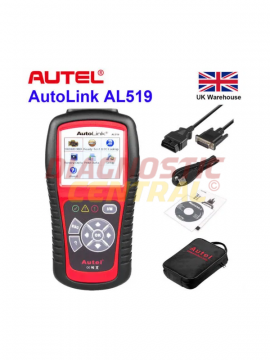
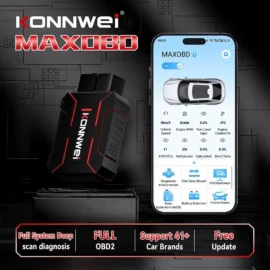
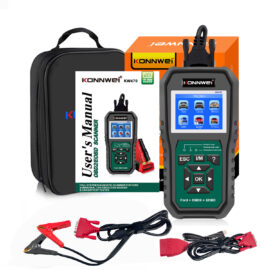
The right tool depends on the vehicles you see and the work you intend to carry out. A competent DIY user may need a reliable multi-make scanner that reads enhanced manufacturer codes, displays live data and can reset relevant service functions. An independent garage or mobile technician will usually benefit from wider vehicle coverage, faster module access, guided functions and regular software support.
For workshops handling EVs and hybrids regularly, consider whether the scan tool covers battery management, charging control, thermal systems and manufacturer-specific service functions for the makes you repair. Also check licence terms, update coverage, language options and whether an adapter is needed for older vehicles, commercial vehicles or brand-specific diagnostic ports.
Diagnostic equipment should complement, not replace, basic test gear. A 12V battery tester, multimeter rated for the task, current clamp and suitable breakout or adapter leads can all support a more reliable diagnosis. For lorries, vans and trailers, the correct commercial vehicle adapter cable is essential before expecting access to the relevant systems.
Be cautious with universal tool claims. A scanner may connect to a vehicle and read codes but not offer bi-directional controls, coding, battery pack detail or a required calibration routine. Confirm coverage by registration, VIN, model year, engine or motor variant and the exact task, such as diagnosing a charging fault or carrying out a brake service reset.
EV diagnostics and battery health reports
Battery health is a common customer question, especially when buying or selling a used EV. Some tools can show reported state of health, battery capacity estimates, cell voltage spread or charge-cycle information where the vehicle exposes that data. These figures are useful indicators, not always a definitive measure of battery condition.
A meaningful assessment considers temperature, state of charge, recent driving and charging history, active fault codes and manufacturer test procedures. A small cell-voltage variation may be normal at one charge level and worth further investigation at another. Avoid promising a precise remaining battery life from a single scan result.
FAQs about EV diagnostics
Can a normal OBD2 scanner diagnose an electric car?
It can often read basic codes on compatible vehicles, but generic OBD2 coverage is limited. Enhanced EV diagnostics normally require a tool with make-specific system access and functions.
Will clearing EV fault codes fix the warning?
Only if the underlying issue has been resolved or the code was historical. If the fault is active, the warning will usually return, sometimes immediately.
Can a weak 12V battery cause EV problems?
Yes. Low 12V voltage can create module communication faults, prevent the vehicle from waking correctly and trigger misleading warnings. Test it early in the process.
Is it safe to diagnose an EV at home?
Reading codes and checking the 12V battery can be suitable for capable users with the correct equipment. High-voltage isolation, wiring repairs and battery-pack work should be left to trained personnel following approved procedures.
Accurate EV diagnostics start with the right coverage, a recorded full scan and a disciplined approach to safety. If you are unsure which tool suits your vehicle or workshop, contact Diagnostic Central with the registration, VIN and the functions you need, and the team can help narrow down the suitable options.