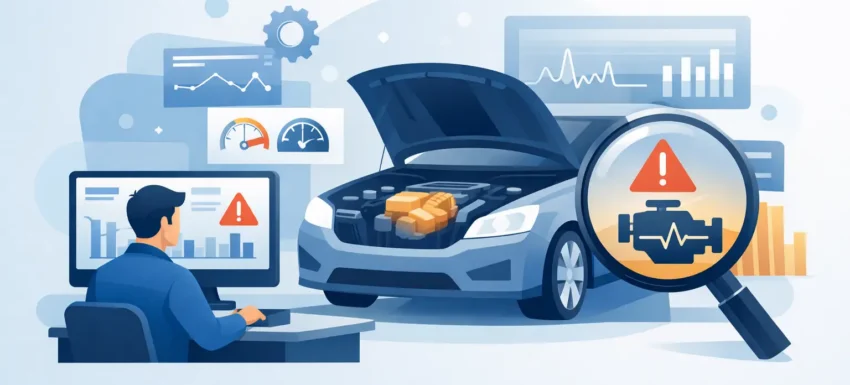
A fault code tells you what system the ECU has complained about. Freeze frame tells you what the engine was doing at the exact moment it complained. That distinction is why knowing how to read freeze frame data can save a workshop from fitting parts on a guess.
A P0171 code, for example, does not automatically mean a failed lambda sensor. The freeze frame may show the fault occurred at idle, with the engine fully warm and fuel trims heavily positive. That points you towards an intake leak or low fuel delivery far more convincingly than the code alone. Read the snapshot before clearing anything.
What freeze frame data actually is
When a control module stores a diagnostic trouble code (DTC), it can also save a limited set of operating values from that instant. This is the freeze frame. It is a still image of ECU data, not a live reading and not a complete record of everything happening on the vehicle.
On most EOBD and OBD2 vehicles, the engine ECU is most likely to provide freeze frame information for emissions-related faults. Higher-specification diagnostic tools may also retrieve event data from transmission, ABS, airbag, body and manufacturer-specific modules, but coverage depends on the make, model, module and scan tool.
The data normally includes engine speed, coolant temperature, calculated load, vehicle speed and fuel-system status. Depending on the vehicle, it may also include short- and long-term fuel trim, intake air temperature, manifold pressure, throttle position, battery voltage and a distance or time counter.
Treat it as evidence, not a verdict. A freeze frame can show the conditions that triggered the code, but it cannot prove the root cause without corroborating checks.
How to read freeze frame data step by step
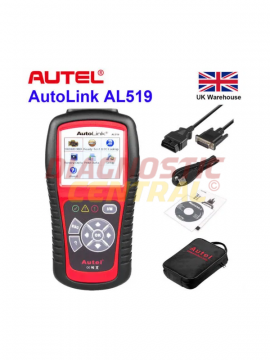
Start by connecting a compatible diagnostic scanner and carrying out a full vehicle scan. Do this before erasing fault codes, disconnecting the battery or carrying out a repair that could change the evidence. If the warning lamp is intermittent, this first scan is often the best chance you will get to see the original conditions.
Open the relevant control module, select the stored DTC, then look for Freeze Frame, Fault Details, Environmental Data, Event Data or a similar menu name. Generic readers commonly display one freeze frame record for the first or highest-priority powertrain code. Professional tools may show multiple records or manufacturer-specific fault histories.
Record the code, its status and every available parameter. A quick photo of the screen is useful, but write down the important values as well. Screenshots can be difficult to compare later when you are road testing or checking live data.
Read the figures in context rather than one at a time. Engine speed of 750rpm has a different meaning at standstill than at 70mph. Coolant temperature of 88°C is normal after warm-up, but 88°C immediately after a cold-start-related fault may indicate that the ECU has not seen a genuine cold start.
The readings that usually matter most
The exact parameter list varies, but these figures provide a strong starting point:
- Engine coolant temperature: Separates cold-start, warm-up and hot-running faults. A reading near ambient after an overnight standstill is generally plausible. An implausible value can point to a sensor, wiring or reference issue.
- Engine speed and vehicle speed: Establish whether the fault happened at idle, on acceleration, during a cruise or under deceleration. This is often the quickest way to plan a meaningful road test.
- Calculated load, throttle position and manifold pressure: Show the demand placed on the engine. They help distinguish a fault under load from one occurring with the throttle closed or barely open.
- Fuel trims and fuel-system status: Particularly useful on petrol engines. Positive trims mean the ECU is adding fuel; negative trims mean it is removing fuel. Compare them with current live readings before condemning components.
- Intake air temperature, battery voltage and ambient data: These can expose a low-voltage event, heat-soak issue or reading that simply does not match the conditions in which the vehicle was driven.
Turn the snapshot into a test plan
The best use of freeze frame is to recreate the fault conditions safely and then observe live data. If a misfire code was stored at 2,800rpm, 92°C coolant temperature and high calculated load, a five-minute idle check is unlikely to prove much. The vehicle needs a controlled road test or loaded workshop test that gets close to those conditions.
Take a P0302 cylinder 2 misfire as an example. If the frame shows the fault at idle with a warm engine, inspect for an air leak local to that cylinder, injector performance, ignition quality and compression at idle conditions. If it occurred under heavy acceleration at high rpm, coil breakdown under load, spark plug gap, fuelling volume and boost-related issues deserve more attention.
For lean codes, compare the freeze frame against current trim figures at idle and at around 2,500rpm. High positive trims at idle that improve with revs often support an unmetered-air leak. Positive trims that remain high under load can indicate restricted fuel supply, an air-flow measurement issue or an exhaust leak affecting lambda feedback. It depends on the engine design, so use smoke testing, fuel pressure checks and scope testing where required.
Diesel diagnostics need the same discipline. A DPF, boost-pressure or EGR code may be stored at a specific exhaust temperature, engine load and road speed. If the values show repeated short journeys and low load, the problem may be operating conditions or an interrupted regeneration. If the fault occurs consistently under demand, investigate pressure control, sensor plausibility, air-path leaks and the relevant actuator system.
Check whether the data is believable
Freeze frame is only as reliable as the sensors feeding it. Before building a repair around it, look for values that do not make physical sense.
Coolant temperature reading -40°C or 215°C, battery voltage well outside a credible charging range, engine speed recorded as zero while vehicle speed is high, or manifold pressure that conflicts with throttle and load are all clues. They may point directly to a circuit fault, or they may show that the frame is incomplete or incorrectly interpreted by a generic tool.
Also check whether the DTC is current, pending, confirmed or historic. A stored historic code with no current symptoms may be an old event. A pending code with fresh freeze frame data can be more useful than a confirmed code that was set weeks ago. Service information and manufacturer test routines still matter, especially on vehicles using non-generic fault logic.
Common freeze frame mistakes in the workshop
The most expensive mistake is clearing codes before recording the frame. Once erased, the evidence may not return until the customer has driven the vehicle through the same conditions again.
Another is assuming the data belongs to every code on the scan report. Many ECUs store only one generic frame, often linked to the first code that met the conditions to illuminate the engine warning lamp. A separate code may have occurred later and under entirely different conditions.
Do not confuse freeze frame with live data either. Freeze frame is historical. Live data is what the vehicle is doing now. Comparing both is where the diagnosis gains direction. If the snapshot showed a fault at 3,000rpm and current values are normal at idle, that does not clear the vehicle of the fault.
Finally, avoid treating a code description as a parts list. “Sensor circuit” can mean a connector, wiring fault, poor earth, reference-voltage problem, signal plausibility issue or module fault. Freeze frame narrows the operating conditions; proper electrical tests confirm the repair.
When a basic reader is enough, and when it is not
A basic EOBD scanner can retrieve generic engine codes and freeze frame on many vehicles, making it a useful first-line tool for competent DIY users and quick workshop triage. It is often enough to establish whether a fault occurred cold, hot, at idle or under load.
However, generic data has limits. For manufacturer-specific engines, automatic gearboxes, commercial vehicles and chassis systems, a capable multi-make or brand-level diagnostic tool can provide deeper event records, guided tests, actuator functions and module-specific live data. That extra coverage is valuable when the first snapshot raises questions rather than answering them.
A good diagnosis starts with the conditions present when the ECU detected the failure. Capture them, make them make sense, then test the vehicle under comparable conditions. That is how freeze frame stops being a menu item on a scan tool and becomes evidence you can repair from.