A trailer with a warning lamp on and no clear fault path can waste an hour before the real job even starts. That is exactly where a trailer diagnostic socket adapter earns its keep. If you work on commercial vehicles, towing systems or fleet trailers, the right adapter is not a nice extra – it is what allows your diagnostic tool to talk to the trailer properly, read faults with confidence and cut out guesswork.
What a trailer diagnostic socket adapter actually does
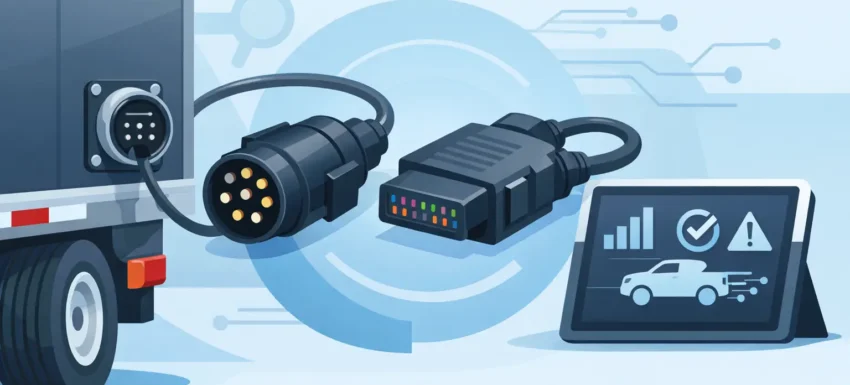
A trailer diagnostic socket adapter is the physical link between your diagnostic device and the trailer’s own diagnostic port. In simple terms, it converts one connector format to another so your tester can communicate with the trailer ECU, ABS or EBS system.
That sounds straightforward, but this is where many compatibility problems begin. Trailer diagnostics is not as universal as standard OBD2 on passenger cars. Different trailer manufacturers, system suppliers and test tools use different sockets, pin layouts and communication protocols. Without the correct adapter, even a capable scanner can become useless the moment it meets the wrong plug.
For a workshop, that matters because the issue is rarely just reading a code. You may need to identify an ABS wheel speed sensor fault, check EBS communication, inspect stored and active faults, or verify that a repair has actually cleared the warning condition. The adapter is the bridge that makes those jobs possible.
Why trailer diagnostic socket adapter choice matters
Buying any adapter that “fits trailers” is usually where people go wrong. Physical fit is only one part of the job. The adapter also needs to match the diagnostic tool, the trailer system and the application you are working on.
A basic mismatch can leave you with no communication at all. A more frustrating mismatch can connect physically but still fail to give stable data. That is when technicians start questioning the scanner, the trailer ECU or even the repair itself, when the real problem is simply the wrong lead in the chain.
This is especially relevant in mixed workshops. If you deal with Schmitz, Krone, SAF, WABCO, Haldex or Knorr-Bremse equipped trailers, connector requirements can vary depending on the system generation and the diagnostic platform you use. One adapter may cover a common setup, but it will not cover everything.
That is why professionals tend to buy with a clear view of the vehicle parc they support. It is faster, cheaper and far more reliable than trying to make a near match do the job.
Common uses in the workshop
Most people think of a trailer diagnostic socket adapter only when a warning lamp is already on. In practice, it is useful well beyond reactive fault finding.
In a working garage, the adapter is often used during pre-MOT checks, post-repair verification, trailer brake system diagnosis and fleet maintenance inspections. It helps confirm whether a fault is current or historic, whether a sensor issue is intermittent, and whether control units are receiving the signals they should.
It also saves time on repeat jobs. If a trailer comes back with the same warning, direct access to fault memory and live data gives you a much clearer route than swapping parts and hoping for the best. For mobile technicians, that speed matters even more, because every extra call-out minute costs money.
Trailer diagnostic socket adapter types and differences
Not all adapters do the same thing, even when they appear similar on the bench. Some are simple connector conversion leads. Others are designed around a specific diagnostic platform or software package. Some support branded systems only, while others are intended for broader commercial vehicle coverage.
The first distinction is connector type. Trailer systems can use different socket formats, and your tester may use a completely different plug arrangement. The second distinction is intended vehicle coverage. Some adapters are aimed at lorry and trailer diagnostics together, while others are strictly for trailer applications. The third is build quality, which matters more than many buyers expect.
A poorly made lead can create intermittent communication faults that look like ECU issues. Weak strain relief, poor pin tolerances and low-grade cable shielding are not small problems in a workshop environment. Diagnostic cables are handled constantly, bent into awkward positions and used around dirt, moisture and vibration. If the adapter is not built for that reality, it will not stay reliable for long.
How to choose the right adapter
Start with the diagnostic tool you already own. That is the fixed point. Check exactly which trailer systems your device supports, then identify which adapter lead is required for those systems. Do not assume that a cable with a similar connector shape will work.
Next, check the trailer makes and brake system brands you see most often. If your workshop mainly handles one fleet type, buy for that first. If you deal with a wide mix of units, wider compatibility becomes more important than saving a few pounds on a single-purpose lead.
Then look at how you will use it. A garage-based technician may be fine with a more specialised adapter if the workflow is predictable. A mobile engineer usually benefits from carrying a broader selection because roadside and yard work rarely gives you the luxury of perfect preparation.
It is also worth checking whether the adapter is intended for fault code reading only or whether it supports deeper diagnostic functions through your tool. Some setups allow more advanced access than others. If your work includes calibration, parameter checks or detailed system testing, make sure the cable setup does not become the limiting factor.
The trade-off between universal and dedicated setups
There is no single best answer here. A more universal diagnostic setup gives you flexibility across different trailers and commercial vehicles, which is ideal for independent garages and mixed fleets. The downside is that coverage can vary by make, year and system type, so you still need to confirm exact compatibility.
A dedicated trailer system with matching adapters often gives stronger support for specific platforms and can be the better option for specialist trailer repairers. The trade-off is narrower application. If your business also works on vans, cars and lorries, a highly dedicated setup may leave gaps elsewhere.
That is why the right buying decision depends on workload. For some users, one reliable trailer diagnostic socket adapter solves a regular bottleneck. For others, the smarter move is building a kit of leads that covers the trailer systems they see every week.
Signs you may have the wrong adapter
When communication fails, the adapter is one of the first things to check. Common warning signs include the tool powering up but not detecting the control unit, unstable connection during scanning, limited access to functions that should be available, or inconsistent results between similar trailers.
Of course, the adapter is not always at fault. Power supply problems, damaged trailer sockets, software issues and ECU faults can all affect communication. But in real workshop use, incorrect lead choice is common enough that it should never be an afterthought.
A simple process helps. Confirm the trailer system, confirm the tool’s supported coverage, confirm the required adapter part, then inspect the pins and cable condition before assuming a deeper electronics problem. That saves wasted time and avoids replacing components based on poor diagnostic access.
Why build quality is worth paying for
Cheaper leads can look fine until they are used daily. Then the weak points show up quickly. Pins loosen, housings crack, cable sheathing splits and communication becomes intermittent. In diagnostics, intermittent is the worst kind of failure because it muddies the result.
A proper workshop-grade adapter gives you more than convenience. It gives repeatable connection quality, better durability and more confidence in the data on screen. That matters whether you are a professional technician billing by the hour or a capable owner trying to avoid needless parts replacement.
At Diagnostic Central, that is the difference that matters most – not just whether a lead can plug in, but whether it can perform reliably in real diagnostic work.
Getting more from your trailer diagnostics
The adapter itself does not diagnose the fault. It enables the process. The real value comes when it is paired with a capable scan tool, correct software support and a technician who understands what the system is reporting.
If you treat the adapter as part of a complete diagnostic chain rather than a cheap accessory, you will make better buying decisions. You will also avoid one of the most common workshop frustrations: having the right tool in theory, but not being able to use it on the trailer in front of you.
For anyone working with modern trailers, electronic braking systems and fleet maintenance, that is reason enough to take adapter choice seriously. The right lead turns a dead end into usable data, and usable data is what gets the job finished properly.