A gearbox warning message, harsh shift or sudden loss of drive creates an obvious question: can scanners detect gearbox faults before expensive parts are fitted? Often, yes. A capable diagnostic scanner can communicate with the transmission control module, read stored fault codes and show live operating data. But it cannot physically inspect worn gears, a slipping clutch pack or contaminated oil, so the scan is the start of a proper diagnosis rather than the verdict.
Quick answer
- A basic OBD2 reader may only display generic powertrain codes, if it sees gearbox-related codes at all.
- A professional or make-capable scanner can often access the gearbox control module, manufacturer codes, live data and service functions where supported.
- Electrical, hydraulic-control and communication faults are commonly detectable by scan tools.
- Mechanical faults may produce no useful code, especially on manual gearboxes, and still require workshop checks.
What a scanner can find in an automatic gearbox
Modern automatic, DSG, dual-clutch and CVT transmissions are controlled by dedicated electronics. The transmission control module monitors sensor signals, solenoid circuits, oil temperature, clutch adaptation values, selector position and communication with the engine ECU, ABS module and other systems.
When a monitored value falls outside its permitted range, the module may log a diagnostic trouble code. Depending on the vehicle and the scan tool, this can point towards issues such as a failed speed sensor, an open-circuit solenoid, excessive clutch slip, implausible selector data, low control pressure or a CAN communication fault.
A scanner can also reveal faults that do not immediately illuminate the engine management light. Many vehicles store transmission codes in the gearbox module only. Reading the engine ECU alone can therefore miss the information needed to explain a delayed engagement, limp-home mode or intermittent shift concern.
Live data adds the useful detail
Fault codes tell you what the control unit has recognised, but live data helps establish whether the code is current and believable. Useful gearbox parameters may include input and output shaft speed, selected and commanded gear, transmission fluid temperature, clutch slip, turbine speed, line-pressure requests and solenoid status.
For example, if the control module commands third gear but the calculated ratio does not match third gear, the scan data may support an internal clutch or hydraulic-pressure problem. If an oil temperature reading is implausible before the vehicle has moved, the temperature sensor or its wiring becomes a more credible starting point.
The exact data list varies significantly by manufacturer, model, gearbox type and scanner software. Always check that the tool supports the specific vehicle and gearbox functions required rather than assuming all-system coverage means full transmission diagnostics.
What scanners cannot prove
A scan tool cannot look inside the gearbox. It cannot directly confirm worn bearings, damaged gear teeth, a blocked filter, low oil level, incorrect fluid specification or mechanical wear in a clutch pack. It can identify clues, but those clues need to be tested against the vehicle’s symptoms.
A transmission can slip under load with no fault code if the electronics are receiving values that appear plausible. Equally, a code for excessive ratio monitoring does not automatically mean the gearbox needs rebuilding. Low battery voltage, damaged wiring, poor earth connections, fluid problems, valve-body faults and engine torque-management issues can all contribute.
This matters because gearbox codes are often interpreted too literally. A code naming a solenoid circuit may be caused by the solenoid itself, but it could also be caused by an internal harness, corroded connector, water ingress, damaged wiring or a control-module supply issue. Check the wiring diagram, power and earths before condemning components.
Manual gearboxes are a different case
Most conventional manual gearboxes do not have a dedicated gearbox control module. If the vehicle grinds when selecting gears, jumps out of gear or whines in a particular ratio, a scanner is unlikely to diagnose the internal mechanical cause.
It can still be valuable. On vehicles with a hydraulic clutch system, electronic clutch monitoring, start-stop control or a clutch-position sensor, scan data may expose related faults. A scan can also identify engine-management, ABS or brake-switch issues affecting functions such as hill hold or rev-matching.
However, diagnosis of a manual gearbox usually relies more heavily on a road test, clutch operation checks, linkage inspection, oil condition and level checks, and listening for bearing noise. A scan tool complements those checks rather than replacing them.
Why scanner capability matters
There is a substantial gap between a low-cost code reader and a diagnostic platform designed for workshop use. Generic readers are useful for basic emissions-related powertrain codes, but their coverage of transmission modules can be limited. They may show a generic P-code without the manufacturer description, freeze-frame data or guided tests needed to act on it confidently.
A more capable multi-system scanner can access the gearbox ECU where supported and may offer manufacturer-specific codes, data graphs, active tests, coding, adaptations and service resets. Those functions are particularly relevant after repairs to mechatronic units, valve bodies, clutches or transmission fluid systems, when a relearn or adaptation procedure may be required.
Do not treat service functions as a shortcut. An adaptation reset performed on a gearbox with an unresolved mechanical or hydraulic fault can make shift quality worse temporarily and can complicate diagnosis. Follow the vehicle manufacturer procedure, meet temperature and battery-voltage requirements, and use the correct fluid before carrying out calibration work.
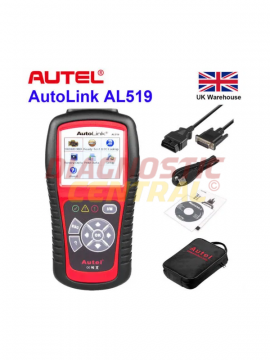
For regular gearbox work, an all-system diagnostic scanner with live data and bi-directional tests is normally a better fit than a basic code reader. For commercial vehicles and lorries, ensure the equipment and adapter cables cover the required make, protocol and vehicle connector. Diagnostic Central’s range includes diagnostic equipment and specialist adapters suited to different passenger and commercial vehicle applications, but compatibility should always be confirmed against the exact registration, VIN and required functions.
A sensible way to diagnose gearbox complaints
Start by recording the customer complaint accurately. Does the problem happen cold, hot, under acceleration, when selecting reverse, or only after a long run? Intermittent transmission problems often depend on temperature, load or battery voltage, and that context makes scan results far more useful.
Next, carry out a full-system scan rather than reading the gearbox module in isolation. Engine, ABS, body-control and battery-voltage faults can affect transmission behaviour. Save codes and freeze-frame information before clearing anything. Then check live data with the symptom present where it is safe to do so.
From there, inspect the basics: battery condition, charging voltage, fuses, connectors, harness routing and signs of oil leaks. Confirm transmission fluid level and condition only using the manufacturer’s specified process. Many automatic gearboxes have strict temperature requirements and no traditional dipstick, so guessing the level can cause damage.
If the evidence points to an electrical component, use wiring checks and manufacturer test values before fitting parts. If it points to internal slip, abnormal pressure or metallic contamination, mechanical investigation may be necessary. The best repair decision comes from agreement between codes, data, physical checks and the road-test result.
Frequently asked questions
Will a cheap OBD2 scanner read gearbox codes?
It may read generic transmission-related P-codes on some vehicles, but it may not enter the gearbox control module or provide manufacturer-specific data. Coverage is vehicle-dependent.
Can a scanner tell if an automatic gearbox needs replacing?
No. It can identify electronic faults and evidence of slip or ratio errors, but it cannot confirm internal wear on its own. Fluid checks, pressure testing and mechanical assessment may still be required.
Can a scanner reset gearbox faults?
Most capable tools can clear codes. Some can also carry out adaptations or resets where supported. Clearing a code does not repair the underlying fault, and resets should only be used when the correct repair procedure calls for them.
Why is my gearbox in limp mode with no engine light?
The transmission module may have stored a fault without requesting the engine warning lamp. A full-system scan is the correct first check, particularly on automatic and dual-clutch vehicles.
A capable scanner turns a gearbox complaint from guesswork into evidence, but it is only as useful as the technician interpreting it. If you need help selecting suitable equipment, contact Diagnostic Central with the registration or VIN, the gearbox type and the functions you need, such as module reading, live data, active tests or adaptations.