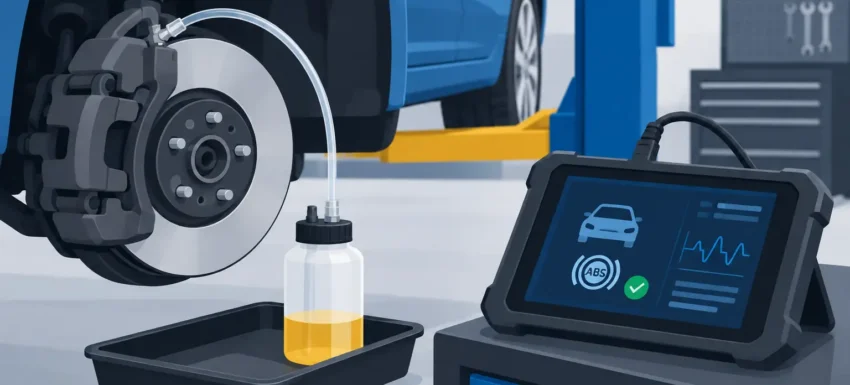
A firm brake pedal can turn soft immediately after a straightforward caliper, hose or master-cylinder repair. With an ABS-equipped vehicle, the usual cause is not always a poor bleed at the wheel. Air can remain inside the ABS hydraulic modulator, and effective abs brake bleeding may require a diagnostic routine to cycle its pump and solenoid valves.
Quick answer
- A normal pressure or pedal bleed is often sufficient if the ABS unit has not been opened or run dry.
- If air has entered the master cylinder, ABS modulator or its hydraulic lines, many vehicles need an ABS bleed function on a compatible scan tool.
- Always use the manufacturer-specified brake fluid and bleeding sequence for the exact vehicle.
- Do not return a vehicle to the road with a spongy pedal, a low fluid level or an unresolved brake warning light.
The distinction matters in a working garage. Repeating a conventional bleed because the pedal is still long wastes fluid and workshop time. More seriously, it can mask the fact that air is trapped where normal pedal pressure cannot reliably shift it.
Why ABS systems can be harder to bleed
A conventional brake system is comparatively simple: fluid travels from the master cylinder through fixed pipes and flexible hoses to the calipers or wheel cylinders. Open the appropriate bleed nipple, move fluid through the circuit and air exits with it.
ABS adds a hydraulic control unit between the master cylinder and the wheels. Depending on the vehicle, that unit contains an electric pump, accumulator, isolation valves and dump valves. During normal driving, these components regulate brake pressure to prevent wheel lock. They also create internal galleries where air can remain after a component replacement, major fluid loss or incorrect repair procedure.
The pedal can feel reasonable with the engine off yet sink or feel inconsistent once servo assistance is present. A road test is not a diagnostic method for this fault. If the brake pedal is not consistently firm before the vehicle leaves the workshop, stop and identify why.
When a conventional bleed may be enough
Not every brake job calls for a scan tool. Replacing a front caliper, fitting pads, renewing a short flexible hose or carrying out a routine fluid change will often be manageable with a pressure bleeder, provided the reservoir has never been allowed to run low and no air has entered the ABS hydraulic unit.
Start with the vehicle manufacturer’s specified wheel order. Do not rely on the old rule of beginning at the furthest wheel: diagonal split systems, left-hand-drive platform adaptations and particular ABS layouts can use a different sequence. Workshop data for the registration or VIN is the right source.
Use clean, unopened fluid of the correct DOT rating. DOT 4 is common across UK vehicles, but it is not universal, and fluid types must never be selected by habit. Keep the reservoir topped up throughout the process, use a correctly fitting pressure-bleeder cap and inspect each bleed nipple for free flow rather than forcing a seized fitting until it snaps.
If the pedal is firm, there are no warning lights and the vehicle’s documented process does not specify an actuator routine, a conventional bleed may be all that is required.
When ABS brake bleeding needs a scan tool
A diagnostic tool becomes necessary where the vehicle procedure calls for an ABS actuator bleed, hydraulic unit bleed, pump motor test or solenoid valve activation. The tool communicates with the ABS ECU and commands parts of the modulator to operate while fluid is bled from specified wheels or ports.
This is commonly needed after replacing an ABS pump or hydraulic control unit, opening brake pipes close to the modulator, replacing a master cylinder after the reservoir has emptied, or dealing with a system that has drawn in substantial air. It may also be required after certain brake-by-wire, electro-hydraulic or integrated brake booster repairs.
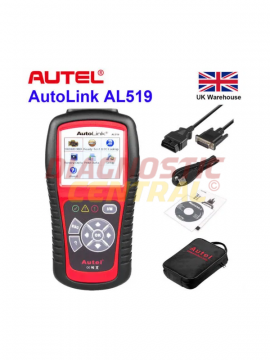
The menu wording varies. One tool may call it “ABS bleeding”, another “air bleed”, “automated bleed”, “hydraulic unit bleed” or “actuator test”. Similar wording does not guarantee the same function. A scanner that reads and clears ABS fault codes may not have bidirectional control, and a bidirectional scanner may not support the required routine on every make, model, year or ABS module.
That is the compatibility check that matters. Confirm the exact vehicle, brake system and required service function before buying or booking in the work. Where supported, a capable diagnostic scanner can save significant time by carrying out the commanded cycle correctly rather than relying on repeated manual bleeds.
A practical workflow for bleeding an ABS system
Begin with the repair itself. Check that every pipe union, flexi hose, caliper and bleed nipple is dry and correctly tightened. Confirm the reservoir is secure, fluid level is correct and the correct fluid has been used. A leak, incorrectly seated hose or damaged caliper seal cannot be solved with a scan tool.
Carry out the standard bleed stage first if the manufacturer procedure specifies it. A pressure bleeder usually gives more consistent results than pedal pumping, particularly when working alone. Keep pressure within the equipment and vehicle manufacturer’s limits. Excessive pressure can damage a reservoir or force fluid out around a poorly fitting adaptor.
Next, connect a stable battery support unit if the diagnostic routine is likely to take time. ABS pumps can draw appreciable current. Low system voltage can interrupt the process, set additional fault codes or prevent the routine from starting. Read and record existing ABS and brake-system codes before clearing anything. Some codes are historical; others point directly to an electrical fault that must be repaired before an active bleed will run.
Run the guided ABS bleed routine exactly as the scan tool instructs. It may ask for a particular wheel to be opened, the pedal to be held, a pressure bleeder to remain connected or the ignition state to be changed. Expect pump and valve noises from the hydraulic unit. That is normal during a commanded activation, but stop if there is a fluid leak, an abnormal mechanical noise or a clear instruction on the tool to abort.
Finish with the required conventional wheel bleed, then check pedal feel with the engine off and on. Recheck the fluid level, inspect all components for leaks and scan the ABS system again. Any warning lamp must be investigated, not simply erased.
Common mistakes that create a soft pedal
The most frequent mistake is letting the reservoir run dry. Once air reaches the master cylinder or modulator, a quick caliper bleed can become a much longer job. Another is using a universal scan tool on the assumption that an ABS menu means full actuator control is available.
Poor sealing at the pressure-bleeder cap can also be misleading. Air drawn through the adaptor may produce bubbles in the bottle and make it appear that air is still leaving the hydraulic system. Check the equipment setup before condemning the vehicle.
Be wary of aggressive pedal pumping on older systems. Pushing the master-cylinder piston beyond its usual travel can damage seals in a corroded bore. Controlled pressure bleeding is generally the cleaner approach, although the exact method remains vehicle-dependent.
Finally, do not confuse an ABS warning fault with trapped air. A failed wheel-speed sensor, wiring issue, corroded reluctor ring or internal ECU fault will not be cured by bleeding. Diagnostics and hydraulic repair are connected, but they are not interchangeable.
Choosing equipment for the job
For regular brake work, a quality pressure bleeder and the correct reservoir adaptors are the foundation. Add a diagnostic scanner with ABS-system access, live data and active tests where your vehicle coverage requires it. A basic code reader can identify stored faults, but it is rarely enough for service routines.
Garages working across mixed makes benefit from checking model-level function coverage before committing to a tool. Some vehicles require manufacturer-level software, while others support the routine through a capable multi-make diagnostic platform. Diagnostic Central can help narrow the choice when you provide the registration, VIN and the exact function needed, such as ABS pump activation or guided hydraulic bleeding.
FAQs
Can I bleed ABS brakes without a scan tool?
Sometimes. If no air has entered the ABS modulator and the manufacturer procedure permits a standard bleed, a pressure or pedal bleed may be sufficient. If the hydraulic unit contains air or the documented procedure requires valve cycling, a compatible scan tool is needed.
Does a soft pedal always mean air in the ABS unit?
No. External leaks, a failing master cylinder, incorrect rear brake adjustment, flexible hose expansion and poor bleeding technique can all cause a soft pedal. Inspect and diagnose the base brake system before assuming the ABS unit is at fault.
Should the engine be running during brake bleeding?
Follow the vehicle procedure. Most conventional bleeding is done with the engine off, while some guided routines specify ignition on or require a particular pedal action. Never improvise around an active ABS pump routine.
Can old brake fluid cause ABS problems?
Moisture-contaminated fluid lowers the boiling point and can promote corrosion within hydraulic components. A fluid change will not repair an electrical ABS fault, but correct scheduled maintenance helps protect the system.
Brake bleeding is safety-critical work, not a task to finish by feel alone. Check the vehicle-specific procedure, use equipment that supports the required ABS function and ask Diagnostic Central for guidance with the registration, VIN and required functions before selecting diagnostic equipment.