A warning lamp on a lorry rarely tells the full story. It may point to an engine-management issue, but the root cause could sit in an emissions system, wiring circuit, pressure sensor, aftertreatment module or a fault stored elsewhere on the vehicle network. A proper lorry scanner review therefore needs to look beyond whether a tool can read a code. The real question is whether it gives a technician enough accurate information to make a repair decision without wasting time on guesswork.
For UK garages, mobile mechanics and commercial vehicle repairers, the right diagnostic tool can shorten a breakdown job, reduce parts swapping and give customers a clear explanation of what their vehicle needs. The wrong one can connect successfully, display a generic code and still leave the workshop no closer to the fault.
Lorry scanner review: the checks that matter
Commercial diagnostics are not simply passenger-car diagnostics on a larger vehicle. Modern lorries, vans, buses and trailers use multiple electronic control units, manufacturer-specific systems and communication protocols that basic OBD2 readers may not reach. Engine faults are only part of the job. Depending on the vehicle and tool, a scanner may need access to ABS, EBS, transmission, body control, instrument cluster, suspension, airbag, AdBlue and diesel particulate filter systems.
Coverage is the first buying check. A scanner advertised for heavy-duty use should state which vehicle manufacturers, systems and model years it supports. Do not assume that a tool covering one European lorry make will offer the same depth on another. A unit may read and clear engine codes across several brands but only provide live data, calibrations or active tests on selected vehicles.
This distinction matters in a busy workshop. Reading a stored fault code is useful, but it is not the same as being able to inspect the conditions that caused it. A code for low boost pressure, for example, becomes far more useful when the scanner can show requested versus actual boost, air mass, exhaust pressure and relevant sensor values while the engine is running.
Generic OBD2 versus dedicated commercial diagnostics
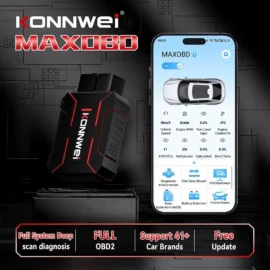
A low-cost OBD2 reader has a place. It can often identify standard engine and emissions fault codes on compliant vehicles, making it useful for an initial check or for competent owners who need basic information. It is not, however, a substitute for a dedicated lorry diagnostic scanner when commercial work is the priority.
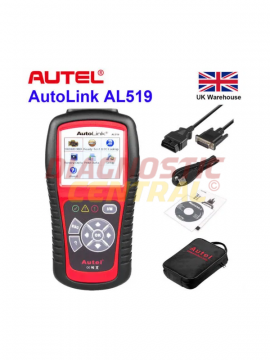
Dedicated equipment is built around wider system coverage and deeper vehicle communication. It should help the operator identify the control unit reporting the fault, view manufacturer-specific codes, access freeze-frame information, inspect live data and carry out supported service functions. This is where the difference between a quick code reader and a workshop tool becomes obvious.
The trade-off is cost and complexity. A technician who works mainly on light vans may not need every function offered by a high-end multi-brand commercial platform. Equally, a garage servicing fleet vehicles will quickly outgrow a basic handheld reader if it cannot enter braking, transmission or aftertreatment modules. Buy to match the vehicles that actually come through the door, not the broadest claim on the packaging.
Functions that make a scanner worthwhile
Live data is one of the strongest indicators of a useful commercial scanner. Fault codes tell you what the ECU has detected; data lets you test whether the fault is current, intermittent or caused by another system. Look for clear parameter naming, sensible refresh speed and the ability to compare readings without scrolling through an unmanageable list.
Active tests are equally valuable where supported. These commands allow the scanner to request an action from a component or system, such as operating an actuator, commanding a fan or checking a control circuit response. They do not remove the need for a multimeter, pressure gauge or wiring diagram, but they can narrow the diagnostic path considerably.
Service and maintenance functions should be judged on relevance rather than quantity. Common requirements include oil service resets, DPF-related functions, injector coding, steering angle calibration, battery registration and electronic parking brake operations on applicable vehicles. For commercial users, aftertreatment functions can be especially important. DPF and AdBlue faults can place a vehicle into reduced-power operation, which means lost time for the operator and urgent pressure on the repairer.
A scanner should also make report handling straightforward. The ability to save a pre-repair scan, record fault codes and provide a clear customer report supports a professional handover. It creates a useful record of what was found, what was cleared and what needs further investigation. That is good workshop practice, particularly when dealing with intermittent electrical faults.
Coverage, cables and communication protocols
Before choosing a tool, check the physical connection as carefully as the software list. Commercial vehicles may use 6-pin, 9-pin or 16-pin diagnostic sockets, and older vehicles can require specific adapter leads. A scanner that looks ideal on paper is of little use at the roadside if the correct cable is not in the case.
The vehicle’s communication standard also matters. J1939 is common on heavy-duty applications, while J1708 and other systems may appear on older or specialist vehicles. Some diagnostic packages include the main leads; others require adapters to be purchased separately. Establish what is supplied and what is needed for the fleet, customer base or vehicle types you work on.
Trailer diagnostics deserve separate consideration. Trailer ABS and EBS systems can produce faults that are not visible through the tractor unit alone. Workshops handling HGV combinations should consider whether they need dedicated trailer coverage, compatible cables and the ability to test the relevant system directly. This is an area where an apparently broad commercial scanner can have limits, so check the specification rather than relying on a general heavy-duty label.
Ease of use still affects diagnostic speed
A professional tool does not need to be complicated to be capable. Clear menus, reliable automatic vehicle identification and readable live-data screens save time on every job. This is especially relevant for mobile technicians working in poor light, bad weather or a customer’s yard where there is little patience for repeated connection failures.
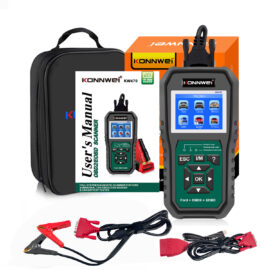
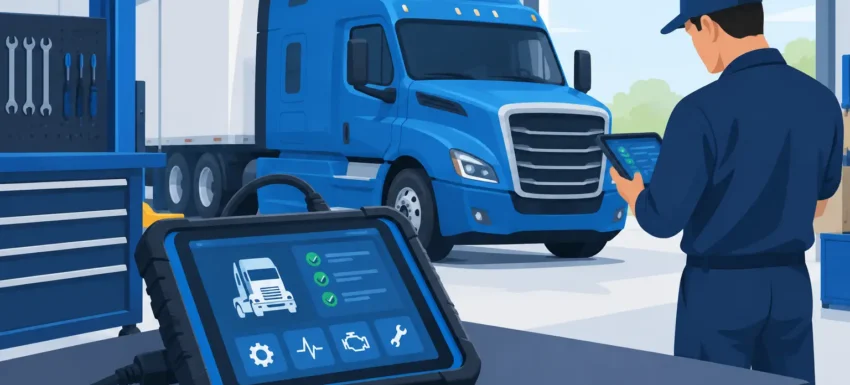
Screen size, battery life and build quality are practical considerations. A compact handheld scanner is easier to carry and often suits quick inspections. A tablet-style system can provide a larger display, guided functions and better reporting. Neither format is automatically superior. The best choice depends on whether the tool will live in a workshop bay, a service van or both.
Software updates need scrutiny too. Vehicle systems change, and a scanner is only as useful as its current coverage. Check how updates are delivered, whether they are included for a set period and what happens after that period ends. A cheap purchase can become expensive if essential updates are restricted, while a more capable tool may offer better value over several years of regular use.
How to assess value rather than just price
The cheapest scanner is not always the lowest-cost option. If it cannot diagnose the systems responsible for your common jobs, technicians lose time, repairs are delayed and another tool may still be required. A more capable unit can pay for itself through faster fault finding, provided its coverage fits your work.
Start with the vehicles you see most often. Record the main makes, approximate ages and typical faults. A garage repairing modern Euro 6 lorries may place aftertreatment and manufacturer-level data at the top of the list. A mixed independent workshop may prioritise broad van, car and commercial coverage. A mobile operator may value speed of connection, reliable adapters and a hard-wearing case above advanced functions used only occasionally.
Support also carries value. Diagnostic equipment is technical by nature, and specifications can be confusing when comparing tools. Buying from a specialist supplier such as Diagnostic Central gives workshops a more relevant route to equipment, adapters and replacement accessories than choosing on headline price alone. The aim is not to buy the most elaborate unit available. It is to buy a scanner that can earn its place on real jobs.
A practical buying decision
A credible lorry scanner should identify the right vehicle, enter the systems you need and present data that leads to a testable repair path. It should not promise universal coverage where none exists, and it should not force a technician to rely on generic engine codes for a complex commercial fault.
For occasional checks, a dependable basic reader may be enough. For regular commercial repair, choose deeper system access, relevant service functions, supported adapters and a clear update route. When a lorry is off the road, accurate diagnosis is not a luxury feature. It is the first step towards getting it working again with confidence.