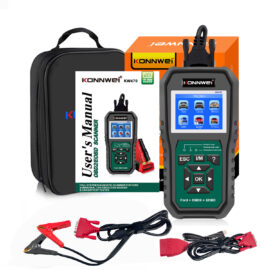

A scan tool can connect to a vehicle, identify the VIN and read basic fault codes, yet still be unable to clear a warning light or run an actuator test. In many late-model vehicles, the secure gateway is the reason. It is not a scanner fault and it is not a problem solved by repeatedly reconnecting the diagnostic lead. It is an intentional access control system fitted by manufacturers to protect safety-critical vehicle networks.
For independent garages, mobile technicians and capable DIY users, this changes the diagnostic process. Buying a tool with the right connector is no longer enough. You need compatible hardware, the correct software capability and, where required, authorised access to the vehicle manufacturer’s protected systems.
What Is a Secure Gateway?
A secure gateway, often shortened to SGW, is an electronic control point between the diagnostic socket and selected vehicle networks. It decides which messages a diagnostic tool is permitted to send. Reading information may be allowed, while commands that alter the vehicle are restricted until the user and tool have been authorised.
The system became more common as cars, vans and lorries gained more connected control modules. Modern vehicles can contain dozens of ECUs managing braking, steering, airbags, ADAS, immobiliser functions, body electronics, transmission control and battery management. A diagnostic command that is useful in a workshop can also be harmful in the wrong hands. Manufacturers therefore use gateway protection to reduce the risk of unauthorised coding, malicious commands, stolen-vehicle programming and interference with safety systems.
This is particularly associated with newer models from certain manufacturer groups, but the exact implementation varies by make, model, year and region. Do not assume every vehicle from a particular badge has the same access requirements. Check the vehicle coverage and function support for the exact job in front of you.
Why Secure Gateway Access Matters in the Workshop
The practical impact is simple: an unrestricted diagnostic session and a protected diagnostic session are not the same thing. A tool may retrieve diagnostic trouble codes and live data but refuse to carry out an active test, service reset, calibration or coding procedure. The display may show a message such as “security access required”, “function not supported” or “authentication failed”.
That distinction matters because reading codes is only the start of accurate fault-finding. A DTC points towards a circuit, sensor, module or operating condition. It does not prove that a component has failed. Technicians need live values, bidirectional tests and guided functions to confirm the cause before fitting parts.
Consider a modern diesel vehicle with an emissions warning. You may be able to read DPF differential pressure, exhaust gas temperatures and stored faults without full access. But completing a forced regeneration, resetting learned values after a repair or running a component test can require authorised gateway access. The same applies to electronic parking brake service mode, steering-angle calibration, battery registration and certain ADAS procedures.
Without the required access, a workshop can lose time, delay a handover or risk making a poor decision based on incomplete evidence. The right preparation protects both profitability and repair quality.
Read-only access is still useful, but it has limits
Restricted access does not make a scan tool useless. Basic code reading, freeze-frame data, vehicle identification and selected live data can still give a technician a strong starting point. For a DIY motorist investigating an engine-management lamp, that may be all that is needed to establish whether the vehicle needs immediate professional attention.
For paid repair work, however, it is sensible to view read-only data as an initial inspection rather than the full diagnosis. If the planned repair requires adaptations, calibrations or command tests, confirm access before quoting the job. This avoids the awkward situation where the vehicle is already in a bay and the final required function is blocked.
Which Diagnostic Functions Can Be Restricted?
The restricted functions depend on the manufacturer and vehicle architecture. Common examples include clearing certain fault codes, actuator or component tests, service resets, adaptations, coding, module configuration, key-related procedures and calibrations. Some systems may allow a routine reset but prevent deeper configuration work. Others can restrict almost every write command.
This is why generic claims about “full system diagnostics” need careful interpretation. A capable diagnostic machine may support every major control module on a vehicle, but secure gateway restrictions can still apply to individual operations. Coverage, function level and authorised account access must all line up.
The issue is not limited to passenger cars. Commercial vehicles increasingly rely on electronically controlled braking, emissions, body systems and trailer interfaces. For workshops that work on vans, lorries or mixed fleets, make-specific coverage and adapter requirements are just as important as security access.
How Authorised Access Usually Works
There is no single process for every manufacturer, but the usual arrangement has several parts. The diagnostic tool must support the relevant secure gateway scheme, the software must be current, and the user may need a verified account with the manufacturer or an approved authentication platform. An active internet connection is commonly required when the protected function is requested.
The technician signs in through the tool or associated diagnostic software. The system verifies the user, the workshop or business details where applicable, and the tool’s entitlement. Once approved, the tool receives permission to communicate with protected modules for a defined period or function.
This is a legitimate workshop process, not a workaround. It creates accountability around sensitive operations while allowing properly equipped independent repairers to service modern vehicles. The exact costs, subscription model and registration requirements vary. Some access is included with selected professional tool subscriptions, while other systems require separate registration or payment.
Check these points before committing to a tool
When comparing diagnostic equipment, do not only compare the headline list of vehicle makes. Ask whether the tool supports secure gateway access for the manufacturers you see most often, and whether that support applies to the functions you need.
Also check whether software updates are included, how long any subscription lasts, whether an internet connection is required on the job, and whether the tool supports the service functions your workshop performs daily. A lower purchase price can become poor value if it cannot complete common brake, battery, emissions or calibration work on newer vehicles.
For occasional users, it may be more sensible to use a reliable code reader for inspection and arrange specialist work when protected procedures are needed. For a garage handling late-model vehicles every week, professional equipment with approved access can pay for itself in reduced delays and fewer outsourced jobs.
Do Not Treat Gateway Protection as Something to Bypass
There is a clear line between authorised diagnostic access and attempts to defeat vehicle security. Bypass devices, questionable software and unofficial procedures may appear to offer a shortcut, but they can create serious problems. At best, they can leave the technician without manufacturer-backed function support. At worst, they can compromise vehicle security, corrupt module configuration or expose a business to legal and insurance issues.
There is also a technical risk. Modern control modules rely on correct voltage, stable communication and proper procedure order. Interrupting a programming or configuration process can immobilise a vehicle or leave warning systems in an unsafe state. A battery support unit, the right lead, verified software and a stable connection are not optional extras when carrying out sensitive work.
A professional approach is more straightforward: use supported equipment, maintain valid software, follow the vehicle-specific prompts and document the work completed. That is the standard customers expect when they are trusting you with electronically complex vehicles.
Building a Secure Gateway-Ready Diagnostic Setup
A useful setup begins with the work you actually undertake. A mobile mechanic handling servicing and common faults may prioritise a fast, reliable tablet scanner with broad car and van coverage, service functions and protected-access support. A specialist workshop may need manufacturer-level software, brand-specific interfaces, J2534 pass-through capability or dedicated programming equipment.
Hardware quality matters. Cheap interfaces can struggle with unstable communication, slow module scans and incomplete vehicle coverage. That costs more than the initial saving when a vehicle is occupying a ramp. Choose equipment that identifies vehicles accurately, displays live data clearly and supports the systems you work on rather than relying on vague compatibility claims.
Keep the software updated and check your subscription status before a booked job. If gateway authentication needs an internet connection, make sure the workshop Wi-Fi reaches the diagnostic bay or use a dependable mobile connection. It is also wise to maintain battery voltage with an appropriate support unit during extended testing, coding or programming.
Finally, build gateway checks into your job intake. Ask for the registration, VIN, model year and the exact warning or repair requirement. This lets you confirm likely coverage before the vehicle arrives. It is a small step that prevents avoidable downtime.
The Real Value Is Confident Diagnosis
Secure gateways add another layer to vehicle repair, but they do not replace sound diagnostic method. Start with the customer complaint, carry out a visual inspection, check battery condition and charging voltage, scan all relevant modules, assess live data and test the suspected circuit or component before replacing parts. Protected access gives you the ability to complete the process where the vehicle requires it.
As vehicle electronics become more controlled, the workshops that stay efficient will be those that invest in legitimate diagnostic capability rather than guessing around restrictions. Choose equipment that matches your vehicle mix, keep access arrangements current and treat secure gateway requirements as part of the job from the moment the booking is made.