Quick answer
- Choose wired when daily workshop reliability, repeatable multi-system diagnosis and a dedicated tool matter most.
- Choose wireless for convenient preliminary checks, standard OBD2 information and occasional mobile use.
- Connection type alone does not determine coverage: always check the exact vehicle, systems and functions required.
- For professional work, a capable main diagnostic system supported by a compact secondary reader is often the strongest combination.
A warning light is on, a customer is waiting, and the vehicle is occupying a ramp. That is when the difference between wired versus wireless scanners stops being a product-specification debate and becomes a workshop decision. Both can read fault codes and live data when matched to the right vehicle, but the way they perform under pressure is not the same.
A wired diagnostic scanner gives you a direct, self-contained connection. A wireless scanner trades some of that physical certainty for flexibility, portability and lower entry cost. Neither is automatically better. The right choice depends on the vehicles you see, the depth of diagnosis required and whether the tool is for daily commercial use or occasional fault finding at home.
Wired versus wireless scanners: the practical difference
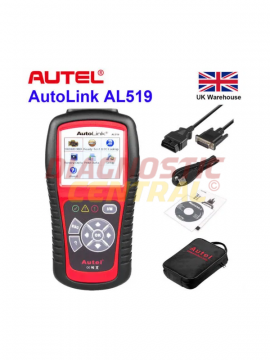
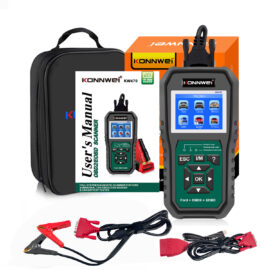
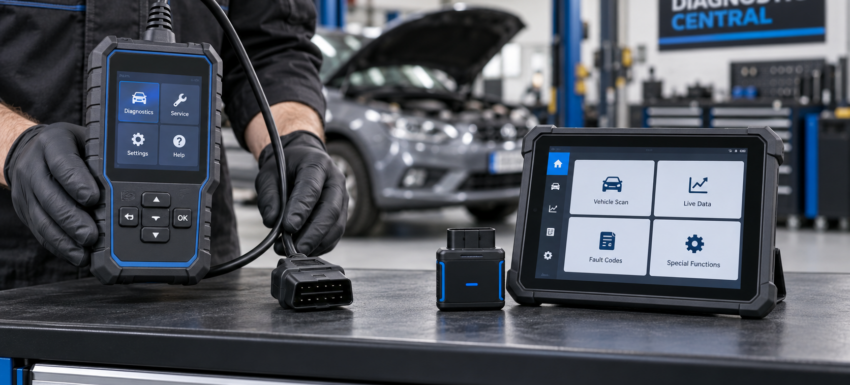
A wired scanner normally connects directly to the vehicle’s OBD2 socket using a fixed lead. The display, controls and diagnostic software are usually built into one handheld unit. Professional models may also use dedicated adapter leads for manufacturer-specific systems, lorries, trailers or older vehicles.
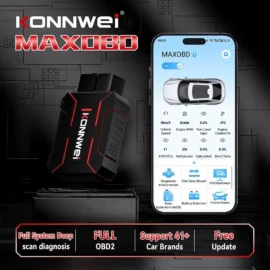
A wireless scanner uses a small interface plugged into the diagnostic port. That interface sends information by Bluetooth or Wi-Fi to an app on a phone, tablet, laptop or separate display unit. The hardware can be compact and convenient, but it relies on the connection and device running the software.
The basic job is the same: communicate with electronic control units, retrieve diagnostic trouble codes, view live parameters and, where supported, perform functions such as service resets, electronic parking brake procedures, injector coding or battery registration. The important point is that connection type does not determine diagnostic coverage on its own. Software capability, vehicle compatibility and the quality of the interface matter just as much.
Why professional workshops still rely on wired scanners
For a busy garage, a wired unit remains the dependable default. There is no need to pair a phone, accept a Bluetooth prompt or worry that a technician’s tablet battery has gone flat halfway through a test. Pick up the tool, connect it and get on with the job.
That direct connection is particularly valuable when checking live data during a road test or carrying out guided functions that can take several minutes. A stable wired link reduces the chance of an interrupted session while communicating with critical modules. This matters when working on systems such as ABS, airbag, transmission and body control modules, where a lost connection wastes time and can complicate a procedure.
A proper handheld scanner is also built for workshop handling. It is more likely to tolerate oily hands, a crowded tool trolley and regular use than a personal mobile phone. The cable is visible, easy to trace and less likely to be forgotten inside a vehicle after a job.
Wired equipment is often the stronger choice where a technician needs broad, repeatable coverage across makes. Many professional units support comprehensive module scans, actuator tests, graphing, coding and special functions from one dedicated screen. For a garage handling several vehicles a day, this consistency is worth more than the convenience of a cable-free setup.
There are limits. Cables can snag around pedals or gear levers, and a lead can eventually wear at the connector if it is pulled or twisted. A wired scanner may also cost more initially, especially when advanced functions and regular software updates are included. Those are manageable trade-offs when the tool earns its place through daily diagnostic work.
When a wired unit makes most sense
Choose a wired scanner when speed, repeatability and deep coverage are priorities. It is the sensible option for independent garages, mobile technicians who need a tool that works every time, and commercial repairers dealing with multiple systems or vehicle types. It is also well suited to technicians who prefer a dedicated piece of diagnostic equipment rather than using a personal device in a working environment.
Where wireless scanners earn their place
Wireless scanners have changed the entry point for vehicle diagnostics. A compact OBD2 interface and a capable app can give a DIY motorist useful access to engine fault codes, emissions information, freeze-frame data and live readings without buying a full handheld machine.
The main benefit is convenience. With no screen or keypad built into the scanner, the user can view data on a phone or tablet they already own. That makes it easier to stand outside the vehicle while watching readings, take a screenshot of a code, or keep the device in the glovebox for occasional checks. For a competent owner monitoring a recurring engine-management issue, this can be a practical and cost-effective arrangement.
Wireless tools are also useful for quick initial inspections in a workshop. A technician can plug in a compact interface, carry out a basic scan and decide whether the vehicle needs to move onto a ramp or be booked in for further investigation. The small physical size is an advantage where access around the driver’s footwell is awkward.
However, wireless does not mean fit-and-forget. Bluetooth range can be affected by the vehicle, the position of the interface and interference from other equipment. Wi-Fi interfaces can be fast, but they may require the phone or tablet to disconnect from its normal internet connection while the diagnostic session is active. App permissions, operating-system updates and device compatibility can all affect the experience.
The quality gap is also wider in the wireless market. A well-supported interface from a recognised diagnostic supplier can be a useful tool. A cheap, unbranded dongle may read generic engine codes but struggle with manufacturer-specific modules, return incomplete data or simply fail to communicate with certain vehicles. Low price is not a diagnostic strategy.
Wireless is best for targeted, mobile use
A wireless scanner suits drivers and enthusiasts who want quick access to standard OBD2 information, as well as technicians who need a compact second tool for preliminary checks. It can be an excellent addition to a diagnostic kit, but it should not automatically replace a professional wired scanner where coding, service functions or multi-system diagnosis are routine.
Do not confuse connection type with diagnostic capability
The most expensive mistake is buying based on wired or wireless alone. Before choosing either, establish exactly what the scanner needs to do.
A basic code reader may identify a generic powertrain fault and allow the code to be cleared. That can be enough for an owner investigating an engine warning light after checking the obvious causes. It will not necessarily access the ABS, airbag, climate control, body electronics or transmission modules. Nor will it necessarily carry out maintenance resets or bidirectional tests.
For professional fault finding, look beyond the headline claim of “all vehicles”. Check the supported makes, model years, system coverage and functions. A vehicle can use OBD2 for standard emissions-related data while still requiring enhanced software for full manufacturer-level diagnosis. This is especially relevant on newer cars with complex driver-assistance systems, battery-management modules and networked control units.
Commercial vehicles need the same scrutiny. Lorry and trailer diagnostics may require different protocols, connectors and software licences from passenger-car equipment. The connector at the end of the cable – or the wireless interface – must be appropriate for the vehicle, but so must the diagnostic platform behind it.
Data speed, battery drain and real-world reliability
For ordinary code reading, both connection types are usually quick enough. The difference becomes clearer when viewing multiple live-data parameters, logging a long test drive or carrying out module procedures. A quality wired scanner offers predictable performance because its communication path is direct and its own battery or vehicle supply is managed as part of the tool.
Wireless performance depends on the interface, the device and the app. A modern tablet with a reliable interface can be highly responsive. An older phone running an overloaded app may not be. If the diagnostic tool is used professionally, that variable is worth considering before it costs billable time.
Battery drain is another small but genuine issue. Some wireless dongles continue drawing power while left in the OBD port. On a vehicle that is parked for extended periods, that can contribute to a flat battery. Remove the interface after use unless it is specifically designed for permanent monitoring and the vehicle use case supports it.
Security should not be ignored either. Use trusted apps and interfaces, keep the software updated, and avoid leaving a wireless diagnostic device connected in a vehicle that is unattended. Diagnostic access is not something to treat casually.
Build the scanner choice around the job
For a garage, the strongest setup is often not wired or wireless. It is a capable wired main scanner for full diagnostic work, supported by a compact wireless reader for quick checks and customer vehicles. That combination keeps the workflow fast without compromising when deeper investigation is needed.
For a DIY owner, start with the fault types you genuinely need to investigate. If the aim is reading and understanding engine codes, checking live sensor values and clearing a confirmed repair, a quality wireless scanner can be the sensible buy. If you maintain several vehicles, carry out service work or need access beyond the engine ECU, a wired handheld unit may offer better value over time.
Diagnostic Central’s range is built around that practical distinction: choose the tool for the systems and vehicles in front of you, not the marketing claim on the box. A scanner that communicates reliably and delivers the right data will save more time than any feature you never use.
Recommended Diagnostic Central options
Diagnostic Central own VCI — available as an interface for installation on a suitable Windows device, or as part of a complete diagnostic kit. Coverage and available functions vary by vehicle, so confirm the required systems before ordering.
Panasonic ToughTab professional diagnostic kit — a practical complete-kit option for buyers who want dedicated workshop hardware with the diagnostic software already installed and configured, together with Diagnostic Central’s support package.
Frequently asked questions
Is a wireless scanner as capable as a wired scanner?
It can be, but the connection method does not determine coverage. The interface, software, licence and exact vehicle support matter more than whether data travels through a cable, Bluetooth or Wi-Fi.
Can one scanner diagnose every vehicle system?
No scanner should be assumed to support every system and function on every vehicle. Check the make, model, year, engine and required task, particularly for coding, service functions and commercial vehicles.
What details help when choosing a diagnostic system?
Provide the registration or VIN, vehicle make and model, year, engine and the functions you need. This allows compatibility to be checked more accurately.
Need help choosing?
Send Diagnostic Central the vehicle registration or VIN and the exact systems or functions you need to access. Our experienced team will help identify the most suitable option without relying on vague “all vehicle” claims. Contact Diagnostic Central.